
Language
Please Choose Your Language
Views: 222 Author: Amanda Publish Time: 2025-12-17 Origin: Site


Content Menu
● Understanding Your Patio Umbrella Structure
● Why Patio Umbrella Cords Fail
● Choosing the Right Replacement Cord
● Tools and Materials You Will Need
● Safety Tips Before You Start
● Step 2: Map the Cord Path Through the Patio Umbrella
● Step 3: Prepare the New Cord
● Step 4: Thread the Cord Through the Pole
● Step 5: Route the Cord Over the Pulley and Through the Hub
● Step 6: Attach the Cord to the Crank Mechanism
● Step 7: Adjust Tension and Test the Patio Umbrella
● Recommended Use of Images and Videos
● Maintenance Tips After Restringing
● When to Replace Instead of Restring
● OEM and Branding Opportunities for Patio Umbrella Buyers
● FAQs
>> 1. How often should a Patio Umbrella cord be replaced?
>> 2. Can any rope be used to restring a Patio Umbrella?
>> 3. Is it necessary to remove the Patio Umbrella from the base before restringing?
>> 4. What if my Patio Umbrella crank is also damaged?
>> 5. Can I restring a cantilever or offset Patio Umbrella the same way?
A damaged or broken cord does not mean you need to throw away your Patio Umbrella; with the right tools and a clear method, most people can safely restring a Patio Umbrella at home and restore smooth opening and closing. Restringing a Patio Umbrella is also a practical way for brands, wholesalers, and OEM manufacturers to extend product life, reduce returns, and improve customer satisfaction.
A typical Patio Umbrella consists of a canopy, ribs, a center pole, a hub system, and a lifting mechanism (crank or pulley) that relies on a cord running inside or along the pole. The ribs support the Patio Umbrella canopy, while the upper and lower hubs move along the pole to open and close the structure when the cord is pulled.
In many crank‑style Patio Umbrella designs, the cord connects the crank handle to the runner hub so that turning the crank winds or unwinds the cord to raise or lower the canopy. When the Patio Umbrella cord frays, snaps, or jumps off the pulley, the crank can spin freely, jam, or fail to open the umbrella entirely.
Most Patio Umbrella cords are made from synthetic materials such as nylon or polyester, chosen for their strength and resistance to abrasion. Over time, exposure to UV rays, moisture, and repetitive bending around pulleys or guides can weaken the cord, leading to fraying, stiffness, or sudden breakage.
Mechanical stress occurs every time the Patio Umbrella is opened or closed, especially if users crank quickly, over‑tighten the canopy, or operate the umbrella in high winds. Dirt, sand, and debris can also increase wear on the cord and pulleys, particularly for Patio Umbrella installations near beaches, pools, or dusty gardens.
For most standard Patio Umbrella models, a braided synthetic cord with good UV resistance and moderate flexibility works best. Polyester cord is often preferred for outdoor Patio Umbrella use because it resists UV degradation and absorbs little water, helping maintain strength even after rain or cleaning.
Nylon cords are strong and slightly stretchier, but they can absorb more water and may lose performance faster under constant sun exposure compared with polyester. When restringing a Patio Umbrella, choose a cord diameter that matches the original so it fits correctly through pulleys, guides, and the crank mechanism.
Before starting to restring a Patio Umbrella, gather all tools and parts so you can work safely and efficiently. Typical items include:
- Replacement cord suitable for outdoor Patio Umbrella use (UV‑resistant polyester or similar)
- Screwdrivers for removing the crank housing, finial, or access covers
- Pliers or needle‑nose pliers for gripping knots, bolts, and small components
- Scissors or a utility knife to cut the old and new Patio Umbrella cord cleanly
- A wire coat hanger or grabber tool to help fish the cord through the pole
- A lighter or heat source to fuse the cord ends and reduce fraying
If your Patio Umbrella uses special fasteners or a proprietary crank, having spare nuts, bolts, or washers compatible with the frame can help if anything is corroded or stripped. For commercial Patio Umbrella installations in cafés, hotels, or resorts, it is wise to keep a small repair kit with cords, hardware, and basic tools on site.
Always fully close the Patio Umbrella and, if possible, remove it from the table or stand so you can place it horizontally on a stable work surface. Working with the Patio Umbrella on a flat bench or pair of supports reduces the risk of it tipping while you handle the pole, hub, or crank assembly.
Check for any sharp edges, rusted components, or broken ribs that might catch the cord while restringing. If your Patio Umbrella frame is bent, cracked, or heavily corroded, it may be safer to replace the whole unit rather than simply restringing it, especially in commercial environments where safety standards are strict.
Start by opening or partially opening the Patio Umbrella enough to relieve tension on the cord, then close it gently so the ribs are not under full load. Remove the finial or top cap at the tip of the Patio Umbrella, if your design uses one, because this often provides access to the cord path at the top.
Next, locate the crank housing or cord attachment point near the middle of the Patio Umbrella pole and open the housing with a screwdriver or by removing retaining screws. Cut or untie the old cord from the crank drum or attachment point, and then pull the cord out through the pole and hub area, noting the routing for reference.
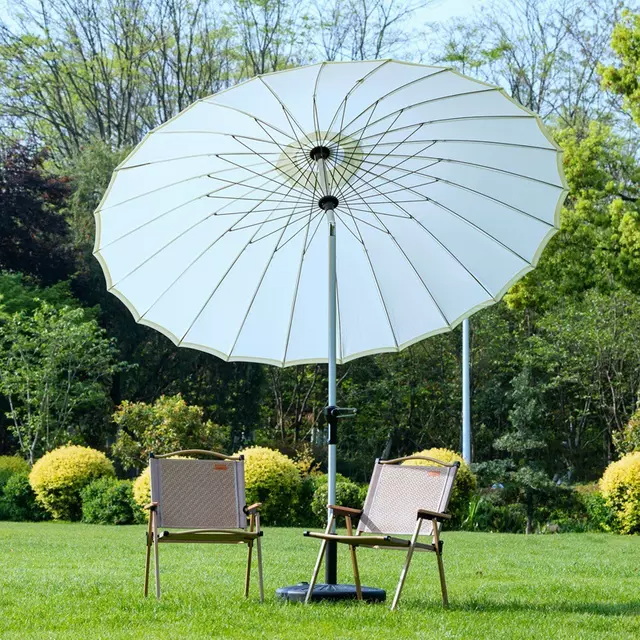
Before threading the new cord, carefully observe or reconstruct the route the old cord took through the Patio Umbrella. In many designs, the cord runs from the crank drum through a hole in the pole, up the interior of the Patio Umbrella pole, over a pulley near the top, and then down to the hub or lift ring.
Some Patio Umbrella models use external pulleys or additional guides where the cord exits the pole and attaches to the runner hub. Sketch a quick diagram or take photos so you can follow the same route with the new cord and avoid twisting, crossing, or misrouting that could cause friction or jamming.
Measure the old Patio Umbrella cord if possible and cut a new cord slightly longer than the original to allow for knots and adjustments. If the old cord broke and you do not know the exact length, a safe guideline is to use a cord at least twice the length of the Patio Umbrella pole plus extra for knots and overlaps.
Trim both ends of the new cord cleanly and gently melt the tips with a lighter if it is a synthetic material, creating a small fused end to minimize fraying during installation. For smooth feeding through narrow channels inside the Patio Umbrella pole, you can also taper the fused ends slightly while they are still soft, taking care to avoid burns.
There are two common techniques for threading the cord through a Patio Umbrella pole: pulling it through using the old cord or fishing it with a tool. If the old cord is still mostly intact, you can tie the new Patio Umbrella cord securely to the old one, then pull from the opposite end so the old cord drags the new cord along its path through the pole and pulley.
If the cord has snapped in the middle or been completely removed, straighten a wire coat hanger or use a grabber tool to guide the new cord down the inside of the Patio Umbrella pole. Hook the new cord into the end of the wire, feed it through the pole from the top or from the access hole above the crank, and then pull it out at the crank opening or hub attachment point.
Once the cord emerges at the top of the Patio Umbrella pole, pass it through the pulley housing exactly as the old cord was installed. Make sure the cord sits cleanly in the pulley groove with no twists or half‑turns, because misalignment can cause premature wear when the Patio Umbrella is operated.
From the pulley, lead the Patio Umbrella cord down to the runner hub or lift ring and pass it through the designated hole, slot, or eyelet. Tie a secure knot at the end of the cord, leaving enough tail so the knot cannot slip back through the hole under tension when the Patio Umbrella is raised.
With the upper part of the Patio Umbrella cord routed correctly, return to the crank housing and pull gently on the lower end of the cord to take up slack. Feed the cord through the hole in the crank axle or around the drum, depending on the design, and tie a knot or wrap it according to the original configuration.
Reassemble the crank housing with screws, ensuring the Patio Umbrella cord winds evenly as you turn the handle and does not pinch between housing parts. Avoid overtightening bolts or screws around the crank and pole, as this can distort thin aluminum tubing or crack plastic housings, leading to stiff crank movement.
Before fully tightening all fasteners and replacing decorative caps, test the Patio Umbrella several times. Slowly turn the crank to open the Patio Umbrella canopy, observing how the hub travels, how the ribs unfold, and whether the cord tracks smoothly over the pulley and inside the pole.
If the Patio Umbrella does not fully open, leaves the hub short of its normal top position, or feels excessively tight, you may need to adjust cord tension by retying the knot at the crank or hub. When you are satisfied that the Patio Umbrella opens and closes smoothly without jerks or clicking, reinstall the top cap and any covers you removed earlier.
To make a Patio Umbrella restringing article more practical and engaging, use images and videos at key steps. For example, include a labeled diagram of Patio Umbrella parts, close‑up shots of frayed versus new cords, and detailed photos of the crank housing during disassembly and reassembly.
Short tutorial videos can show the full process of removing the old Patio Umbrella cord, threading the new line through the pole and pulley, and testing the finished umbrella. Maintenance‑focused clips can demonstrate how to inspect the Patio Umbrella cord each season, apply suitable lubricants to pulleys, and store the umbrella correctly to extend service life.
Once your Patio Umbrella is successfully restrung, a few simple habits will help the new cord last longer. Avoid forcing the crank if the Patio Umbrella is blocked by furniture, tangled fabric, or strong wind; instead, reduce the load and then operate it gently.
Store the Patio Umbrella closed and covered when not in use, particularly during storms or off‑season periods, to protect the cord, ribs, and canopy from unnecessary stress. Inspect the cord, pulley, and crank mechanism at least once per season, looking for early signs of fraying or stiffness so you can address problems before they cause failures.
Restringing a Patio Umbrella is cost‑effective when the frame, ribs, and canopy are still in good condition and only the cord or crank needs attention. If the Patio Umbrella has multiple broken ribs, a badly bent pole, or severe corrosion at the hubs and hardware, a full replacement may be safer and more economical.
For commercial Patio Umbrella applications, such as cafés or hotel terraces, local regulations and brand standards may favor replacing significantly damaged units rather than attempting extensive repairs. In these settings, OEM manufacturers can support professional buyers by offering spare parts, clear restringing manuals, and bulk replacement Patio Umbrella options.
For international brands, wholesalers, and project buyers, a well‑designed Patio Umbrella with a reliable cord system and clear maintenance instructions can become a long‑lasting marketing asset. Custom printing on the Patio Umbrella canopy, branded crank handles, and coordinated color schemes help reinforce brand identity in outdoor spaces such as cafés, resorts, and showrooms.
Partnering with a specialized Patio Umbrella OEM manufacturer makes it possible to specify cord materials, pulley quality, and frame designs that match your performance and budget goals. Adding multilingual care labels and QR codes linking to restringing videos can further reduce after‑sales issues and strengthen the perceived quality of your Patio Umbrella range.
Restringing a Patio Umbrella is a practical way to extend the life of outdoor shade products, avoiding unnecessary replacements while restoring smooth, reliable operation for homeowners and commercial users alike. With the right cord, basic tools, and a clear step‑by‑step method, brands and end‑users can keep their Patio Umbrella installations in service for many seasons, supported by professional OEM manufacturing and clear maintenance guidance.
The lifespan of a Patio Umbrella cord depends on sun exposure, weather, usage frequency, and material quality; many cords last several seasons under normal residential use. In high‑use or commercial environments, it is wise to inspect the cord each season and plan replacement when fraying, stiffness, or discoloration appears.
Not every rope is suitable; a Patio Umbrella typically performs best with a braided synthetic cord that fits the existing pulleys and crank system. UV‑resistant polyester cord is widely recommended for Patio Umbrella restringing because it combines strength, low stretch, and outdoor durability.
Removing the Patio Umbrella from the base and laying it horizontally is not strictly required, but it usually makes the restringing process safer and easier. A stable, horizontal position gives better access to the crank housing, hub, and top cap, and reduces the risk of the Patio Umbrella tipping while you work.
If the Patio Umbrella crank is cracked, stripped, or seized, replacing the cord alone may not solve the problem and the crank assembly might need repair or replacement. Many suppliers offer Patio Umbrella crank kits or replacement parts, and in some cases it may be more economical to upgrade the entire frame rather than repair multiple components.
Cantilever or offset Patio Umbrella designs use different arm structures and lift systems, but many still rely on internal cords or cables. The general principles of choosing a durable cord and routing it correctly apply, but it is important to follow model‑specific instructions because the cord path and tensioning method may differ from center‑pole Patio Umbrella designs.


