
Language
Please Choose Your Language
Views: 222 Author: Amanda Publish Time: 2025-11-06 Origin: Site


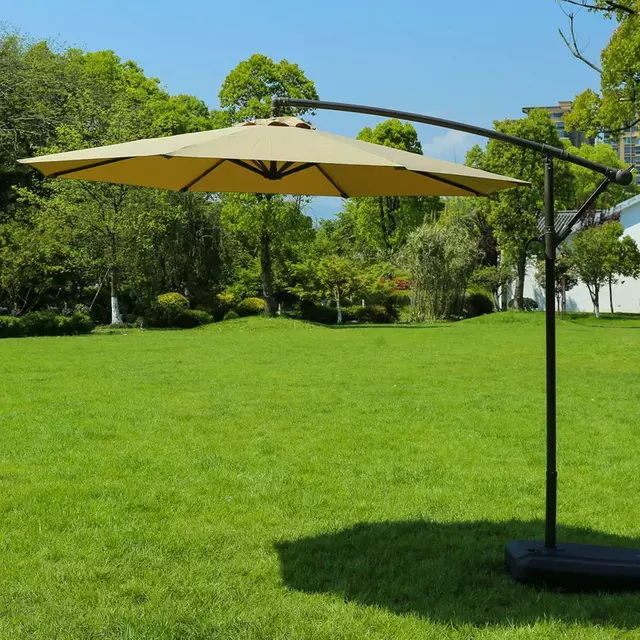
Content Menu
● Core principles of base weight
>> The ten-pounds-per-foot rule (starting point)
>> Canopy size and base weight correlation
● Installation method: freestanding vs table-supported
>> Freestanding Patio Umbrella
● Environmental and application factors
>> Wind exposure and geography
>> Usage patterns and mobility
● Base design and ballast options
>> Traditional rigid bases (cast iron, steel)
>> Modern polymer and composite bases
>> Fillable bases and ballast systems
● Practical guidance for OEMs and distributors
>> Building a base-weight matrix
>> Testing, validation, and documentation
● Implementation steps for exporters and retailers
>> Customer education and after-sales service
● Summary and practical takeaways
● Final thoughts for OEMs and distributors
● FAQs
>> 1. What is a typical base weight for a 6–7 ft Patio Umbrella?
>> 2. How heavy should a base be for an 11-foot Patio Umbrella?
>> 3. Can a table-assisted umbrella require a lighter base?
>> 4. Are there advantages to fillable ballast bases?
>> 5. What factors might require increasing base weight beyond the standard chart?
A well-chosen base weight is the cornerstone of Patio Umbrella stability, safety, and performance in varied outdoor environments. For brands, distributors, and OEM partners serving overseas markets, clear guidance on base weight helps in crafting accurate product specifications, marketing materials, and installation manuals. This article builds a comprehensive framework: it starts from fundamental principles, then delves into canopy size, installation method, wind exposure, and ballast design; finally it provides practical guidance for troubleshooting, testing, and customer education. The result is a practical, market-ready guide that supports confident selling and dependable user experiences across international contexts.
The stability of a Patio Umbrella arises from the interaction of canopy diameter, base weight, and environmental loads. A practical, widely used rule of thumb is to weight the base to resist tipping and lateral movement under expected wind conditions. For OEM programs, this translates into a base-weight matrix that can be readily adapted to different canopy sizes, table-integrated setups, and exposed locations. The following sections translate this rule into concrete recommendations, while allowing room for adjustment based on local testing and field feedback.
- A common starting point is roughly 10 pounds of ballast per foot of canopy diameter for freestanding configurations. This provides a straightforward baseline for cataloging base options and guiding customers in multiple markets.
- Table-assisted installations can reduce required base weight because the table contributes to stability, but ballast should still meet safety margins in wind and usage scenarios.
- In wind-prone environments, increase ballast beyond the baseline to account for gusts and lateral forces.
- 6–9 ft canopies: 20–50 pounds as a baseline, with consideration for table-assisted setups that may reduce the need for heavier ballast.
- 10–11 ft canopies: 50–75 pounds for freestanding use, higher in windy environments or high-exposure sites.
- 12 ft and larger: 90–110 pounds or more, depending on wind exposure and base design.
These ranges provide practical frames for OEM catalogs, distributor sales sheets, and installer guides, while allowing field testing to refine the exact figures for specific products. Robust guidance improves consistency across product lines and regions. Market sources and technical guides frequently reflect these tiered ranges to help buyers select compatible bases and ballast accessories.
- Freestanding bases bear full lateral and overturning loads; ballast must counteract wind uplift and side forces.
- In gusty or open environments, consider adding ballast beyond the basic calculations to maintain safety margins.
- Heavier, denser bases are common in premium OEM lines designed for hospitality settings and public spaces.
- The tabletop contributes partial stabilization, allowing lighter ballast in many cases.
- However, the table's structural integrity, mounting method, and nearby obstructions must be considered to prevent tipping or pivoting under wind loads.
- When in doubt, perform field tests in representative conditions and adjust the ballast accordingly.
- Coastal and open areas with frequent gusts require higher ballast. In such locations, even a 9–11 ft canopy may benefit from heavier bases or additional ballast bags.
- Urban canyons, shaded courtyards, and sheltered spaces may permit lighter ballast, but safety margins should still be defined by testing.
- If the Patio Umbrella is moved between locations or used seasonally in portable configurations, ballast design should emphasize ease of handling and quick re-ballasting without compromising stability.
- Weight distribution, handle design, and ballast-accessory compatibility influence user experience and repeat purchases.
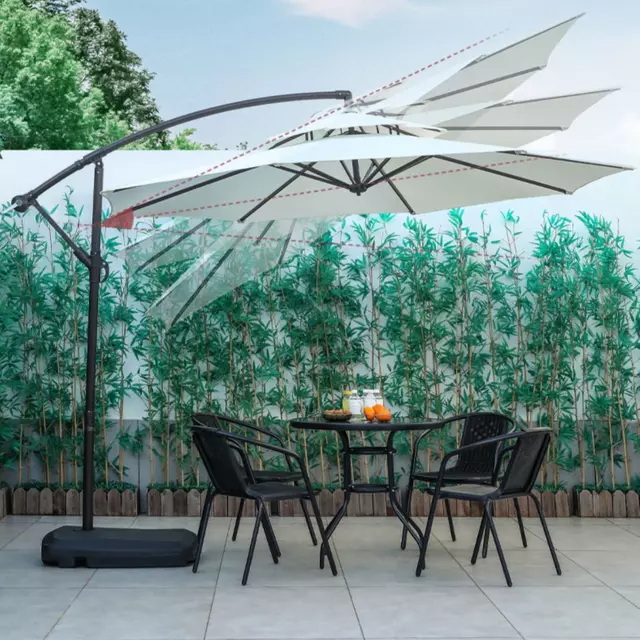
- Heavy, inertia-driven performance; long-term durability suited to premium applications.
- Corrosion resistance and finishing are essential for outdoor longevity.
- Integral design considerations (ease of lifting, compatible with various pole diameters, secure locking mechanisms) improve usability for international markets.
- Lighter yet strong, enabling easier shipping, handling, and modular configurations.
- Often rely on ballast bags or fillable chambers; ensure leak-proof design and UV resistance.
- Ballast options should include water, sand, or dry-fill alternatives with clear instructions for use.
- Fillable systems offer adjustable ballast to accommodate multiple canopy sizes within a single base family.
- Durable connectors and robust seals are critical to prevent leakage and maintain performance in varied climates.
- For OEM programs, standardized fillable bases simplify logistics and improve cross-market compatibility.
- Create a simple matrix mapping canopy diameter ranges to recommended base weights and wind-exposure categories (low, moderate, high).
- Include notes on table-assisted setups and recommended ballast accessories, enabling consistent cross-market sales and technical documentation.
- Conduct field tests under representative wind and usage scenarios to verify weight recommendations.
- Document test conditions, outcomes, and safety margins to support catalog claims, installation manuals, and after-sales support.
- Use standardized language and measurements in all international catalogs to avoid ambiguity and misinterpretation.
- Integrate a clear base-weight chart into product literature, catalogs, and online product pages.
- Provide multilingual versions of weight guidelines to support international markets.
- Include a simple calculator or matrix in digital catalogs to help customers select appropriate ballast quickly.
- Offer guidance on safe handling and lifting of heavy ballast components.
- Provide troubleshooting tips for common stability issues, including what to adjust when a base seems insufficient in a given setting.
- Develop an FAQ section that addresses typical consumer questions about base weight, installation, and ballast options.
- For Patio Umbrella installations, canopy size, installation method, and wind exposure are the primary drivers of base weight.
- A practical starting point is the 10 pounds per foot rule, with adjustments made based on local testing and field observations.
- Table-supported installations can use lighter ballast, but still require careful validation for safety and performance.
- Ballast system design—whether rigid bases, fillable options, or ballast bags—should prioritize ease of use, cross-market compatibility, and durable construction for outdoor conditions.
- Clear, market-ready documentation (charts, multilingual guides, and installation notes) improves distributor confidence and customer satisfaction across international markets.
A well-structured base-weight framework, supported by empirical testing and robust ballast accessories, equips umbrella brands to serve global customers with clarity and confidence. By combining practical guidelines with strong media assets and precise technical specifications, an OEM program can deliver reliable, safe, and market-competitive Patio Umbrella solutions worldwide.
Choosing the correct base weight for a Patio Umbrella is a multifaceted decision that blends canopy size, installation method, wind exposure, and ballast design. A clearly defined base-weight matrix, complemented by versatile ballast options and thorough installation guidelines, enables international buyers and distributors to select and install bases with confidence. This approach reduces returns, enhances safety, and strengthens brand trust across markets.
Answer: A typical base weight ranges from about 20 to 50 pounds, depending on design and wind exposure. For table-assisted setups, a lighter ballast may suffice, while freestanding configurations may require more ballast to ensure stability. Typical ranges are listed in general guidelines and can be refined for specific products.
Answer: For freestanding 11-foot canopies, base weights commonly range from 80 to 110 pounds, with higher values in windy or exposed locations. If using ballast bags or fillable bases, total ballast can exceed the rigid base to achieve the same stability.
Answer: Yes. The table can contribute to stabilization, allowing lighter ballast when combined with appropriate installation practices and local wind testing. Always verify stability under representative conditions.
Answer: Fillable ballast bases offer adjustable ballast, enabling a single base model to support multiple canopy sizes and wind conditions, simplifying OEM offerings and reducing inventory complexity.
Answer: Local wind patterns and gusts, poolside exposure, surrounding structures that funnel wind, and the use of larger canopy diameters all warrant higher ballast or additional ballast accessories.
[1](https://westshade.com/blogs/how-heavy-should-an-umbrella-base-be/)
[2](https://mybaser.com/guide-how-heavy-umbrella-base-be-weight-cantilever)
[3](https://www.aoodorshop.com/blogs/news/how-heavy-should-a-patio-umbrella-base-be-weight-and-safety-tips)
[4](https://bossshade.com.au/umbrella-base-for-patio/)
[5](https://www.aosom.com/blog-the-complete-guide-to-measuring-patio-umbrellas.html)
[6](https://purpleleafshop.com/blogs/news/patio-umbrella-size-guide)
[7](https://www.patioheatandshade.com/how-heavy-should-an-umbrella-base-be.htm)
[8](https://authenteak.com/blog/anchoring-a-patio-umbrella-your-complete-guide/-/1406660/)


