
Language
Please Choose Your Language
Views: 222 Author: Amanda Publish Time: 2025-12-12 Origin: Site


Content Menu
● Why It Is Called a Golf Umbrella
● Umbrella Origins and Language Roots
● How Golf Shaped the Golf Umbrella
● Key Features of a Modern Golf Umbrella
● Golf Umbrella vs. Regular Umbrella
● Evolution of the Golf Umbrella
● Why Non‑Golfers Prefer the Golf Umbrella
● The Golf Umbrella as a Branding Tool
● Choosing a Golf Umbrella for OEM Projects
● Everyday Benefits of the Golf Umbrella
● FAQs
>> 1. What exactly makes a golf umbrella different?
>> 2. Do you have to play golf to use a golf umbrella?
>> 3. What size golf umbrella is best?
>> 4. Are golf umbrellas windproof?
>> 5. Is a golf umbrella worth the investment for branding?
A Golf Umbrella is an oversized, high‑performance umbrella designed to protect golfers and their gear from rain, wind, and sun across a full round on open terrain. It typically features a canopy ranging from about 54 to 70 inches in diameter, which is significantly larger than a standard personal umbrella that averages around 35 to 40 inches.[3][4]
To support this large size, a golf umbrella usually includes a reinforced frame, a longer shaft, and a comfortable grip that make it easier to carry over long distances. Many golf umbrella designs also incorporate vented or double canopies to handle sudden gusts of wind without flipping inside out, which is crucial on exposed golf courses.[5][3]
The term “golf umbrella” arose because the design was created specifically for golfers who spend hours outdoors on courses with little natural shelter. On these courses, sudden rain or strong wind can interrupt play, so golfers needed a larger and sturdier umbrella that could cover both the player and the golf bag while remaining stable in gusty conditions.[2][4][1][3]
Manufacturers began promoting these larger models directly to golfers, using the sport in the product name to signal their purpose and performance. As the design became popular and recognizable, the phrase “golf umbrella” evolved into a generic term for this type of oversized, robust umbrella, even when used far away from any golf course.[6][1][2][3]
The word “umbrella” comes from Latin roots related to “umbra,” meaning shade or shadow, reflecting the early use of umbrellas as parasols for sun protection rather than rain. Ancient cultures such as Egypt, Greece, China, and Assyria used early umbrellas and parasols as symbols of status and as practical tools to block the sun for nobles and high‑ranking individuals.[7][8][9][10]
Centuries later, umbrellas transformed from luxury accessories into practical everyday items, particularly in Europe, as materials improved and designs adapted to rainy climates. As umbrella manufacturing advanced, specialized types emerged for different uses, including the golf umbrella, which was tailored to the specific demands of the sport.[9][11][1]
Golf is played on large, open courses where players walk long distances in varying weather, often with minimal built‑in shelter. This environment naturally created the need for a golf umbrella large enough to protect a golfer, a caddie, and a full golf bag while remaining stable during wind and showers.[4][12][3][9]
Because golfers frequently face extended exposure to ultraviolet radiation, light rain, heavy showers, and sudden gusts, the golf umbrella had to be more than just big. It needed a strong, yet flexible frame and reliable materials that could cope with repeated use across many rounds, which is why golf umbrella designs emphasize durability and weather resistance as much as size.[3][4][5]
Modern golf umbrellas differ from ordinary umbrellas in several important ways that explain why they justify a dedicated name. These design elements focus on performance in open, windy spaces, but they also make a golf umbrella attractive for everyday users who want extra protection.[4][6][3]
Common features of a golf umbrella include:
- Oversized canopy that typically ranges from about 54 to 70 inches to keep both the golfer and golf bag dry.[6][4]
- Reinforced frame and ribs made from materials such as fiberglass, which provide flexibility and reduce breakage in strong wind.[5][4]
- Vented or double‑canopy structure that allows air to pass through while the golf umbrella stays in shape and resists inversion.[3][5]
- Ergonomic handle and long shaft designed for comfort during several hours of carrying and opening throughout a round.[13][3]
- High‑performance canopy fabric with water‑repellent coatings and, in many models, UV or reflective coatings for improved sun protection.[4][5]
These features combine to create a golf umbrella that performs reliably in conditions where a small, compact umbrella might fail or provide insufficient coverage. As a result, the name “golf umbrella” is now associated not just with golf but with superior all‑weather protection in general outdoor use.[14][6][3][4]
Comparing a golf umbrella with a standard umbrella helps clarify why the golf version is recognized as a separate category. While both serve the same basic purpose—keeping people dry—their design priorities are very different.[6][3][4]
A regular umbrella is usually built for quick, personal use in urban environments, where compact size and light weight matter more than maximum coverage. It often has a smaller canopy, a lighter frame, and a shorter shaft, which makes it convenient to carry in a bag or backpack but less capable of protecting multiple people or large items.[15][4]
In contrast, a golf umbrella sacrifices compactness in favor of spacious coverage and structural strength. The large arc, reinforced ribs, and wind‑resistant construction allow a golf umbrella to withstand tougher weather and provide more complete protection, creating a clear functional difference that justifies its own name and category.[3][4][6]
The golf umbrella has evolved alongside improvements in umbrella technology more generally. Early umbrellas used heavy metal or wooden frames and natural fabrics, making them less comfortable to carry for long periods on a golf course.[10][12][1]
With innovation, the golf umbrella transitioned to lighter metals and then to fiberglass, which offers a combination of strength, flexibility, and corrosion resistance that suits wet, windy conditions. At the same time, canopy fabrics moved from traditional cottons or silks to advanced synthetic materials, which repel water more effectively, dry faster, and can be treated to block ultraviolet radiation.[1][5][4]
Today, the golf umbrella may also include automatic opening systems, high‑visibility colors, reflective piping, and ergonomic handles, all designed to make it easier and safer to use in different environments. These developments reinforce the status of the golf umbrella as a piece of specialized equipment designed around the needs of golfers but useful for anyone seeking strong weather protection.[12][14][1]
Even though the name points directly to the sport, many non‑golfers deliberately choose a golf umbrella because of its practical advantages. The extra‑large canopy makes it ideal for families walking together, spectators at outdoor events, coaches on the sidelines, and workers who spend long hours outside in variable weather.[14][4][6][3]
For commuters, a golf umbrella can mean arriving at work drier and more comfortable, especially during storms when smaller umbrellas may leak or invert. Because the golf umbrella is designed not to fail under pressure, it delivers peace of mind as well as physical protection, which helps explain why the term now suggests quality and durability beyond its original golfing context.[4][6][3]
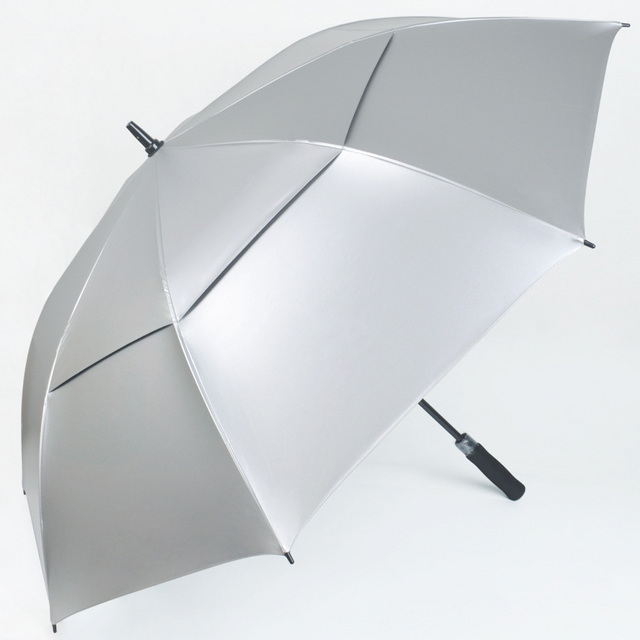
For brands, wholesalers, and OEM partners, the golf umbrella offers a powerful combination of functional value and visual impact. Its broad panels provide large, highly visible spaces for logos, slogans, and brand colors, turning the golf umbrella into a moving billboard each time it is used outdoors.[12][14][6]
Because a well‑built golf umbrella tends to be kept for many years, it can deliver repeated exposure in multiple settings, from golf courses to city streets and sports events. When companies choose high‑quality materials and professional printing, the golf umbrella becomes a premium promotional gift that associates the brand with reliability, protection, and outdoor performance.[12][14][6]
When designing or sourcing a golf umbrella for OEM clients such as retailers, wholesalers, or promotional brands, several technical and design choices matter. The goal is to match the characteristics of the golf umbrella to the expectations of the end user, whether that user is a serious golfer or a city commuter.[14][12]
Important decision points include:
- Canopy size and panel count: Larger golf umbrellas (for example, 60–68 inches) offer more coverage and branding space, while slightly smaller sizes may be easier to carry in crowded areas.[6][4]
- Frame material and rib structure: Fiberglass or composite frames provide a good balance of strength and flexibility, while metal components can be chosen for specific cost or stiffness targets.[5][4]
- Opening mechanism: Manual or automatic open mechanisms should be selected according to safety standards, user preferences, and price positioning for the golf umbrella.[1][12]
- Canopy fabric and coatings: High‑density polyester or similar materials with water‑repellent and UV‑blocking treatments add to the durability and perceived quality of the golf umbrella.[5][4]
- Handle design and finish: Straight, curved, or rubberized handles change the comfort level and style, allowing the golf umbrella to match different brand images and target audiences.[13][3]
By carefully balancing these factors, OEM manufacturers can create a golf umbrella that meets technical requirements, supports brand identity, and satisfies demanding end users in many markets.[12][14]
Beyond the golf industry, the golf umbrella offers everyday benefits that justify its slightly larger size and weight. In heavy rain or strong wind, the extra stability and coverage can prevent clothing from getting soaked, protect sensitive items like laptops or documents, and even shield small children or pets walking alongside the user.[14][3][4][6]
For outdoor businesses and event organizers, providing golf umbrellas for staff or guests can improve comfort and create a more professional impression during bad weather. Because the golf umbrella is easily recognized and associated with quality, simply offering one can enhance the perceived level of care and service in hotels, resorts, and venues.[6][12][14]
It is called a golf umbrella because the design originated to meet the specific needs of golfers, who required extra‑large, wind‑resistant protection for both themselves and their equipment on wide, exposed courses. Over time, the name “golf umbrella” has come to represent a complete set of performance characteristics, including a large canopy, strong frame, and advanced fabrics that deliver reliable protection in demanding weather.[2][1][3][4]
Today, the golf umbrella stands at the intersection of sport, everyday life, and brand promotion, offering value to golfers and non‑golfers alike. Whether carried during a rainy round, used on a busy city street, or printed with a corporate logo, a well‑made golf umbrella remains true to its origin: an umbrella designed for golf that now defines a whole category of superior weather protection.[3][12][14][6]
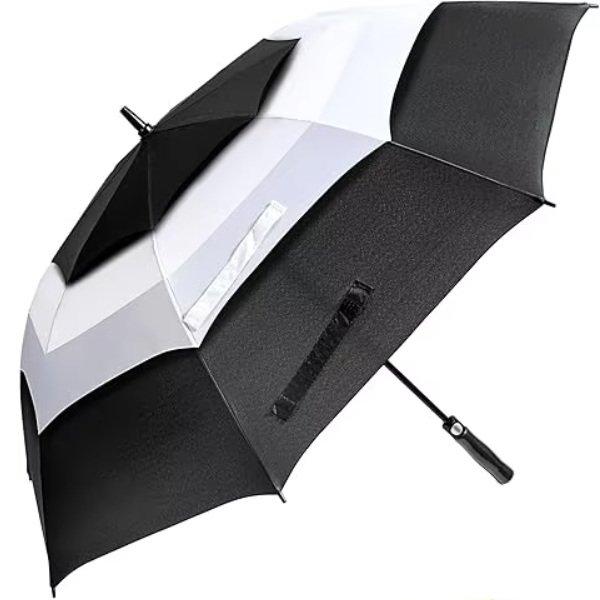
A golf umbrella is distinguished by its larger canopy, stronger frame, and wind‑resistant design, which are all engineered for the open environment of a golf course. These features help a golf umbrella protect both the golfer and the golf bag, whereas a regular umbrella is usually intended to cover only one person in milder conditions.[4][3][6]
You do not need to play golf to benefit from a golf umbrella, because its generous coverage and durable construction are valuable in any outdoor situation. Many commuters, families, and event spectators choose a golf umbrella specifically because it offers more reliable protection and better wind resistance than compact models.[14][3][4][6]
For most users, a golf umbrella with a canopy of around 60 to 68 inches offers an effective balance between coverage and portability. Smaller golf umbrella sizes may work better in very crowded urban settings, while the largest sizes are ideal for wide fairways, sidelines, and open venues where space is not restricted.[3][4][6]
No golf umbrella can be completely windproof, but many are designed to be highly wind‑resistant through reinforced frames and vented or double‑canopy constructions. These design elements allow air to pass through the golf umbrella rather than pushing against it, which significantly lowers the risk of inversion during strong gusts.[5][4][3]
A golf umbrella is often an excellent branding investment because it combines a large, visible print area with real, long‑term usefulness for the recipient. High‑quality golf umbrellas tend to be kept and reused for many seasons, which means each opening becomes a moment of exposure for the logo or message printed on the canopy.[12][6][14]
[1](https://www.umbrellasonly.com.au/blog/evolution-of-golf-umbrellas-fashion-accessory-to-essential-equipment.htm)
[2](https://www.bothwinraingear.com/blog/why-is-it-called-a-golf-umbrella_b43)
[3](https://www.shipsticks.com/blog/best-golf-umbrellas/)
[4](https://vovexgolf.com/blogs/golf/how-big-is-a-golf-umbrella)
[5](https://www.gonexsport.com/blogs/gift-guides/how-to-choose-the-best-golf-umbrella)
[6](https://topumbrella.com/info/141)
[7](https://en.wikipedia.org/wiki/Umbrella)
[8](https://www.umbrellaworkshop.com/umbrellas/history-of-the-umbrella/)
[9](https://www.thecottonlondon.com/pages/history-and-types-of-umbrella)
[10](https://promotionalumbrellas.co.uk/blogs/news/the-fascinating-journey-of-the-umbrella-a-historical-glimpse)
[11](https://historycooperative.org/when-was-the-umbrella-invented/)
[12](https://www.blueprintumbrella.com/a-golf-umbrella-manufacturers-unveiling-the-industry-leaders.html)
[13](https://www.correctionenterprises.com/product/golf-umbrella/)
[14](https://parapluiedecherbourg.com/en/how-and-why-should-you-choose-a-better-golf-umbrella/)
[15](https://www.pens.com/uk/blog/umbrella-history-invention/)


