
Language
Please Choose Your Language
Views: 222 Author: Amanda Publish Time: 2025-12-13 Origin: Site


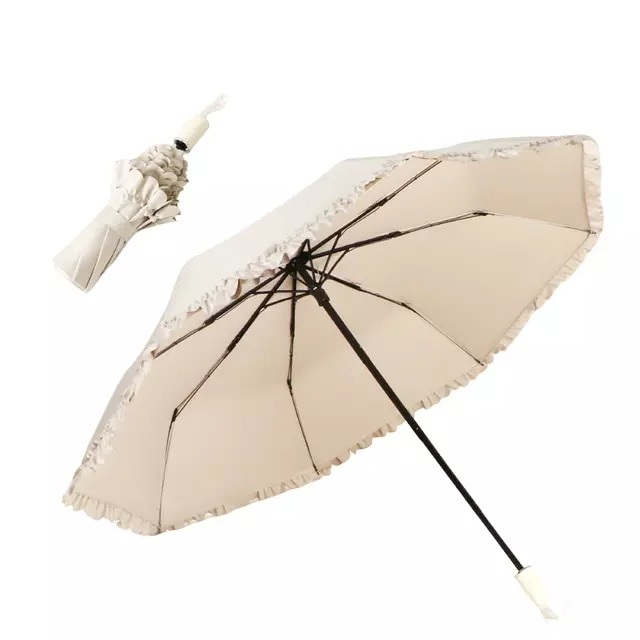
Content Menu
● Ancient Parasols Before Rain Umbrellas
● Early Chinese Innovation and Collapsible Designs
● From Ritual Object to Everyday Tool
● European Experiments with Folding Mechanisms
● The Birth of the Compact Folding Umbrella
● How Modern Folding Umbrellas Work
● Material Choices in Folding Umbrella Manufacturing
● Why Folding Umbrellas Dominate Today's Markets
● OEM Opportunities in Folding Umbrella Development
● Did the Earliest Umbrellas Really Fold?
● FAQ
>> 1. Did ancient umbrellas really fold like modern Folding Umbrellas?
>> 2. When did the first compact Folding Umbrella appear?
>> 3. Why is the Folding Umbrella more popular than stick umbrellas in many markets?
>> 4. What are the key components of a high‑quality Folding Umbrella?
>> 5. How can brands customize Folding Umbrellas through an OEM partner?
From royal parasols in ancient empires to today's pocket‑size Folding Umbrella, the umbrella's story is one of continuous technical refinement and changing social meanings. The question “Did the earliest umbrellas fold?” opens a window onto how people solved practical problems of sun and rain protection long before industrial manufacturing. For modern OEM manufacturers and brand owners, understanding this journey helps position each new folding umbrella collection within a deep, fascinating tradition.
In contemporary usage, a Folding Umbrella typically means a compact umbrella with a telescopic shaft and collapsible frame that shrinks to a short length for easy storage in handbags, backpacks, or even coat pockets. This type of Folding Umbrella is often associated with daily commuting, travel, and urban use, where portability is crucial. Mechanically, a Folding Umbrella relies on multiple sliding segments in the shaft and articulated ribs that fold neatly against the shaft when closed.
From a broader engineering perspective, any umbrella that opens and closes with a movable canopy could be described as “folding.” Yet there is a clear difference between a large ceremonial parasol that only collapses slightly and a modern three‑fold or four‑fold compact Folding Umbrella. The former may reduce volume a little, while the latter is engineered specifically to minimize length and bulk. For wholesalers, importers, and private‑label brands, clarifying this difference ensures that buyer expectations align with the type of Folding Umbrella they intend to source.
Long before people carried a Folding Umbrella in their bag, elites in ancient civilizations used parasols primarily for shade. In Mesopotamia, Egypt, Assyria, and later in Greece and Rome, depictions show rulers or high‑status individuals beneath canopies mounted on long poles. These early parasols signaled power and prestige more than functional weather protection. Their canopies might be made from palm leaves, feathers, woven materials, or cloth stretched over wooden frames.
Because these parasols were heavy and often carried by attendants, there was little incentive to design them as compact Folding Umbrellas. The focus was on symbolism rather than portability. In some cases, a parasol could be partially collapsed to store or transport it, but the mechanism was simple and not comparable to the refined folding geometry seen in today's travel umbrellas. The distance between these early shade devices and the fully engineered Folding Umbrella is therefore wide in both purpose and structure.
China occupies a special place in umbrella history because it contributed several crucial innovations: waterproofing, lighter materials, and early collapsible structures. Traditional oil‑paper umbrellas combined bamboo frames with paper or silk canopies coated in oils or lacquer to resist rain. This shift from pure shade to true rain protection marked a key functional transition and can be seen as a distant ancestor of the modern Folding Umbrella.
Some traditional Chinese umbrellas incorporated mechanisms that allowed the ribs and canopy to fold tightly around the shaft. While these were not compact telescopic products, they moved the design closer to what would later become a practical Folding Umbrella. The use of bamboo ribs also reduced weight compared with solid wooden constructions in other regions. Over centuries, this combination of waterproofing, collapsibility, and lighter frames spread along trade routes and influenced other umbrella cultures.
As umbrellas and parasols moved between cultures, their meaning gradually shifted from pure status symbol toward everyday utility. In medieval and early modern Europe, umbrellas were initially associated with women or with exotic styles imported from Asia and the Middle East. Over time, as urban life intensified and paved streets increased splashing rain, the need for reliable rain protection grew, and the umbrella slowly became an accepted unisex accessory.
This social shift set the stage for more practical mechanical innovation. Once people began to carry umbrellas personally, instead of assigning them to servants, the desire for lighter, more compact solutions increased. Makers started to experiment with frames that could fold further, handles that were easier to grip, and canopies that dried more quickly. These developments created a pathway from the rigid parasol to the more mobile, user‑friendly Folding Umbrella.
By the 17th and 18th centuries, European craftsmen were actively refining umbrella mechanisms. Artisans in France and other countries created umbrellas that could be folded and stored more conveniently, even if they were still relatively long when collapsed. Some early French designs, often associated with Paris workshops, were celebrated for being lighter and more portable than older models, anticipating the concept of a Folding Umbrella in spirit if not in final form.
These early folding designs typically featured:
- A non‑telescopic shaft that remained one piece, even when the canopy was folded.
- Ribs that pivoted inward toward the shaft, reducing the canopy diameter.
- Cases or sleeves that allowed users to carry the folded umbrella more neatly.
In practice, such umbrellas could be called “folding” because the canopy collapsed, but they did not yet achieve the ultrashort folded length expected of a modern Folding Umbrella. Nevertheless, these products were critical intermediate steps in the wider evolution.
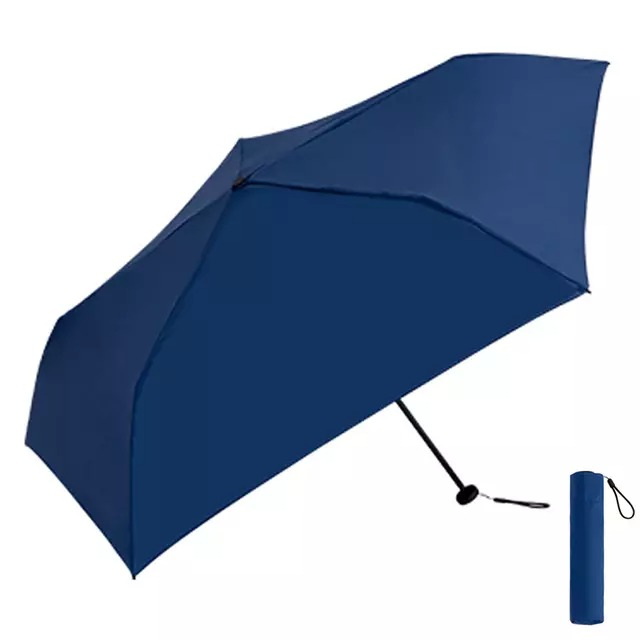
The truly compact Folding Umbrella emerged gradually during the 19th and 20th centuries as metalworking, textiles, and mass production all advanced. Manufacturers began using steel ribs and springs to make frames that were both stronger and more flexible. These changes made it possible to design umbrellas with multiple folding segments that could endure frequent opening and closing without permanent deformation.
Key breakthroughs included:
- Telescopic shafts with two, three, or more sliding segments.
- Jointed ribs that fold in stages, stacking neatly along the shaft.
- Stronger, thinner fabrics that could be cut and stitched to maintain tension despite complex folding.
By the early to mid‑20th century, pocket‑size Folding Umbrella models appeared under various brand names. Some became iconic for their ability to fold to handbag size while still offering generous canopy coverage. Later patents further optimized the folding geometry, spring placement, and locking systems, leading to the familiar three‑fold and five‑fold compact Folding Umbrella formats widely sold today.
Modern Folding Umbrella engineering combines mechanical precision with material science. At the center is a telescopic shaft, usually made of steel or aluminum in multiple nested sections. When the user presses a release button or slides the runner, springs and guides coordinate to extend the shaft while simultaneously unfolding the ribs into the open canopy. The entire structure is designed so that forces distribute smoothly across joints, ensuring stability in wind and rain.
The ribs and stretchers form a network of articulated arms that must balance flexibility and rigidity. In many premium Folding Umbrella models, ribs use combinations of steel, fiberglass, or other composites to withstand bending and snapping. The canopy fabric—often polyester or specialized microfibers—is cut into multiple panels that are stitched onto the ribs to create a domed shape. Small but critical details, such as reinforced tips, durable thread, and protective caps, help the Folding Umbrella survive repeated use.
For OEM manufacturers, material selection is one of the most important decisions in a Folding Umbrella project. Shaft and ribs can be made from carbon steel for strength, aluminum for reduced weight, fiberglass for flexibility, or hybrid constructions that combine these advantages. Each choice affects cost, perceived quality, and performance in strong winds, all of which influence how a Folding Umbrella is positioned in the market.
Canopy fabrics also shape the character of a Folding Umbrella. Standard polyester balances cost and durability, while higher‑grade fabrics add features such as quick‑drying, UV protection, or a finer hand‑feel for fashion umbrellas. Water‑repellent coatings improve beading and drying, making it more pleasant to stow a wet Folding Umbrella in a bag. Handles, ferrules, and end caps provide branding fields and tactile experience, whether a client prefers soft‑touch, wood‑grain, or high‑gloss finishes.
Although classic stick umbrellas still have prestige appeal, Folding Umbrellas dominate many modern markets because they fit contemporary lifestyles. Urban commuters value the ability to tuck a Folding Umbrella into a laptop bag or a coat pocket. Travelers rely on ultra‑light Folding Umbrellas that disappear into luggage until needed. Even event organizers choose Folding Umbrellas as practical, high‑perceived‑value gifts that are easy to distribute and carry home.
From a business perspective, Folding Umbrellas:
- Offer broad customization options for logos, colors, and patterns.
- Work in both budget and premium segments through changes in frame and fabric specification.
- Provide year‑round sales potential, especially in regions with frequent showers or strong sun.
These factors make the Folding Umbrella a strategic staple in many product portfolios, from fashion brands to corporate gift distributors.
For an OEM umbrella manufacturer serving overseas brand owners, wholesalers, and importers, specializing in Folding Umbrella solutions presents significant opportunity. Compact umbrellas align with e‑commerce logistics because they ship efficiently and occupy less warehouse space. Retail partners appreciate the ability to present a wide variety of colors and designs within a small shelf area, which suits the Folding Umbrella format perfectly.
OEM services can include:
- Custom frame structures, such as windproof Folding Umbrellas with vented canopies.
- Tailored folded lengths (for example, 2‑fold business umbrellas versus 3‑fold ultra‑compact designs).
- Branding on canopy panels, woven labels, handle medallions, and printed sleeves.
- Packaging concepts, from simple polybags to premium gift boxes, to match target price points.
By offering differentiated specifications and flexible minimum order quantities, an OEM producer can help clients build entire Folding Umbrella collections tuned to various regions and channels.
Returning to the central question, the earliest umbrellas and parasols did sometimes include mechanisms that allowed them to open and close or to collapse partially around a shaft. These features can technically be described as “folding,” but they did not create the small, light, personal accessory associated with today's Folding Umbrella. Instead, they were often heavy, ceremonial objects that required attendants and were not optimized for everyday portability.
Over centuries, improvements in materials, mechanics, and manufacturing steadily transformed these early collapsible parasols into the practical Folding Umbrella used around the world. While ancient designs laid the conceptual foundation, the fully modern, pocket‑size Folding Umbrella is largely a product of industrial‑age innovation. In that sense, the earliest umbrellas foreshadowed folding, but they did not fold in the compact, user‑friendly way that defines today's Folding Umbrella.
The story of the umbrella begins with grand parasols that symbolized power and privilege and ends with the humble yet highly engineered Folding Umbrella that fits in a pocket. Early umbrellas did exhibit simple folding or collapsing features, especially in Chinese and European traditions, but these designs were far from the compact, lightweight Folding Umbrella familiar today. Only with advances in metallurgy, textiles, and mass production did it become possible to create telescopic, multi‑fold frames that balanced strength, convenience, and cost.
For modern OEM manufacturers and international brand partners, the Folding Umbrella represents the culmination of this long evolution. It brings together centuries of design experimentation in a product that consumers use daily, often without considering its rich history. By understanding how the earliest umbrellas evolved into today's sophisticated Folding Umbrella formats, brands can tell more compelling product stories and develop collections that honor tradition while embracing innovation.

Ancient umbrellas and parasols sometimes used mechanisms that allowed the canopy to open, close, or partially collapse, so in a basic sense they did fold. However, they lacked the telescopic shafts and multi‑joint frames of today's Folding Umbrella, and they did not shrink to a compact, pocket‑friendly length. Most early umbrellas were heavy, ceremonial objects rather than lightweight personal accessories.
The first truly compact Folding Umbrellas emerged between the late 19th and mid‑20th centuries, as metal frames, telescopic shafts, and durable fabrics became widely available. Earlier umbrellas could fold their canopies, but they remained long and bulky. Only when manufacturers combined multi‑section shafts with articulated ribs did the familiar handbag‑size Folding Umbrella become a commercial reality.
The Folding Umbrella is often more popular because it offers excellent portability without sacrificing basic protection from rain and sun. Commuters and travelers prefer a Folding Umbrella that fits easily into bags and car compartments, reducing the chance of leaving it behind. Retailers also favor Folding Umbrellas because they display well in small spaces and support a wide variety of colors, prints, and branding ideas.
A high‑quality Folding Umbrella typically features a strong, precisely engineered telescopic shaft, flexible yet resilient ribs and stretchers, and a well‑tensioned canopy fabric. Additional indicators of quality include smooth opening and closing action, reliable locking mechanisms, reinforced stress points, and durable stitching. Premium Folding Umbrella models may also use wind‑resistant frames, vented canopies, and ergonomic handles for better comfort and performance.
Brands can customize Folding Umbrellas by specifying frame type, folded length, opening mechanism (manual, auto‑open, or auto‑open‑close), canopy fabric, and special finishes. They can also choose custom colors, all‑over prints, logo placements on panels or sleeves, and unique handle designs. Working with an experienced OEM manufacturer allows brands to create exclusive Folding Umbrella collections that match their visual identity, pricing strategy, and target consumer segment.


