
Language
Please Choose Your Language
Views: 222 Author: Amanda Publish Time: 2025-12-14 Origin: Site


Content Menu
● What Makes a Beach Umbrella Different?
● Can a Patio Umbrella Work as a Beach Umbrella?
● Stability and Wind Safety on the Beach
● Materials, Corrosion, and UV Protection
● Maintenance and Care After Beach Use
● When a Beach Umbrella Is the Better Choice
● OEM and Branding Opportunities
● Practical Buying Tips for Consumers
● FAQ
>> 1. Is it safe to use a patio umbrella at the beach?
>> 2. Why is a Beach Umbrella more stable in sand?
>> 3. Can I add a sand anchor to my patio umbrella?
>> 4. Which materials are best for a Beach Umbrella frame?
>> 5. Should I buy one umbrella for both patio and beach use?
When people plan a seaside holiday, shade is one of the first essentials they think about, and many wonder whether their existing patio umbrella can double as a Beach Umbrella. In practice, the two products are designed for very different environments, even though they look similar at first glance. Understanding these differences will help you choose the right solution for your family, your business, or your OEM product line.
A Beach Umbrella is engineered from the ground up for use on sand, where the surface is soft, the wind is changeable, and salt and UV exposure are intense. The pole, frame, and canopy must all work together to provide secure, portable shade that can be set up and taken down quickly.
Most Beach Umbrella designs feature a pointed or screw‑style lower pole that penetrates sand easily and holds firmly when the user rocks it down and compacts the area around it. The canopies are often vented so that wind can pass through instead of lifting the umbrella like a sail, and the weight of the structure is kept low so that one person can carry it along the beach without difficulty.
In contrast, a patio umbrella is created for use on stable, hard surfaces such as decks, concrete patios, garden terraces, or restaurant spaces. It normally relies on a heavy base, a table hole, or even a built‑in mount to keep the pole standing upright. The frame materials may be heavier, and the canopy may be larger, because transport is not a major concern. This makes a patio umbrella excellent for fixed outdoor seating, but less suitable for hauling over dunes or pushing deeply into sand.
Although a patio umbrella is not designed as a Beach Umbrella, it can be used at the beach in specific conditions and with the right accessories. The key is to accept that you are using it outside of its original design and to compensate for that with careful setup. If the weather is calm, the sand is relatively firm, and your walking distance is short, a well‑anchored patio umbrella can provide acceptable shade.
However, there are important limitations. Without a pointed or screw‑type pole, a patio umbrella has trouble biting into the sand, so it is more likely to wobble or tilt under load. Without vents in the canopy, it can catch wind more easily and become unstable, especially near the shoreline where gusts are common. For this reason, frequent beach visitors usually find that investing in a real Beach Umbrella is more comfortable, safer, and more convenient in the long term.
Whether you use a Beach Umbrella or a patio umbrella, safety in the wind is the most critical factor. Accidents happen when an umbrella is not anchored deeply enough, when the sand is too loose, or when a sudden gust hits a fully opened canopy. A flying pole can cause serious injuries, so it is never worth taking chances.
To make a patio umbrella behave more like a Beach Umbrella, start by choosing your location carefully. Avoid very soft, dry sand close to the water that has not been compacted by foot traffic. Instead, look for slightly firmer sand above the high tide line. Insert the lower pole with a rocking motion, rather than forcing it straight down, and then press the surrounding sand firmly with your feet to create a stable column. If the umbrella comes with a vented canopy or can be upgraded with one, that will help relieve pressure during gusts.
However, even with good technique, there are limits to what any umbrella can handle. If the wind picks up enough that you feel strong resistance while holding the pole or the canopy starts to flap violently, the safest choice is to close the umbrella. This rule applies both to patio umbrellas and to Beach Umbrella models specifically advertised as wind‑resistant.
The main reason a Beach Umbrella performs better in sand is the anchoring system. Many Beach Umbrella products include:
- A built‑in sand screw at the bottom of the pole
- An external plastic or metal sand anchor that grips the lower pole
- Holes or clips for attaching sandbags or additional weights
These features are optimized for loose, granular surfaces and work together with the user's setup technique to keep the Beach Umbrella upright.
A typical patio umbrella depends instead on a heavy, flat base made of concrete, stone, steel, or water‑filled plastic. This base is excellent on flat ground but awkward to carry to the shoreline and impractical to bury into sand. If you want to take a patio umbrella to the beach, a better solution is to match its pole diameter with an aftermarket Beach Umbrella sand anchor or a portable sand‑fillable base.
With a compatible anchor, you can clamp or insert the patio umbrella pole securely and then twist the anchor deep into the sand. While this still does not transform the product into a true Beach Umbrella, it raises stability and safety significantly when combined with good positioning and wind awareness.
Portability is another area where the Beach Umbrella has an advantage. Most Beach Umbrella products fold down into compact, lightweight packages with carry bags and shoulder straps. This is crucial when you may need to walk several hundred meters from the parking lot to your chosen spot on the beach, often while carrying towels, coolers, and toys.
By comparison, a patio umbrella usually feels bulky and heavy, with a thicker center pole and a heavier frame. If it is part of a set with a base, that base is rarely practical to move across sand. For a single quick afternoon at a local shore, some users accept this inconvenience, but anyone who goes to the beach regularly discovers that a dedicated Beach Umbrella is much easier to live with.
For commercial clients—such as hotels, beach bars, and rental operators—the difference is even more important. Staff must set up and take down dozens of umbrellas every day. In these situations, a Beach Umbrella with a manageable weight, clear anchoring system, and stackable design is vastly more efficient than repurposing patio umbrellas.
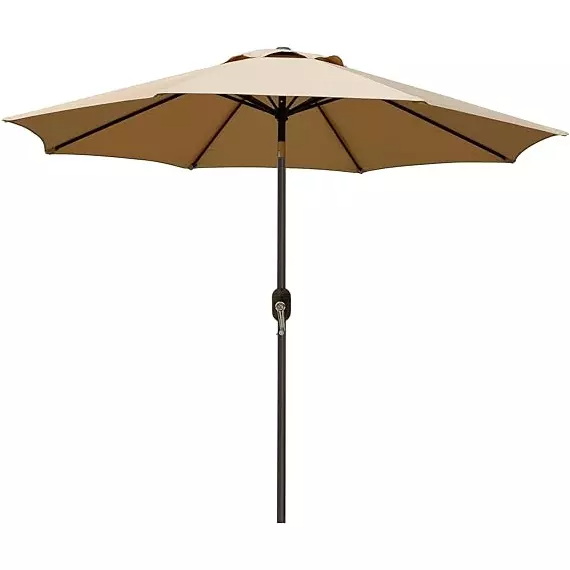
The marine environment is harsh, and both patio umbrellas and Beach Umbrella products must deal with intense UV radiation, temperature swings, and salt spray. However, Beach Umbrella specifications often prioritize corrosion resistance and UV performance more than typical backyard models.
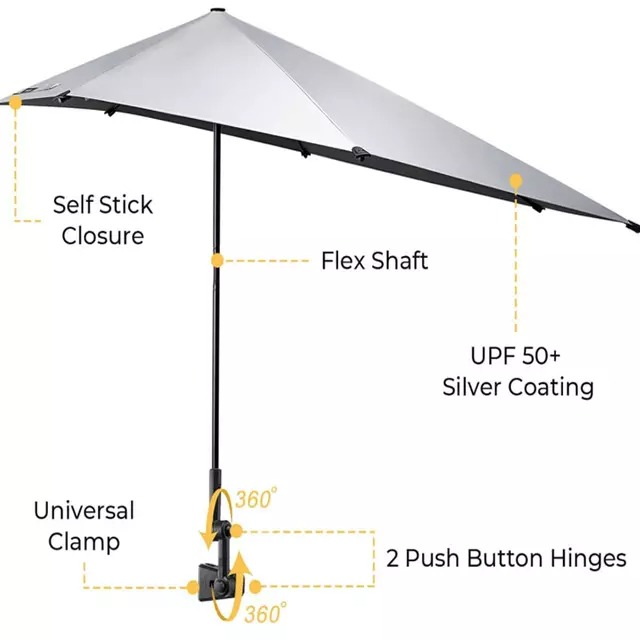
High‑quality Beach Umbrella frames frequently use aluminum or fiberglass for the ribs and pole, which resist rust and offer a balance of strength and flexibility. A little flex is beneficial because it lets the structure bend with the wind instead of snapping suddenly under pressure. The fabrics used in Beach Umbrella canopies are often selected for high UPF ratings, giving users better protection from harmful rays.
Patio umbrellas, on the other hand, may make broader use of powder‑coated steel, hardwood, or heavier composites because they are expected to stay in one place for long periods. These materials can perform well outdoors but may suffer faster corrosion if exposed repeatedly to salty air and sand abrasion without proper maintenance. This is another reason why a dedicated Beach Umbrella generally offers longer service life in coastal conditions.
If you do decide to use a patio umbrella at the beach, regular maintenance is essential. Sand, salt, and moisture can accelerate wear and lead to corrosion or fabric damage much faster than in a garden setting. Good care habits can extend the life of both patio umbrellas and Beach Umbrella models.
After each beach trip, brush or shake off loose sand from the canopy and frame before putting the umbrella into your vehicle. At home, open the umbrella fully in a shaded, well‑ventilated area and rinse the frame and pole lightly with fresh water to remove salt residue. Allow the fabric to dry completely before closing and storing it to prevent mildew. Periodically check screws, joints, and tilt mechanisms, especially if the umbrella was stressed by wind.
Beach Umbrella products benefit from the same care, but because they are designed with coastal use in mind, many include protective coatings and fabrics that tolerate this routine better. Still, proper cleaning and drying remain important if you want your Beach Umbrella or patio umbrella to retain its color, strength, and function over multiple seasons.
For most users, a Beach Umbrella is the smarter investment if the primary goal is regular shade on sand. The reasons are clear:
- Easier transport with lighter frames and carry bags
- Faster, more intuitive setup using pointed poles or integrated sand anchors
- Better wind management through vents and flexible frames
- Materials and coatings focused on salt and UV resistance
Families with children, older beachgoers, and anyone who values quick, independent setup will appreciate these benefits. The convenience of a true Beach Umbrella also encourages people to take shade seriously, which supports healthier habits around sun exposure.
A patio umbrella still has its place. It remains the best choice for terraces, gardens, and cafés, where it can sit in a stable base and provide broad, attractive shade for long periods. But asking it to do double duty as a Beach Umbrella will always involve compromise, extra effort, and careful monitoring of conditions.
For brand owners, wholesalers, and manufacturers working with OEM partners, the difference between a Beach Umbrella and a patio umbrella is not just technical—it is also strategic. Each category serves a distinct use scenario and customer expectation, which should be reflected in product lines, marketing language, and packaging.
A focused Beach Umbrella line can highlight features such as wind vents, sand anchors, lightweight poles, UPF fabrics, and coastal color palettes. These details resonate strongly with beach resort shops, coastal retailers, online outdoor brands, and rental service companies. Meanwhile, a patio umbrella line can emphasize large diameters, rich fabric textures, crank or pulley lifting systems, and compatibility with standard bases and outdoor furniture sets.
Positioning the two lines clearly allows your business to answer common consumer questions—such as “Can a patio umbrella be used at the beach?”—with practical, product‑driven solutions. For example, you can recommend a compact Beach Umbrella model for travel while suggesting a robust patio umbrella for the customer's backyard. This approach respects the specific strengths of each design and helps avoid safety or satisfaction problems caused by misuse.
When choosing between a patio umbrella and a Beach Umbrella, or deciding whether to add a beach‑specific model to an existing patio setup, consider these factors:
- Primary environment: If most use will be on sand, prioritize a Beach Umbrella; if shade is mainly needed on a deck or in a garden, a patio umbrella is more appropriate.
- Transport distance: Long walks from parking to shoreline strongly favor a compact Beach Umbrella with a carry bag.
- Typical weather: Windy coasts and open beaches demand vented canopies and secure sand anchors; relatively sheltered yards can use heavier patio umbrellas comfortably.
- Storage space: If storage is limited, a folding Beach Umbrella can share space with other beach gear, while a large patio umbrella may need a dedicated corner.
- Family needs: Families with children benefit from Beach Umbrella models that are fast to set up, easy to tilt, and comfortable to carry.
By thinking through these points before buying, consumers can avoid disappointment and select the right product for their lifestyle instead of trying to force a patio umbrella to play the role of a Beach Umbrella too often.
A patio umbrella can be used at the beach, but only as a compromise solution that demands careful anchoring, close wind monitoring, and diligent maintenance. It lacks many of the design features—such as sand‑friendly poles, integrated anchors, vented canopies, and lightweight construction—that make a Beach Umbrella naturally safer and more convenient on the shore. For anyone who spends significant time by the sea, a dedicated Beach Umbrella is the better long‑term choice, while patio umbrellas continue to shine in gardens, terraces, and hospitality spaces. For OEM buyers and brands, offering distinct Beach Umbrella and patio umbrella lines is the most effective way to match real‑world use scenarios, improve customer satisfaction, and reduce safety risks.
It can be reasonably safe to use a patio umbrella at the beach if the weather is calm and you take time to anchor the pole deeply in firm sand, add extra weight at the base, and close the canopy whenever winds increase. However, it will never be as naturally stable on sand as a well‑designed Beach Umbrella, so caution and constant attention to conditions are essential.
A Beach Umbrella is more stable in sand because it usually has a pointed or screw‑type lower pole that bites into the ground, along with an anchoring system designed specifically for loose surfaces. Many Beach Umbrella models also include vented canopies, which allow wind to pass through instead of building pressure underneath and lifting the frame.
Yes, you can often add a separate sand anchor or sand‑fillable base that fits the diameter of your patio umbrella pole. By twisting the anchor deep into the sand and then inserting or clamping the pole, you can improve stability and make the patio umbrella behave more like a Beach Umbrella, though you should still close it in strong winds.
The best materials for a Beach Umbrella frame are typically aluminum or fiberglass, because they are light, corrosion‑resistant, and flexible enough to handle gusts without snapping easily. Combined with high‑UPF, fade‑resistant fabrics, these materials help a Beach Umbrella deliver reliable, long‑lasting shade in harsh coastal environments.
Using one umbrella for both patio and beach use usually leads to compromise, especially in stability and convenience on sand. For occasional seaside trips, a carefully anchored patio umbrella might be acceptable, but anyone who visits the beach regularly is better served by a dedicated Beach Umbrella for coastal use and a separate patio umbrella optimized for home or commercial outdoor areas.


