
Language
Please Choose Your Language
Views: 222 Author: Amanda Publish Time: 2025-12-12 Origin: Site


Content Menu
● Can Golf Umbrellas Be Used for Rain?
● Why a Golf Umbrella Excels in Heavy Rain
● Golf Umbrella vs Regular Umbrella for Rain
● Everyday Rainy-Day Uses for a Golf Umbrella
● Key Rain-Ready Features of a Golf Umbrella
● OEM Design Options for Rain-Focused Golf Umbrellas
● Branding and Marketing Advantages in Rainy Seasons
● How to Choose a Golf Umbrella for Rain
● Comfort and Ergonomics in Rain
● Durability and Long-Term Value
● Care and Maintenance in Rainy Seasons
● Sustainability Considerations for Golf Umbrellas
● Who Should Choose a Golf Umbrella for Rain?
● FAQs
>> 1. Is a golf umbrella really better for heavy rain?
>> 2. Can a golf umbrella be used as an everyday city umbrella?
>> 3. Are golf umbrellas windproof?
>> 4. Do golf umbrellas also provide sun and UV protection?
>> 5. What size golf umbrella is best for rainy conditions?
Golf umbrellas can absolutely be used for rain and, in many situations, they perform far better than standard umbrellas thanks to their larger canopies, stronger frames, and wind‑resistant structures. For international brands, wholesalers, and OEM partners, positioning the golf umbrella as a premium rain umbrella is an effective way to combine practical protection with high‑impact branding.
A golf umbrella is a large, sturdy umbrella originally designed to shield golfers and their equipment from sudden showers, strong wind, and intense sun on open courses. Compared with the typical compact umbrella used in cities, a golf umbrella usually offers a much larger canopy, a longer shaft, and reinforced ribs to handle harsh outdoor conditions.
The defining feature of a golf umbrella is its generous canopy span, which often extends from about 54 inches up to 70 inches in arc size. This wide coverage allows a golf umbrella to protect not only the user but also golf bags, trolleys, backpacks, laptop bags, or even a second person standing close by. In addition, many modern golf umbrellas integrate UV‑blocking coatings, making them effective for both sun and rain throughout the year.
Although the golf umbrella was born on the fairway, it is perfectly suited for any rainy environment, whether that is a city street, a sports stadium, or a construction site. In heavy rain, the extended canopy of a golf umbrella keeps water away from the shoulders, legs, and bags far more effectively than a compact umbrella.
Another reason a golf umbrella works so well for rain is its structural strength. Golf umbrellas are engineered for exposed, windy environments, so their ribs, stretchers, and shafts are generally thicker and more durable than those found on standard umbrellas. This robust frame, often made from fiberglass or reinforced metal, helps the golf umbrella resist flipping inside‑out in gusty, rainy weather.
In heavy downpours, two problems occur at the same time: high water volume and strong, shifting wind. A golf umbrella addresses both. The oversized canopy acts as a shield that keeps a larger “dry zone” around the body, so rain that blows at an angle is less likely to reach clothing, shoes, or equipment.
Many golf umbrellas also feature a vented or double‑canopy design, which allows wind to pass through controlled openings instead of pushing hard against the fabric. This reduces the chance of inversion in storms. When combined with waterproof or water‑repellent fabric, a golf umbrella sheds rain quickly rather than absorbing it, which helps the canopy dry faster after use.
A regular umbrella is usually optimized for portability, while a golf umbrella is optimized for protection. Standard compact umbrellas are light and easy to carry but often struggle in strong wind and heavy rain. Their smaller canopies cannot cover bags or keep trousers and shoes as dry, and their frames may bend or break when exposed to repeated storms.
By contrast, a golf umbrella is a serious weather tool. Its larger arc size allows two adults to stand side by side, making it ideal for couples, parents with children, or business partners walking between offices in bad weather. The stronger frame is designed to withstand wind gusts that would quickly damage a small travel umbrella. For customers who live in regions with long rainy seasons, a golf umbrella can become the primary, everyday rain umbrella rather than a niche sports accessory.
While the golf course remains an important scene for the golf umbrella, many users now rely on it in daily life. Commuters who walk or take public transport value the way a golf umbrella covers both themselves and their backpacks or briefcases. Service staff, such as hotel concierges or restaurant hosts, often use branded golf umbrellas to escort guests to cars without getting them wet.
Outdoor workers also benefit from the added coverage that a golf umbrella provides. Security guards, delivery personnel, field technicians, and parking attendants may spend long hours outside in the rain. A durable golf umbrella helps them stay dry and comfortable, which supports both productivity and health. For these professional uses, companies often choose OEM golf umbrellas printed with their logos, turning every rainy day into a moving advertisement.
Several structural and material features make a golf umbrella particularly well‑suited to rainy weather:
- A large canopy, often between 60 and 68 inches, provides wide coverage for the body and carried items.
- High‑density pongee or polyester fabric with a water‑repellent coating encourages raindrops to bead and roll off the golf umbrella rather than soaking into the fabric.
- A robust frame, frequently made from fiberglass or a fiberglass‑steel combination, offers both flexibility and strength, reducing the risk of broken ribs.
- A double‑canopy or vented design helps air flow through the golf umbrella, balancing pressure on both sides of the fabric and reducing inversion in high winds.
- A comfortable, non‑slip handle gives the user firm control, even when hands are wet or when wearing gloves.
When these elements are combined, the result is a golf umbrella that can reliably handle repeated use in strong rain without losing shape or function.
For brands, wholesalers, and professional buyers, OEM production of golf umbrellas makes it possible to fine‑tune every detail to match local climates, target end‑users, and brand positioning. A rain‑focused golf umbrella line can differ in several aspects from a purely sports‑focused range.
First, the canopy size and shape can be chosen according to the main scenario. A 60‑inch or 62‑inch golf umbrella is very popular for daily commuting because it balances protection and portability. For markets where customers commute with larger bags or travel with family, 68‑inch or even 70‑inch golf umbrella models deliver extra coverage. Second, the fabric and coating technologies can be upgraded for rainy regions, using advanced waterproof treatments, seam sealing, or quick‑dry finishes.
Frame material is another critical OEM decision. Full fiberglass frames offer excellent wind flexibility and rust resistance, making them ideal for coastal and storm‑prone areas. Mixed metal‑fiberglass frames can be chosen for more cost‑sensitive markets while still ensuring good rain performance. Handle designs, color schemes, and printing techniques allow the golf umbrella to reflect each brand's identity, from minimalist corporate style to bold, sporty patterns.
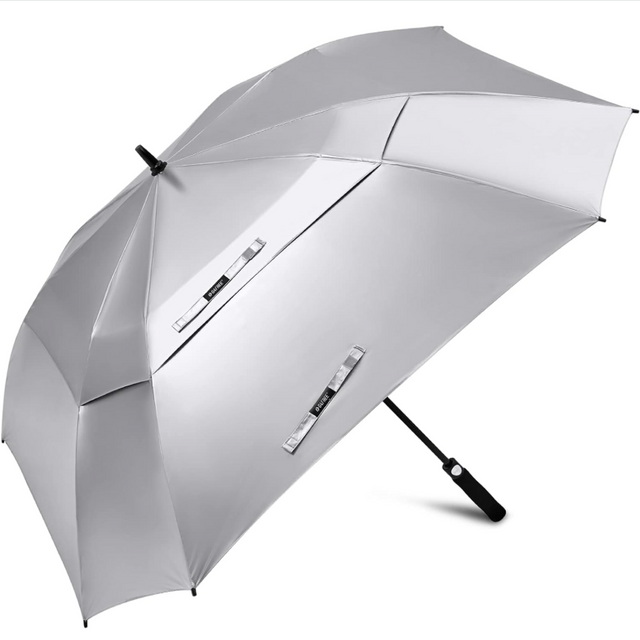
From a marketing perspective, the golf umbrella is a highly visible canvas. In a crowd of small, dark umbrellas, a large, color‑rich golf umbrella stands out instantly. This makes it ideal for promotional campaigns, retail collections, and loyalty gifts during the rainy season. Logos, slogans, and brand colors printed across multiple panels of a golf umbrella can be seen from a long distance.
Many international brands use golf umbrellas as seasonal giveaways, corporate gifts, or membership rewards. When customers use these high‑quality golf umbrellas on rainy days, they not only stay dry but also display the brand to everyone nearby. This combination of functional value and advertising reach creates a strong return on investment for the brand owner.
For buyers and end‑users, selecting a suitable golf umbrella for rain involves considering several key points:
- Coverage: Confirm the canopy arc size and diameter, ensuring that the golf umbrella can protect both the user and any important items they carry.
- Waterproof performance: Look for durable fabrics with water‑repellent coatings and well‑constructed seams to prevent leaks over time.
- Wind resistance: Inspect the ribs, shaft, and canopy design. Vented or double‑canopy golf umbrellas generally handle gusts better.
- Opening mechanism: Many people prefer automatic‑open golf umbrellas for sudden showers, while some professional users favor manual systems for maximum control.
- Weight and balance: The golf umbrella should feel stable but not excessively heavy, with a comfortable grip and well‑distributed weight.
OEM customers can request samples for testing under local weather conditions. Walking with the golf umbrella in real rain and wind is often the best way to evaluate whether the design truly meets user expectations.
Beyond pure technical performance, comfort is very important when using a golf umbrella under rain for long periods. A well‑designed handle reduces hand fatigue and improves control. Soft EVA foam or textured rubber handles provide better grip in wet conditions than smooth plastic, reducing the chance that the golf umbrella will slip.
The length of the shaft influences posture. A shaft that is slightly longer than a regular umbrella keeps the canopy higher, which improves visibility and allows tall users to walk without stooping. Balanced weight distribution between handle, shaft, and canopy ensures that the golf umbrella feels steady even when wind pushes against one side.
Many buyers choose a golf umbrella because they are tired of frequently replacing cheap, fragile umbrellas. A well‑constructed golf umbrella is designed to last for multiple rainy seasons, even with regular use. Strong frames, rust‑resistant components, and quality fabrics all contribute to longevity.
From a brand perspective, durability also protects reputation. When a customer's golf umbrella remains reliable year after year, they associate that durability with the logo printed on the canopy. For OEM customers, investing in better materials and quality control for a golf umbrella range can significantly reduce returns and increase customer satisfaction.
Good care helps any golf umbrella stay in excellent condition, especially when used heavily during rainy seasons. After coming in from the rain, it is best to open the golf umbrella in a safe, ventilated area and allow it to dry fully. Storing a golf umbrella while still wet for long periods can lead to mold, unpleasant odors, and damage to waterproof coatings.
Users should avoid forcing the golf umbrella closed if fabric or ribs are caught, as this may bend the frame. If mud or saltwater splashes onto the shaft or tips, gently rinsing and drying them prevents corrosion or surface damage. In offices, hotels, and homes, placing golf umbrellas upright in a stand instead of leaning them at sharp angles can prevent accidental bending or warping.
Sustainability is becoming more important in the umbrella industry, and golf umbrellas are no exception. While a larger golf umbrella uses more material than a compact umbrella, its longer service life can reduce overall waste by lowering the replacement rate. When users keep one high‑quality golf umbrella for many years instead of discarding multiple cheap models each season, the environmental impact per year of use can be lower.
OEM buyers can also request more eco‑friendly material options, such as recycled polyester canopy fabrics, water‑based coatings, or packaging made from recycled paper. By combining durability with responsible material choices, a golf umbrella collection can support both rainy‑day comfort and sustainability goals.
A golf umbrella is an excellent rain choice for many different user groups:
- Commuters in cities with long or intense rainy seasons
- Students who walk between classrooms and dormitories in wet weather
- Parents who often walk with children and need more shared coverage
- Spectators at outdoor sports events, concerts, or festivals
- Professionals working outdoors, such as security staff and delivery drivers
- Golfers and caddies who play in changing weather conditions
For these users, the extra coverage and strength of a golf umbrella provide real, daily benefits that go far beyond the golf course.
Golf umbrellas can definitely be used for rain, and in many situations they are the best tool available for staying dry in heavy showers and gusty conditions. Their large canopies, reinforced frames, and wind‑resistant designs make them ideal not only on the fairway but also in city streets, stadiums, and outdoor workplaces. For international brands, wholesalers, and OEM clients, a carefully designed golf umbrella range offers high performance, strong visual impact, and long‑term value for customers across multiple rainy seasons.
By choosing the right size, materials, and construction, and by applying thoughtful branding, a golf umbrella becomes much more than a piece of sports equipment. It transforms into a premium rain umbrella that protects users, showcases your brand, and turns every rainy day into an opportunity to be seen.
Yes. A golf umbrella is usually better for heavy rain because its larger canopy covers more of the body and any bags or equipment you carry, reducing the chance of water seeping in from the sides. Its stronger frame and, often, vented canopy are designed to handle wind and intense downpours with much less risk of flipping or breaking.
A golf umbrella can absolutely be used as an everyday city umbrella, especially in regions with frequent or strong rainfall. The main trade‑off is that it is longer and bulkier than a compact umbrella, so it may not fit easily into a small bag, but many users are willing to carry it by hand for the extra comfort and protection it provides.
No umbrella can be completely windproof in every extreme situation, but many golf umbrellas are specifically engineered to be highly wind‑resistant. Features such as flexible fiberglass ribs, reinforced joints, and double‑canopy vents help the golf umbrella cope with strong gusts that would easily damage a regular umbrella.
Yes, many modern golf umbrellas are designed to offer both rain and sun protection. Fabrics with UV‑blocking coatings or special reflective layers can significantly reduce UV exposure, making the golf umbrella suitable for use during sunny days on the course, at outdoor events, and on city streets as well as during rain.
For most adults, a golf umbrella with an arc size between 60 and 68 inches provides an excellent balance of coverage and manageability. This size range is large enough to protect both the user and their bag in heavy rain, while still being comfortable to carry and control. Larger sizes, such as 68 or 70 inches, are ideal when you often share the golf umbrella with another person or need to cover extra equipment.


