
Language
Please Choose Your Language
Views: 222 Author: Amanda Publish Time: 2025-12-17 Origin: Site


Content Menu
● Why a Good Patio Umbrella Stand Matters
● Basic Structure of a Patio Umbrella Stand
● Materials You Can Use for DIY Patio Umbrella Stands
● Planning Your DIY Patio Umbrella Stand
● Tools and Safety Tips for DIY Projects
● Method 1: Concrete Bucket Patio Umbrella Stand
● Method 2: Paver‑Based Patio Umbrella Stand
>> Building a Flat, Low‑Profile Base
● Method 3: Planter‑Style Patio Umbrella Stand
>> Combining Greenery and Stability
● Method 4: Wall‑Mounted or Deck‑Mounted Patio Umbrella Stand
>> When Floor Space Is Limited
● Method 5: Cross‑Base with Removable Weights
>> Flexible Solution for Large Patio Umbrellas
● Choosing the Right Weight for Your Patio Umbrella
● Weather, Wind, and Safety Considerations
● Maintenance Tips for Long‑Lasting Patio Umbrella Stands
● When to Replace a DIY Patio Umbrella Stand
● OEM Options for Patio Umbrella Bases and Stands
● Integrating Branding with Patio Umbrella Stands
● How to Test Your DIY Patio Umbrella Stand
● Indoor and Seasonal Storage for Patio Umbrellas and Stands
● FAQs
>> (1) How heavy should a Patio Umbrella stand be?
>> (2) Can I use water instead of concrete in my Patio Umbrella base?
>> (3) Do all Patio Umbrella poles fit the same stand?
>> (4) Is it safe to leave a Patio Umbrella open in the wind with a DIY stand?
>> (5) When should a business choose OEM Patio Umbrella stands instead of DIY?
A DIY Patio Umbrella stand is one of the simplest and most cost‑effective ways to stabilize your outdoor shade and customize your patio layout. For brands, wholesalers, and project buyers, understanding how a Patio Umbrella stand is built also helps you choose better OEM Patio Umbrella solutions for long‑term outdoor use.
A Patio Umbrella is only as safe and useful as the base that holds it in place, especially when wind or accidental bumps occur. A sturdy DIY Patio Umbrella stand prevents tipping, protects furniture and people, and extends the life of the canopy and pole.
For commercial terraces, cafés, hotels, or OEM Patio Umbrella projects, a well‑designed stand supports heavy canopies, branding prints, and daily opening and closing without loosening.
Most Patio Umbrella stands share three main elements: a weight or base, a vertical tube that holds the Patio Umbrella pole, and a locking system that keeps the pole centered and upright.
The weight may be concrete, sand, water, metal plates, or paver stones, while the tube is usually steel, aluminum, or reinforced plastic sized to match the Patio Umbrella pole diameter.
There are many ways to build a DIY Patio Umbrella stand depending on your budget, tools, and whether the Patio Umbrella is used at home or in a commercial setting.
Common material options include:
- Heavy plastic buckets or planters filled with concrete or sand
- Plywood or timber bases with added paver stones or metal weights for a Patio Umbrella on decks
- Large concrete pavers or tiles drilled to accept a Patio Umbrella pole sleeve
- Steel plates, flanges, and bolts for slim, low‑profile Patio Umbrella stands in cafés or restaurants
Before starting, measure the Patio Umbrella pole diameter, canopy size, and the typical wind conditions on your patio or terrace. A small balcony Patio Umbrella needs a compact but dense stand, while a large garden Patio Umbrella requires more surface area and weight.
Larger canopies or cantilever Patio Umbrella designs require significantly more weight and often need a cross‑base or multi‑paver system to prevent tipping, while a small center‑pole Patio Umbrella can often use a compact stand.
To build a safe DIY Patio Umbrella stand you typically need a drill, measuring tape, mixing bucket (for concrete), a level, and corrosion‑resistant fasteners.
Safety practices include wearing gloves and eye protection when cutting or drilling, lifting heavy Patio Umbrella stands with proper technique, and allowing concrete to cure fully before installing the Patio Umbrella. Always test the stand carefully with the Patio Umbrella half open before trusting it in busy areas.
A concrete bucket or planter stand is practical for home patios and is strong enough for many residential Patio Umbrella models.
1. Choose a heavy‑duty plastic bucket or decorative planter wide enough to resist tipping when a Patio Umbrella is fully open.
2. Place a metal or PVC tube in the center that matches the Patio Umbrella pole diameter, and secure it upright with temporary braces.
3. Mix concrete according to instructions, pour it into the container, and check the tube remains vertical with a level.
4. After curing, remove braces, insert the Patio Umbrella, and secure the pole with a bolt or knob through the tube.
This type of Patio Umbrella stand can be customized easily: add color pigments to the concrete, apply a textured coating, or wrap the finished base with decorative wood or rattan to match outdoor furniture.
If the Patio Umbrella still feels unstable, you can add extra weight on top of the concrete or place the bucket inside a larger decorative container. For movable Patio Umbrella installations, add small wheels under a wooden platform that supports the concrete bucket.
A paver‑based Patio Umbrella stand uses thick concrete paving stones around a central sleeve, ideal for flat decks and commercial seating areas.
1. Start with a steel or PVC tube sized to the Patio Umbrella pole, bolted to a small metal plate or timber block for stability.
2. Arrange four or more heavy pavers in a square or rectangle, with a center gap to fit the tube mount.
3. Drill the pavers or use cutouts if necessary, then set the tube mount and lock it in place with construction adhesive or anchor bolts.
4. Insert the Patio Umbrella to test balance; add extra pavers or weights if the Patio Umbrella canopy is very wide.
This design keeps the Patio Umbrella stand close to floor level, reducing trip hazards and making it easier to place chairs and tables around the Patio Umbrella.
For outdoor restaurants and cafés, mark the pavers or paint the edges to match brand colors and make the Patio Umbrella zone clearly visible. If furniture is rearranged often, choose slightly smaller pavers that can be moved by staff but still provide enough mass.

A planter‑style Patio Umbrella stand hides the base in flowers or shrubs, giving a more premium look on residential patios or hotel terraces.
1. Use a large, sturdy planter with a central tube or inner bucket to hold the Patio Umbrella pole.
2. Fill the lower part around the tube with gravel or concrete for weight, then top with soil and plants that tolerate partial shade from the Patio Umbrella.
3. Ensure drainage holes are not blocked and that the Patio Umbrella pole is firmly clamped inside the tube to prevent wobbling.
This design makes the Patio Umbrella feel integrated into the landscape, turning the stand into an attractive focal point rather than a purely functional object.
Select plants that will not grow tall enough to hit the Patio Umbrella canopy. Use slow‑release fertilizer and drip irrigation where possible so maintenance staff do not need to move the Patio Umbrella frequently.
On narrow balconies or crowded commercial decks, a wall‑mounted bracket or deck‑mounted flange can hold a Patio Umbrella securely without a bulky base.
1. Choose a corrosion‑resistant metal bracket or flange system rated for the size of the Patio Umbrella and local wind exposure.
2. Secure it to structural studs, concrete, or deck joists with appropriate anchors and bolts, then slide in the Patio Umbrella pole and lock with set screws.
Wall‑mounted Patio Umbrella stands are especially useful in cafés lining sidewalks, where floor space is limited but consistent shade is required for each table.
Always confirm that the surface is load‑bearing before mounting a Patio Umbrella to it. In rental properties, get approval for drilling and consider removable flanges that can be covered or reused later.
A cross‑base system combines a metal cross frame with removable weights such as pavers or water‑filled containers, making it popular for larger Patio Umbrella models.
1. Assemble the metal cross frame and attach the Patio Umbrella pole in the center using the supplied collar.
2. Place square concrete blocks, pavers, or dedicated weights on each arm of the cross, ensuring they sit flush and do not wobble.
3. Test the Patio Umbrella both open and closed to confirm that the center of gravity remains within the footprint of the cross‑base.
This setup is common in hotel pools and resort terraces where each Patio Umbrella may be relocated according to events or seasons.
For OEM projects, cross‑bases can be designed with logo‑printed covers that hide the raw weights and match the Patio Umbrella canopy. For home users, rubber pads under the cross‑base prevent scratching decks or tiles.
The heavier and wider the Patio Umbrella canopy, the more base weight is needed. Commercial 3–4 m Patio Umbrella models may require 50–100 kg or more, especially in open, windy environments.
Factors that influence weight selection include typical wind speeds, whether the Patio Umbrella is free‑standing or passes through a table, and whether it is a center‑pole or offset design. A cantilever Patio Umbrella always needs more weight because its load sits off to one side.
Even with a strong DIY Patio Umbrella stand, the safest practice is to close and tie the Patio Umbrella when wind picks up or when leaving the area. Gusts can create powerful leverage on the pole and stand.
For stormy climates, choose Patio Umbrella fabrics, poles, and bases designed for higher wind loads and follow local safety guidelines for outdoor shading structures. In exposed coastal areas, consider adding ground anchors or moving Patio Umbrellas indoors before storms.
A DIY Patio Umbrella stand lasts longer when checked regularly for rust, cracks, or loose fasteners, especially after storms or seasonal storage. Tighten all bolts, replace worn collars, and clean the pole sleeves.
Cleaning spilled drinks, dirt, and plant debris from the Patio Umbrella base, plus touching up paint or protective coatings, keeps the stand looking new and aligned with premium Patio Umbrella branding. For metal Patio Umbrella stands, periodic anti‑rust treatment is recommended.
If a base is cracked, heavily rusted, or no longer holds the Patio Umbrella pole firmly upright, replacement is safer than further repair. Any sign of tilting or sudden movement under load is a warning.
Upgrading to a professional or OEM‑designed Patio Umbrella stand is usually worthwhile when adding larger canopies, branding, or when outfitting commercial patios that handle high daily traffic. A high‑quality stand protects both the Patio Umbrella investment and customer safety.
As an OEM Patio Umbrella supplier, a factory can engineer base systems matched precisely to the pole diameter, canopy size, and branding requirements of each buyer. This includes testing for weight, corrosion resistance, and long‑term outdoor performance.
Options include custom concrete or resin bases with printed logos, metal plate stands with powder‑coated finishes, and modular Patio Umbrella bases that accept interchangeable weights or wheels for mobility. OEM engineers can also tailor accessories like tie straps, covers, and adapter sleeves.
For hospitality brands and wholesalers, the Patio Umbrella stand is also a branding surface that can display logos, colors, and QR codes. Matching the base finish with the Patio Umbrella fabric color creates a unified look.
Combining printed canopies with coordinated Patio Umbrella bases helps create a consistent outdoor image, improves perceived quality, and makes each Patio Umbrella installation stand out in crowded commercial areas. This is especially important for resorts, cafés, and franchise chains.
After building any DIY Patio Umbrella stand, a simple test routine helps confirm stability before daily use.
- Open the Patio Umbrella gradually and check for wobble or tilting
- Gently push the pole from different directions to simulate wind loads
- Walk around the Patio Umbrella stand to ensure there are no sharp edges or tripping points
If the stand fails any of these checks, add more weight, widen the base, or adjust the clamping system until the Patio Umbrella feels safely supported.
At the end of the season, close and secure each Patio Umbrella, remove it from the stand, and store it in a dry, ventilated area. Covering the Patio Umbrella with a protective sleeve reduces dust and UV exposure.
For heavy Patio Umbrella stands, decide whether to leave them outdoors or move them under shelter. Concrete and metal bases can often stay outside if they are sealed and raised slightly off ground to avoid standing water.
Building a DIY Patio Umbrella stand is an accessible project for homeowners and a valuable learning tool for brands and wholesalers planning larger Patio Umbrella programs. By experimenting with buckets, pavers, planters, and cross‑bases, users can discover which structure best matches their space and wind conditions.
By choosing the right materials, weight, and mounting style, a Patio Umbrella can remain stable, safe, and visually attractive in many different outdoor environments. OEM Patio Umbrella factories can then translate these principles into scalable, branded base solutions that meet the demands of global hospitality, retail, and residential markets.
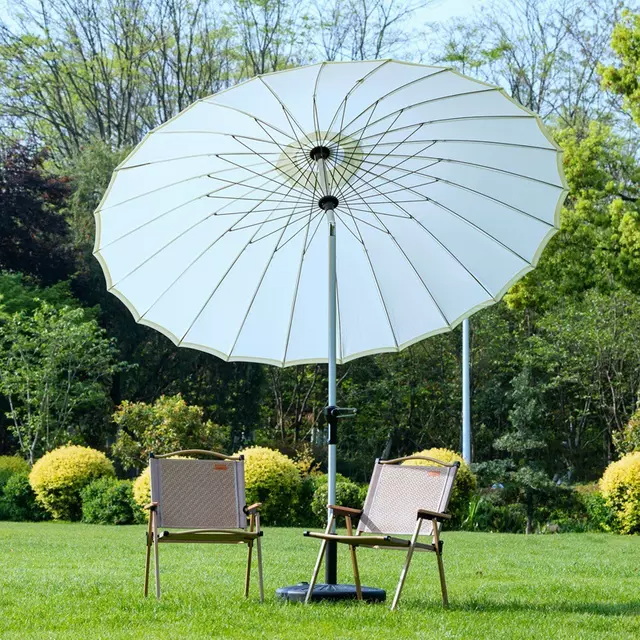
For a small residential Patio Umbrella used through a table, 10–20 kg may be enough in sheltered areas, while free‑standing Patio Umbrella setups usually need significantly more weight. Larger 3 m canopies may require 30–50 kg or more.
As the Patio Umbrella canopy diameter increases, or when used in windy locations, upgrading to heavier concrete, paver, or metal stands in the 50–100 kg range becomes essential for safety and long‑term stability.
Water‑fillable Patio Umbrella bases are convenient and portable, but they are less dense than concrete or sand. They can also crack if water freezes inside in winter climates.
Concrete or sand‑filled Patio Umbrella stands are more durable and stable for long‑term or commercial use, especially where strong gusts can occur. If you choose a water base, check it regularly for leaks and drain it before freezing weather.
No, Patio Umbrella poles vary in diameter and sometimes in shape, so the tube or collar in the stand must match closely for a secure fit. An oversized tube can cause wobble and premature wear.
Many OEM Patio Umbrella bases include adjustable sleeves or multiple bushings to fit common pole sizes. When building a DIY Patio Umbrella stand, measure the pole carefully and design the tube or sleeve to hug it firmly without scratching.
Even with a heavy DIY Patio Umbrella stand, leaving the canopy open in strong wind is not recommended. Gusts can bend poles, tear fabric, or tip furniture, especially with large Patio Umbrella canopies.
Closing and tying the Patio Umbrella when not in use, and following local weather warnings, protects both the Patio Umbrella and the people around it. For coastal or high‑wind locations, choose reinforced Patio Umbrella models and stands that are rated for higher loads.
DIY Patio Umbrella stands are fine for small, private spaces, but hotels, cafés, and branded chains usually benefit from certified OEM Patio Umbrella bases tested for weight, durability, and safety. Professional bases help avoid accidents and liability issues.
OEM production also allows unified designs, custom colors, and logo printing on both the Patio Umbrella canopy and base, creating consistent branding across multiple locations. For large rollouts, OEM Patio Umbrella solutions also simplify spare parts, maintenance, and future upgrades.


