
Language
Please Choose Your Language
Views: 222 Author: Amanda Publish Time: 2025-11-10 Origin: Site


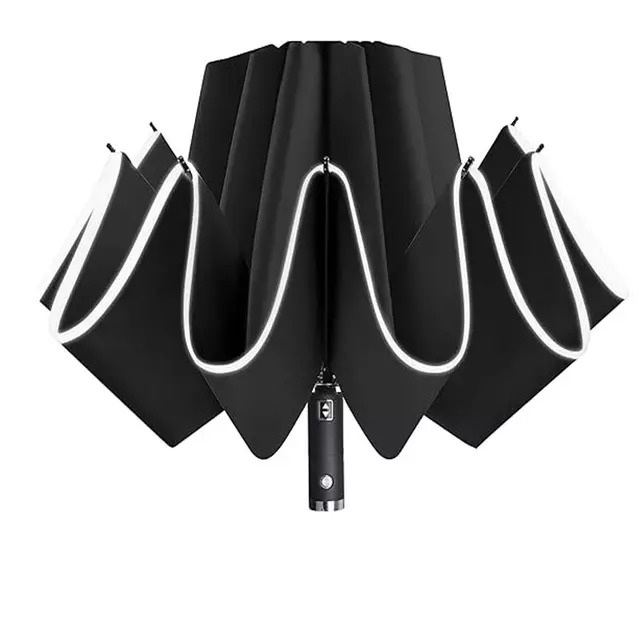
Content Menu
● Core Principles of Auto Close Umbrella
● Key Components and Their Interactions
● Variants of Auto Umbrella Mechanisms
● Design Considerations for OEM Partnerships
● Quality Assurance and Quality Control
● Sustainability and Waste Reduction
● Case Studies and Practical Guidelines for OEMs
>> Case study: European brand partner
>> Case study: Travel-focused design for North American distributors
● Best Practices for Working with OEM Clients
● FAQ
>> 1. How durable is an auto-close umbrella?
>> 2. Can auto umbrellas be customized for branding?
>> 3. What safety features are standard in auto umbrellas?
>> 4. What maintenance is needed for auto umbrellas?
>> 5. What is the difference between mechanical and electronic auto umbrellas?
In the competitive field of outdoor gear, the automatic umbrella—often called an Auto Umbrella—has become a cornerstone product for brands, wholesalers, and OEM manufacturers alike. Understanding the inner workings of auto-close mechanisms is essential to deliver reliable performance, design efficient production lines, and communicate clear value to buyers. This article provides a comprehensive look at the mechanisms behind auto-close umbrellas, the main components involved, materials and design considerations, and practical guidance for OEM collaboration.
The essence of an auto-close umbrella is a mechanism that stores energy when the canopy is closed and releases that energy to deploy the canopy with a single action. This typically involves a spring-driven system within the central shaft and a control mechanism that coordinates the motion of nested frames. A well-engineered auto umbrella balances the positive work of spring energy release with the controlled motion of the ribs during opening. In closing, the mechanism resets so the user can retract the canopy smoothly and safely. For OEM collaborations, articulating these principles clearly helps specify tolerances, ensure consistent opening and closing forces, and reduce long-term wear on moving parts.
Central shaft and ribs: The central shaft houses the spring mechanism that drives deployment. The ribs extend the canopy once the runner is released.
Spring mechanism: A coil or compression spring stores energy when the umbrella is closed. Releasing this energy enables automatic opening. In some designs, a secondary mechanism assists with automatic closing.
Runner, collar, and locking elements: The runner slides along the shaft, aligning the ribs with the fabric. A locking block ensures the spring is preloaded only when desired and prevents accidental deployment.
Canopy fabric and sleeve components: Durable, water-repellent fabrics are attached to a frame that can articulate automatically. Some designs include guides that help the fabric unfurl smoothly.
Safety stops and dampers: To protect users and extend lifespan, dampers or limiters control deployment speed to avoid jerks or pinching hazards.
Materials considerations: OEM projects benefit from corrosion-resistant metals (such as aluminum alloys or stainless steel), durable plastics for housings, and fabrics with good water repellency and UV resistance. Selecting components with high fatigue resistance improves lifecycle performance.
Push-button auto open, manual close: Pressing a button triggers spring-assisted deployment, while closing remains a manual action. This is common in many consumer-facing models.
Push-button auto open and auto close: Both opening and closing are automated, offering one-handed operation and enhanced ease of use.
Sensor-enabled models: Some designs incorporate proximity or light sensors for automatic operation, though this is more common in consumer-oriented products than in traditional OEM lines.
Mechanical vs electronic control: Mechanical systems rely on springs and linkages, offering simplicity and reliability. Electronic variants include microcontrollers and actuators for more complex interactions but add potential maintenance considerations.
Reliability and lifecycle testing: Define expected open/close cycle counts (for example, 100,000 cycles) and conduct fatigue testing on springs and hinges to guarantee performance over time.
Tolerance and fit: Specify tight tolerances for joint clearances, rib alignment, and stowage length when closed to ensure smooth operation and user safety.
Safety and compliance: Address pinch points, ensure reliable locking, and verify compliance with regional safety standards for consumer products.
Weight and balance: Optimize material choices to maintain strength while minimizing weight and ensuring comfortable handling.
Cosmetic and branding options: Offer canopy color options, prints, handle shapes, and branding placements that align with marketing campaigns without compromising mechanical performance.
Packaging and instructions: Provide clear assembly and operation instructions, warranty details, and maintenance guidelines to reduce returns and build trust with international buyers.
After-sales support: Develop spare parts availability, repair guidelines, and a plan for ongoing customer support to sustain long-term OEM partnerships.
Incoming material inspection: Screen fabrics, frame components, springs, and plastics for defects before assembly.
In-process checks: Monitor spring preload, rib alignment, and locking engagement during production.
Final functional testing: Simulate open/close cycles, measure deployment speed, verify automatic operation consistency, and ensure no pinch hazards.
Durability and environmental tests: Expose components to UV, humidity, and temperature variations, then re-test to ensure resilience across climates.
Documentation and traceability: Maintain records of parts, lot numbers, and testing results to support warranties and customer claims.
Material selection: Choose recyclable metals and fabrics with reduced environmental impact while maintaining performance.
End-of-life programs: Support take-back or recycling initiatives for damaged units.
Product longevity: A durable design reduces replacement frequency, aligning with sustainability goals and cost savings for buyers.
- A push-button auto-open and manual-close design achieved faster production cycles due to modular components and standardized spring preloads.
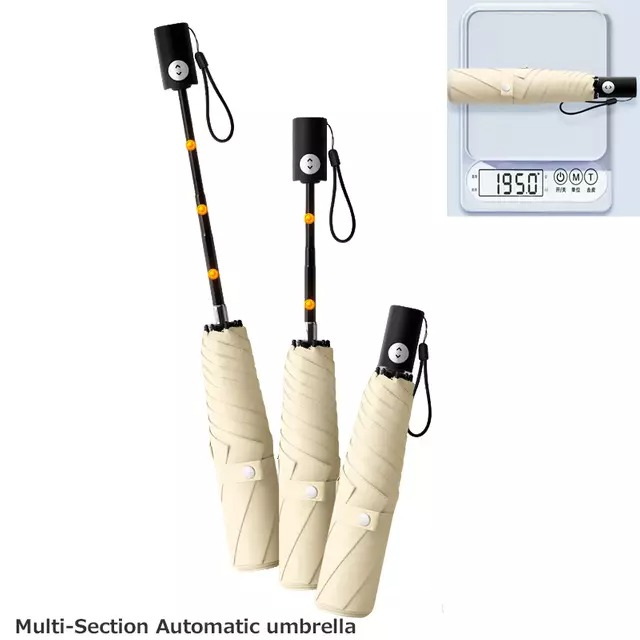
- A lightweight auto umbrella with a slender shaft and compact closed form improves portability and one-handed operation.
- Provide clear technical specs, tolerances, and testing procedures early in design reviews.
Prototyping and iterative design
- Utilize rapid prototypes to validate fit, user experience, and packaging efficiency.
Documentation and compliance
- Produce comprehensive technical data sheets, safety manuals, and certifications for each market.
- Establish a responsive channel for spare parts, warranty claims, and field feedback to drive improvements.
Auto Umbrella technology blends mechanical precision with user-centric design to deliver reliable, one-handed operation in a compact form. For OEM manufacturers serving foreign brands, producers, and wholesalers, success hinges on robust core components, thorough safety and durability testing, and compelling multimedia content that clearly communicates value. By aligning engineering decisions with market needs and providing complete media assets, suppliers can differentiate offerings, reduce production risk, and foster enduring partnerships across global markets.
- Auto-close umbrellas are designed to withstand thousands of open/close cycles, with durability depending on spring life, joint tolerances, and fabric wear. Proper maintenance and high-quality components extend lifespan significantly. Expected lifecycles vary by design but reputable OEM products target tens of thousands of cycles under normal usage.[10][11]
- Yes. OEM collaborations commonly offer canopy color and print customization, handle shapes, and logo placement, enabling brands to differentiate products while maintaining mechanical performance. Material choices and finishing techniques can also be tailored.[12][13]
- Standard features include pinch-point guards, smooth rib-tip reinforcements, reliable locking mechanisms to prevent accidental opening, and controlled deployment speeds. Compliance with regional safety standards is often part of OEM specifications.[11][12]
- Maintenance is typically minimal: keep the canopy dry to prevent mold, wipe sliding components occasionally, and ensure the locking mechanism remains unobstructed. In harsh environments, inspect springs and joints for wear and replace worn parts promptly.[14][10]
- Mechanical auto umbrellas rely on springs and linkages for automatic opening and closing, offering simplicity, lower cost, and high reliability. Electronic variants use actuators and controllers, enabling sensor-triggered deployment and more complex interactions but adding complexity and maintenance considerations.[15][11]
[1](https://hdueo.com/en/prodotto/umbrella-mini-automatic-open-close-dots/)
[2](https://www.umbrellasdirect.com.au/products/storm-proof-premium-compact-umbrella-smart-auto-open-auto-close)
[3](https://shedrain.com/products/e-motion-motorized-open-close-compact-umbrella)
[4](https://www.nitori.com.sg/products/automatic-open-close-foldable-umbrella-58cm-bk-su)
[5](https://topumbrella.com/info/188)
[6](https://wpc-store.hk/en/products/wpc37-ujk)
[7](https://umbear.com/en/products/55-inch-automatic-umbrella)
[8](https://www.tumi.com/p/medium-auto-close-umbrella-01484001041/)
[9](https://www.tbtb.eu/promoting-gifts/promotional-umbrellas/promotional-standard-umbrellas/deluxe-23-reversible-auto-openclose-umbrella)
[10](https://www.madeumbrella.com/news/view_800.html)
[11](https://patents.google.com/patent/US4572226A/en)
[12](https://schirmmacher.eu/umbrella-opening-mechanisms)
[13](https://insights.made-in-china.com/What-Is-an-Automatic-Umbrella-Design-Features-and-User-Benefits_iAzfRmLMFJlk.html)
[14](https://www.sxgaobu.com/news/working-principle-and-structure-of-automatic-umbrella-364.html)
[15](https://huggingface.co/openbmb/cpm-bee-1b/commit/bd72a61dd7a59086ed7456f1dfcaa995c8ec58a3.diff?file=vocab.txt)


