
Language
Please Choose Your Language
Views: 222 Author: Amanda Publish Time: 2025-11-29 Origin: Site


Content Menu
● Understanding Auto Tilt Auto Umbrella
● How the Auto Tilt Mechanism Works
● Exact Point: How High Before Auto Tilt?
● Step‑by‑Step Operation of a Crank Auto Umbrella
● Safe Operating Practices for Auto Umbrella
● Auto Tilt vs Other Tilt Types
● Why Auto Tilt Auto Umbrella Is Popular
● OEM Perspective: Designing a Better Auto Umbrella
● Comfort and Ergonomics of Crank Height
● Maintenance Tips for Long‑Lasting Auto Umbrella
● Best Usage Scenarios for Auto Tilt Auto Umbrella
● Summary of the Crank‑Before‑Tilt Principle
● FAQ
>> 1) How do I know my Auto Umbrella is high enough before tilting?
>> 2) How many turns of the crank does it take to tilt an Auto Umbrella?
>> 3) Can I tilt my Auto Umbrella while it is only half open?
>> 4) Why does my Auto Umbrella crank feel very stiff when I try to tilt?
>> 5) What should OEM buyers check when testing auto tilt Auto Umbrella samples?
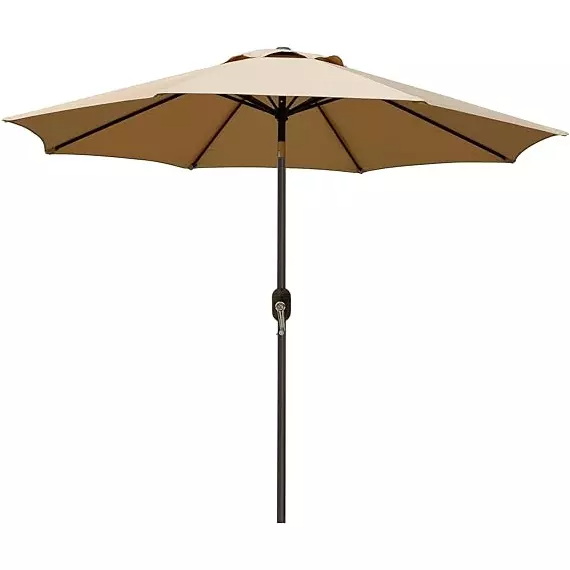
An auto tilt Auto Umbrella is a patio or market umbrella that uses a single crank handle to both open the canopy and tilt it toward the sun. This design removes the need for push buttons or collar rings, making the Auto Umbrella especially convenient for users who prefer to stay seated while adjusting shade. The internal mechanism responds to crank position, so tilt only starts after the Auto Umbrella is fully open.
In a typical auto tilt Auto Umbrella, the crank connects to cables and levers hidden inside the pole. As you turn the handle, the runner slides upward, the ribs extend, and the canopy opens; only after the runner reaches its top position does continued cranking drive the tilt movement. This sequence makes the Auto Umbrella intuitive: first height, then tilt.
Inside the pole of an auto tilt Auto Umbrella, a system of levers, gears, and tensioned components controls when tilt begins. At first, crank motion is converted into lifting force that pulls the ribs open and raises the canopy. Once the runner reaches its travel limit, further crank rotations no longer lift the canopy; instead, they shift load onto the tilt assembly at the top of the Auto Umbrella.
At that point, the upper pole or hub begins to lean to one side, tilting the Auto Umbrella canopy to block low‑angle sun. Because tilt is linked to crank position, the Auto Umbrella offers fine control: each extra turn after full open slightly increases tilt, and reversing the crank gradually returns the canopy to upright.
For a crank‑lift auto tilt Auto Umbrella, the correct height before tilt is "fully open and locked at the top." In practical terms, this means: crank until the runner cannot go any higher, the ribs are straight, and the fabric looks taut with no sagging. Only then should you expect the auto tilt to begin as you keep turning the handle.
If tilt starts while the Auto Umbrella still looks partially closed, something is usually wrong: the pole may be obstructed, the cables twisted, or the frame damaged. At normal operation, tilt is the second stage—the Auto Umbrella must first reach its maximum open height, and only after that does the internal mechanism allow the canopy to lean. Remember the simple rule: "Open high, then tilt."
Using a crank‑lift Auto Umbrella correctly keeps the mechanism smooth and safe. Follow this sequence every time:
1) Preparation
- Place the Auto Umbrella pole fully into a properly sized, heavy base, and tighten all locking knobs so the pole cannot wobble.
- Check for overhead branches, walls, or fixtures that might block the canopy as the Auto Umbrella opens to full height.
- Make sure the fabric tie is undone and the canopy can unfold freely.
2) Cranking to Full Height
- Stand to the side of the Auto Umbrella and turn the crank handle clockwise at a steady pace.
- Watch the runner slide up the pole while the ribs extend and the canopy unfolds.
- Keep cranking until the runner reaches the top and stops; the fabric should appear smooth, and the Auto Umbrella should stand straight and fully open.
3) Engaging the Auto Tilt
- After the Auto Umbrella is fully open, continue cranking clockwise slowly.
- You will feel a slight change in resistance as the internal levers engage the tilt mechanism.
- The top of the Auto Umbrella will begin to lean; stop cranking when you reach a comfortable tilt angle that blocks the sun without over‑straining the frame.
4) Returning to Upright and Closing
- To straighten the Auto Umbrella, turn the crank counterclockwise until the canopy returns to a vertical position.
- Continue turning counterclockwise so the runner descends, the ribs fold, and the Auto Umbrella closes completely.
- Wrap the tie strap around the folded canopy to prevent flapping in wind.
Correct crank height is only safe if combined with good general habits. Always operate the Auto Umbrella slowly; sudden jerks or forcing the crank against heavy resistance can strip gears or snap internal cables. If the crank feels unusually stiff before the canopy is fully open, stop, check for fabric caught in the ribs, or inspect the Auto Umbrella pole for bends.
Wind is another critical factor in Auto Umbrella safety. Even with auto tilt, you should close the umbrella when wind picks up or storms are forecast, because side loads on a tilted canopy are high. Keeping the Auto Umbrella closed and tied when not in use protects both the fabric and the mechanical tilt components.
Auto tilt is only one of several tilt options available on modern Auto Umbrella products. The main categories are:
- Push‑button tilt
- Collar tilt
- Crank auto tilt
- Rotational or 360‑tilt (usually on cantilever umbrellas)
Push‑button umbrellas use a joint with a locking button near the upper pole. You open the Auto Umbrella, press the button, manually push the top to the side, and release the button to lock the tilt. Collar tilt umbrellas open with a crank but use a rotating ring near the top; you twist the collar to tilt the canopy while the pole stays straight.
By contrast, auto tilt Auto Umbrella designs rely entirely on the crank. Once fully open, you keep turning the handle to tilt; there is no separate button or collar. This is especially convenient for dining‑table setups because the user can sit and adjust shade using only the crank side of the Auto Umbrella. Rotational tilt umbrellas, often cantilevered, add side‑to‑side or full 360‑degree movement in addition to tilt.
The auto tilt Auto Umbrella has become a favorite in residential patios, hotel terraces, cafés, and outdoor dining zones. The main reason is ease of use: the same simple crank motion raises, lowers, and tilts the Auto Umbrella. This single‑control experience feels intuitive for guests, avoids confusion, and reduces the risk of misuse.
Another advantage is aesthetic. Auto tilt Auto Umbrella models hide most of their hardware inside the pole, giving a clean, streamlined appearance. There are no exposed buttons or bulky collars near eye level, which works well for upscale branding, OEM private‑label lines, and design‑driven outdoor spaces.
For brands, wholesalers, and manufacturers working with OEM partners, auto tilt Auto Umbrella products offer clear opportunities for differentiation. You can tune the "feel" of the crank—how much force is needed, how early tilt starts after full open, and how smooth the movement is—to match your market positioning. Premium lines may use metal gears and reinforced levers to give the Auto Umbrella a solid, precise feel.
Key OEM design decisions include:
- Pole material (aluminum, steel, or fiberglass) to balance weight, strength, and corrosion resistance for the Auto Umbrella.
- Canopy fabric (for example, solution‑dyed outdoor textiles) to ensure UV resistance and colorfastness over many seasons.
- Crank placement and handle size so that Auto Umbrella users can reach the control comfortably at table height.
- Internal auto tilt components designed for long life, with appropriate lubrication and protection against moisture.
By working closely with an experienced umbrella factory, you can specify how the auto tilt Auto Umbrella behaves: where tilt begins, how far it can lean, and how many crank turns represent the usable range. These details make your branded Auto Umbrella stand out in a crowded patio‑shade market.
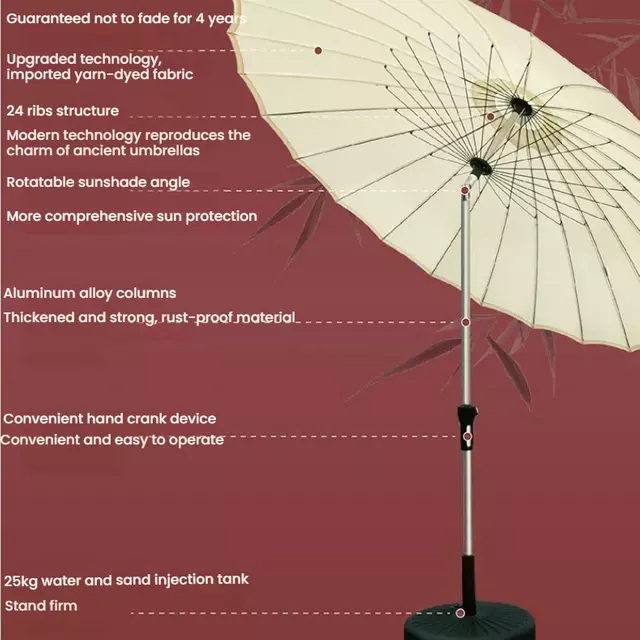
Crank height is not only a technical issue; it is also an ergonomic one. For a dining‑table Auto Umbrella, placing the crank roughly at or slightly above table height lets seated users operate it with minimal reaching. If the crank is too low, users must bend; if it is too high, shorter users struggle to control the Auto Umbrella.
A well‑designed auto tilt Auto Umbrella also considers hand comfort: a smooth, rounded handle reduces pressure points, while a well‑geared mechanism keeps crank force low. Smooth, even resistance as you move from opening to tilting reassures the user that the Auto Umbrella is functioning correctly and encourages gentle operation instead of sudden, damaging motions.
Regular maintenance keeps the auto tilt Auto Umbrella working smoothly through many seasons. Periodically wipe the pole and crank housing with a soft cloth to remove dust and moisture, especially if the Auto Umbrella is used near the sea, where salt can accelerate corrosion. Check that screws, bolts, and knobs remain tight; loose hardware can create wobble and extra stress on the tilt joint.
Lubrication is another simple way to extend the life of an Auto Umbrella. A light application of suitable lubricant on moving joints (without soaking the fabric) can keep the crank and tilt action smooth. Always close and tie the Auto Umbrella when not in use, and store it in a dry, sheltered area during the off‑season to protect both the fabric and the auto tilt components.
Auto tilt Auto Umbrella products shine in situations where the sun moves significantly during the time people are seated. Patio dining, poolside lounges, garden cafés, and rooftop bars all benefit from umbrellas that can tilt easily without moving the base. Customers receive consistent shade with minimal disruption, and staff can make quick adjustments using the crank alone.
In commercial environments, choosing a robust auto tilt Auto Umbrella can reduce replacement and service costs. Strong frames, high‑quality crank systems, and carefully engineered tilt mechanisms withstand frequent use by many different users. Partnering with a manufacturer that specializes in Auto Umbrella OEM production ensures consistent quality across large orders.
Even a high‑quality Auto Umbrella can fail early if misused. Some frequent mistakes include:
- Forcing the crank after the canopy is fully open and tilt has reached its limit, which can strip gears or bend internal levers.
- Tilting the Auto Umbrella in strong winds, increasing side load and risking pole or rib damage.
- Lifting or moving the entire base by the pole while the Auto Umbrella is open, stressing joints and connections.
- Leaving the Auto Umbrella open overnight or unattended, exposing it to sudden weather changes.
Avoiding these habits and following the correct "open high, then tilt" process greatly extends the lifetime of the auto tilt Auto Umbrella and keeps the mechanism responsive.
In all crank auto tilt Auto Umbrella designs, the sequence is consistent:
- Open the Auto Umbrella fully until the runner reaches its highest point and the canopy is taut.
- Only then continue turning the crank slowly to engage the tilt mechanism.
- Reverse the crank to straighten and close the Auto Umbrella in a controlled way.
If you remember only one guideline, make it this: never try to tilt a partially open Auto Umbrella. The mechanism is engineered to tilt safely only once the canopy is at full height, and respecting that design will give you smoother operation and far longer service life.
The answer to "How high crank umbrella before auto tilt?" is simple in principle but crucial in practice: always crank the Auto Umbrella to its fully open position before engaging tilt. Once the runner reaches the top and the canopy is taut, a few more smooth turns of the crank will activate the auto tilt mechanism, allowing you to follow the sun without moving the base. When combined with proper maintenance, sensible wind precautions, and thoughtful OEM design, an auto tilt Auto Umbrella provides comfortable, adaptive shade and long‑lasting value for both end users and brand owners.
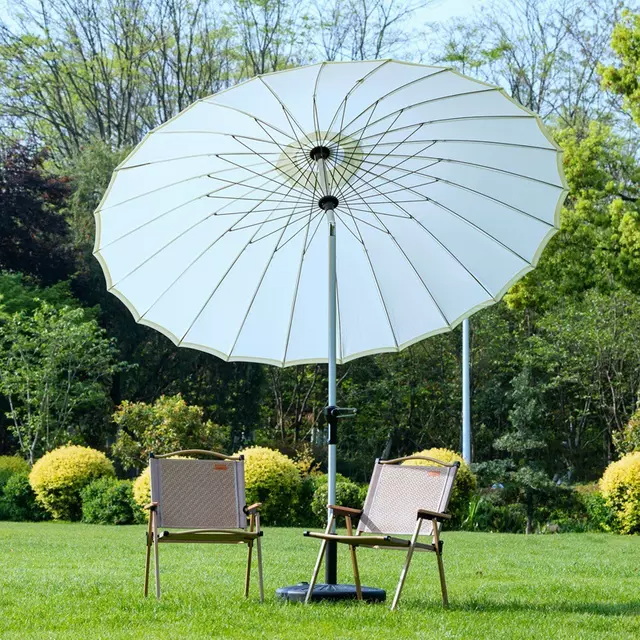
You know your Auto Umbrella is high enough when the runner has reached the top of the pole, the ribs are fully extended, and the canopy fabric is smooth and taut. If you continue cranking at this point and the top begins to lean, the auto tilt has engaged correctly.
The exact number of turns varies by model, but most auto tilt Auto Umbrella designs begin tilting shortly after the canopy reaches full open. In practice, you will usually notice tilt within a few additional turns; the key is to proceed slowly, feel for the change in resistance, and stop once you achieve the desired angle.
No. Tilting a half‑open Auto Umbrella puts uneven stress on the ribs, cables, and joints and can permanently damage the mechanism. Always crank the Auto Umbrella to full height first, then continue cranking to tilt; if the umbrella cannot open fully, resolve that issue before attempting tilt.
A very stiff crank on an Auto Umbrella may indicate internal wear, corrosion, misalignment, or an obstruction such as fabric caught in the ribs. Stop cranking immediately, inspect the frame and pole, and avoid forcing the mechanism; forcing a stiff Auto Umbrella can strip gears or break cables, turning a minor issue into a major repair.
OEM buyers should test how smoothly the Auto Umbrella opens, exactly when tilt begins after full extension, and how solid the frame feels at maximum tilt. Check that crank height is comfortable at table level, that the mechanism operates consistently across multiple cycles, and that materials—pole, ribs, crank housing, and fabric—match the durability expectations of the target market.
[1](https://www.midtownumbrellas.com/blogs/news/buying-guide-tilt-umbrellas-vs-market-umbrellas)
[2](https://lausaint.com/blogs/news/how-to-tilt-patio-umbrella)
[3](https://malibushade.com.au/shade-sails/patio-umbrella-opening-mechanisms/)
[4](https://www.youtube.com/watch?v=iSDhXkv-7zA)
[5](https://www.aosom.ca/blog-whats-the-best-way-to-tilt-a-beach-umbrella.html)
[6](https://www.youtube.com/watch?v=kBQ9IBPZpF8)
[7](https://blog.curranonline.com/patio-umbrella-buying-guide-everything-you-need-to-know/)
[8](https://purpleleafshop.com/blogs/news/patio-umbrella-tilt-guide)
[9](https://www.yongxinumbrella.com/how-does-an-auto-tilt-umbrella-work.html)
[10](https://blog.terraoutdoor.com/pick-the-perfect-patio-umbrella/)


