
Language
Please Choose Your Language
Views: 222 Author: Amanda Publish Time: 2025-12-15 Origin: Site


Content Menu
● Typical Size Ranges by Umbrella Type
● Long Umbrella vs Compact Models
● Average Umbrella Length in Everyday Use
● Men's and Women's Long Umbrella Sizing
● Golf Long Umbrella Dimensions
● Long Umbrella vs Compact: Comfort and Handling
● Choosing Long Umbrella Sizes for Different Uses
● Design Considerations for Long Umbrella OEM Projects
● Long Umbrella Branding and Customization
● Practical Tips for Consumers Choosing Length
● Why Long Umbrella Variety Matters for Overseas Buyers
● FAQ
>> 1. How long is a standard long umbrella?
>> 2. How long is a golf umbrella compared with a regular umbrella?
>> 3. What size long umbrella is best for daily commuting?
>> 4. How should brands choose long umbrella sizes for men and women?
>> 5. Can a compact umbrella offer the same coverage as a long umbrella?
For most people, the idea of an “average umbrella” comes from what they carry every day: either a compact travel piece in a bag or a full‑size long umbrella used for walking to work. In practice, the “average” sits inside a range rather than at a single fixed number, and that range shifts depending on where the umbrella is used and how it is carried.
In general terms, compact umbrellas are about 28–35 cm when folded, while typical long umbrellas are around 80–95 cm from tip to handle when closed. Golf and oversized long umbrella models go beyond this, often exceeding 100 cm in length and offering a much wider canopy. Because of this variety, buyers and brand owners need to think in terms of size bands rather than chasing just one “standard” measurement.
When asking “How long is an average umbrella?”, the length that matters most is the overall closed length. This is measured from the ferrule at the top down to the end of the handle. It determines how easy the umbrella is to carry on public transport, store by a doorway, or pack into a suitcase.
Length can also refer to rib length and shaft length. Rib length influences canopy diameter, which is what actually controls how much of the user's body is covered. Shaft length, especially in a long umbrella, affects how high the canopy sits above the head, changing comfort and visibility. Understanding all three perspectives—closed length, rib length, and canopy diameter—is essential when specifying an OEM long umbrella project.
Different umbrella categories have clear but overlapping size ranges. Knowing these helps define what “average” means in context and lets buyers choose the correct long umbrella format for their customers.
- Pocket mini umbrella: Often folds down to roughly 15–30 cm. Canopy diameters are usually around 90–100+ cm, enough for minimal coverage in emergencies.
- Compact travel umbrella: Typically about 28–30 cm folded, with canopies in the 94–107 cm range. Many travellers treat this as their personal “average umbrella” because it fits nicely into bags and backpacks.
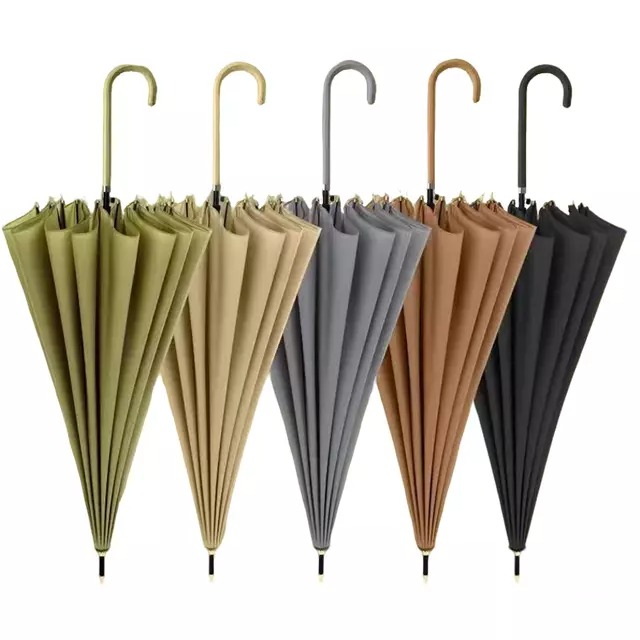
- Standard walking long umbrella: Usually 80–95 cm in closed length. Canopies are around 100–110 cm, giving good coverage for one adult and forming the classic long umbrella silhouette seen in city streets.
- Corporate long umbrella: Commonly built on shafts of about 83–92 cm, with canopy diameters in the 102–122 cm range. This size is popular for printed logos and brand promotions on a long umbrella.
- Golf long umbrella: Closed lengths of about 101–127 cm are typical, with canopies in the 152–178 cm range. These large long umbrella styles protect both the golfer and the equipment in tough weather.
Across these categories, the compact umbrella represents the average for portability, while the walking long umbrella represents the average for coverage and comfort.
Although compact and long umbrellas serve the same basic purpose, they feel very different in real use. A compact umbrella, once folded, is much shorter and easier to pack away, which explains why many consumers automatically think of that format as “average.” A long umbrella, on the other hand, is often more stable and comfortable during heavy rain.
Compact umbrellas focus on folded length. A folded length of around 28–30 cm lets users store the umbrella in handbags, backpacks, or glove compartments without needing much space. In contrast, a long umbrella is not designed to fold; its closed length is similar to its operational length, which gives the structure greater stiffness. This stiffness is why a long umbrella tends to resist wind better and keep its canopy shape more reliably.
To define an “average” umbrella in real life, it helps to think about how people carry them:
- For commuters on trains and buses, a compact umbrella around 28–30 cm is often the norm. It is short enough to stay out of the way and light enough to forget about until rain appears.
- For pedestrians who walk longer distances, a long umbrella around 85–95 cm is more common. This long umbrella format provides better coverage and feels more balanced in the hand.
From a manufacturing perspective, this means there are effectively two “averages”: one in the compact segment and one in the long umbrella segment. OEM suppliers often configure their product lines around these two benchmarks, then add upsized or downsized models for special markets.
Some sizing guides distinguish between men's and women's long umbrellas. The difference normally lies in rib length, shaft height, and overall visual balance rather than in strict functional rules.
Men's long umbrellas often use ribs of around 65–70 cm and a shaft in the 86–91 cm region. This combination leads to large, slightly more imposing canopies and longer silhouettes that pair well with business suits or overcoats. Women's long umbrellas typically use ribs of about 55–60 cm and comparatively shorter shafts, making the long umbrella easier to handle for smaller frames and more convenient to carry with handbags.
These guidelines are flexible, and many unisex long umbrella styles use a mid‑range rib length and canopy diameter. For OEM and private‑label buyers, the key is to match long umbrella sizing to the brand image and to the average height of the target user group in each market.
Golf umbrellas are a special class of long umbrella, built to withstand harsh outdoor conditions and to shield more than one thing at once: the player, the caddie, and the equipment. As a result, they are much larger than what most people consider an “average umbrella.”
A typical golf long umbrella has a canopy diameter between about 152 and 178 cm. This is significantly larger than the 100–110 cm canopy of a standard long umbrella. The closed length of a golf long umbrella often runs between 101 and 127 cm. That size is not ideal for public transport or tight spaces, but on a golf course or sports field, the extra length and span are major advantages.
Because of the stresses placed on a golf long umbrella, high‑grade materials are common: fiberglass ribs for flexibility, double or vented canopies to reduce wind lift, and strong straight handles for a secure grip. These features can also be adapted into premium long umbrella ranges for city or corporate use.
The comfort of an umbrella in real use depends on more than just length, but length is a critical factor. A long umbrella positions the canopy higher above the user's head, reducing the feeling of being cramped underneath the fabric. This improves peripheral vision, which is particularly important in crowded urban environments or when crossing busy streets.
Compact umbrellas, especially small pocket designs, may place the canopy closer to the head due to shorter shafts. While this keeps total length down, it can reduce visibility and make the user feel enclosed. Long umbrella designs avoid this by giving extra shaft height, even when the canopy diameter is similar to a compact model. That is why a long umbrella with a 100–105 cm canopy often feels more spacious than a compact umbrella with nearly the same canopy size.
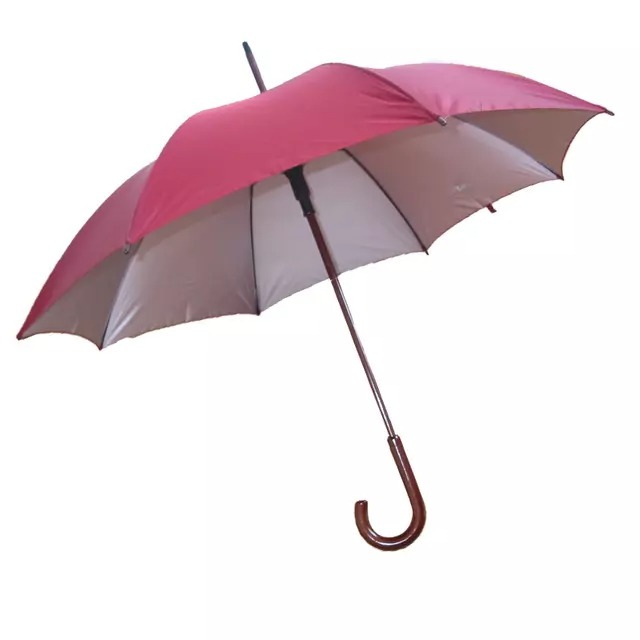
The best long umbrella size depends on how and where it will be used. When planning products or OEM orders, it helps to map typical scenarios to appropriate size ranges.
- Daily commuting on foot: A long umbrella around 85–90 cm, with a 100–110 cm canopy, usually offers an ideal balance of coverage and maneuverability. This long umbrella size fits easily into office entrances and small apartment hallways.
- Business and corporate gifting: Many brands choose long umbrellas with shafts in the 83–92 cm range and medium‑large canopies around 105–120 cm. This allows ample branding space on the panels while keeping the long umbrella convenient for urban professionals.
- Outdoor sports and events: Golf long umbrellas with canopies of 60–68 inches and long shafts over 100 cm provide serious protection. These long umbrellas are often used at tournaments, outdoor festivals, and stadiums where sudden storms are common.
- Tourism and travel retail: For tourists, compact umbrellas with a folded length around 28–30 cm are easier to stock and sell. Still, some retailers also carry stylish long umbrella models as souvenirs and premium gifts.
By aligning each umbrella series with a specific use case, brands can ensure that their “average” long umbrella is perfectly matched to customer expectations in that segment.
When international brands or wholesalers work with an OEM manufacturer, specifying the right long umbrella length is only one part of the picture. A complete specification also includes frame materials, fabric, handle type, and finishing details.
Common decisions include:
- Frame and ribs: Steel frames are cost‑effective, while fiberglass or mixed‑material frames improve flexibility and wind resistance in long umbrella designs. Golf long umbrellas in particular benefit from fiberglass ribs.
- Fabric: Polyester and pongee are standard choices. Higher‑denier fabrics create a more premium feel and may support advanced water‑repellent or UV‑protective coatings.
- Handle and tip: Curved crook handles give a traditional look and make a long umbrella easy to hang on a hook or arm. Straight handles suit sporty or minimalist designs, especially on golf and corporate long umbrellas.
- Opening mechanism: Manual open is durable and simple, while automatic open or auto open‑close adds convenience. Long umbrella models often use auto‑open for a dramatic, premium feel.
A professional OEM partner can guide brands through these choices and help align long umbrella specifications with price targets, brand positioning, and local regulations.
A long umbrella offers much more visible surface area for branding than a compact umbrella. This makes long umbrella models particularly attractive as promotional items, retail fashion pieces, and corporate gifts.
Key branding options include:
- Panel printing: Logos or patterns can be printed on one panel, alternating panels, or all panels. A long umbrella with a larger canopy makes these designs more visible from a distance.
- Interior prints: Some premium long umbrella lines use prints on the inside of the canopy for a distinctive look when the umbrella is open.
- Handle and ferrule customization: Custom colors, textures, or even engraved logos on the handle give each long umbrella a distinctive identity.
- Sleeves and packaging: Branded sleeves, tags, and boxes complete the presentation, especially important when long umbrellas are given as gifts or sold in upscale retail spaces.
By combining thoughtful length selection with strong graphic design, brands can transform a simple long umbrella into a powerful moving advertisement.
From a user's perspective, choosing a long umbrella length is about balancing protection against convenience. A few simple guidelines help:
- Height check: Taller users often feel more comfortable with a slightly longer long umbrella so the canopy does not sit too close to the head. Shorter users may prefer a marginally shorter long umbrella to avoid the tip dragging on the ground.
- Storage check: Measuring the space in a car, office umbrella stand, or hallway can reveal the maximum practical long umbrella length for everyday use.
- Weather habits: In windy, rainy climates, a robust long umbrella will feel safer and more reliable than a small compact umbrella, even if the long umbrella is slightly less convenient to carry.
By thinking through these points, consumers can decide whether their personal “average umbrella” should be a compact travel model or a classic long umbrella.
For foreign brand owners, wholesalers, and distributors, offering only one size of umbrella is rarely enough. Different markets have different norms for what “average” means, and body height, climate, and transport habits all vary.
In some countries, compact umbrellas dominate urban retail shelves, while in others, long umbrella styles remain the default everyday choice. Golf long umbrellas are particularly important in regions with active golfing communities and frequent storms. An OEM partner that understands these patterns can help overseas buyers build a balanced long umbrella portfolio rather than relying on a one‑size‑fits‑all approach.
By mixing compact umbrellas, standard long umbrellas, and golf long umbrellas, a brand can cover daily commuting, business, travel, and sports scenarios. This variety not only meets real user needs but also opens more opportunities for branding and differentiation.
In real‑world terms, there are two main “average” umbrella lengths that most users experience. The first is the compact umbrella, usually about 28–30 cm when folded, which defines the everyday idea of a portable, packable umbrella. The second is the classic long umbrella, typically 80–95 cm in length with a canopy around 100–110 cm, which defines the familiar walking umbrella seen on city streets.
Beyond these, long umbrella formats expand into larger corporate and golf designs that offer even more coverage and a stronger visual impact. For overseas brands, wholesalers, and importers, understanding these size ranges and how they connect to specific use cases is crucial. Working closely with a specialized OEM partner makes it possible to design a coherent long umbrella collection that meets local expectations, supports branding goals, and delivers reliable protection in different weather conditions.
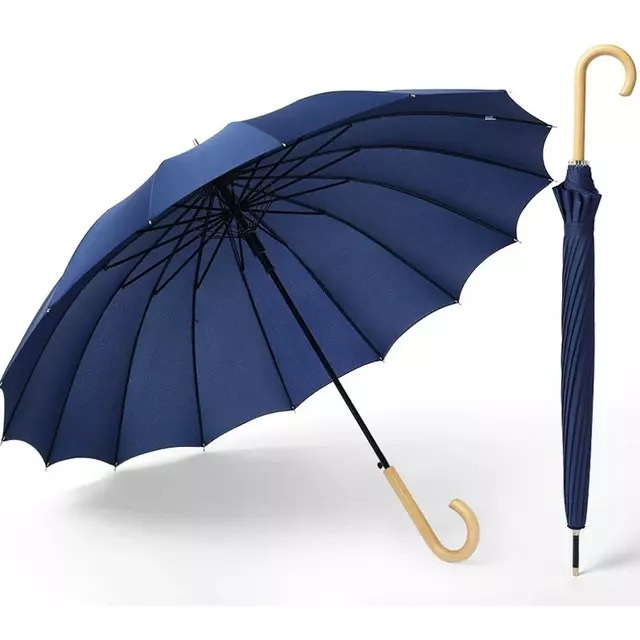
A standard long umbrella typically ranges from about 80 to 95 cm in closed length. This size is long enough to provide comfortable coverage and a classic look while still being practical to carry on sidewalks and store in doorways. For many users, this standard long umbrella is the default choice for everyday walking and commuting.
A golf long umbrella is usually much larger than a regular walking umbrella. While a standard long umbrella might be around 80–95 cm in length, a golf long umbrella often measures 101–127 cm when closed and has a much wider canopy to shield both the golfer and the equipment. This added length and span make the golf long umbrella better suited to open spaces and heavy rain.
For daily commuting, a long umbrella around 85–90 cm with a canopy of about 100–110 cm offers an excellent balance. It is compact enough to handle comfortably in busy streets and building entrances, yet large enough to keep clothes and bags dry in moderate rain. Commuters who frequently use crowded public transport sometimes keep both a compact umbrella and a mid‑size long umbrella to adapt to different days.
Brands can choose long umbrella sizes by considering average height and style preferences in their target markets. Many men's long umbrellas use slightly longer ribs and shafts to create larger silhouettes, while women's long umbrellas often adopt slightly shorter ribs and shafts for easier handling. However, unisex long umbrella designs with mid‑range dimensions also work well when a brand prefers a simpler, universal sizing strategy.
A well‑designed compact umbrella can offer canopy coverage similar to a smaller long umbrella, especially when the canopy diameter is around 95–105 cm. The main difference lies in the shaft length and frame strength. A long umbrella usually positions the canopy higher and tends to feel more stable in wind, while a compact umbrella focuses on minimal folded length and portability. As a result, many users pair a compact umbrella for travel with a sturdy long umbrella for storms.


