
Language
Please Choose Your Language


Content Menu
● Understanding the Golf Umbrella's Identity
● Key Features: Standing Apart From Standard Umbrellas
● Golf Umbrella Applications On and Off the Course
● The Anatomy of a Golf Umbrella: Materials and Innovations
>> Mechanisms
● Types and Sizes of Golf Umbrella
● The Manufacturing Process: Golf Umbrella OEM for International Brands
>> 2. Fabric Preparation and Cutting
>> 6. Final Assembly and Finishing
>> 8. Packaging and Warehouse Logistics
>> 9. OEM/ODM Customization and Service
● Real-World Applications and Industry Trends
● Selecting the Right Golf Umbrella
● Frequently Asked Questions (FAQ)
>> 1. What materials ensure a high-quality golf umbrella?
>> 2. How does double canopy improve umbrella durability?
>> 3. Can golf umbrellas be fully customized for branding?
>> 4. Are golf umbrellas practical outside the golf course?
>> 5. What is involved in golf umbrella quality control?
Golf umbrellas are the distinctive giants in the world of rain protection. Engineered for use on golf courses, they offer the ultimate shelter for athletes, equipment, and spectators alike. Unlike regular umbrellas, the golf umbrella boasts remarkable strength, extensive coverage, and the resilience needed to withstand diverse outdoor conditions. With their superior design, golf umbrellas have evolved beyond the fairways, becoming practical and stylish accessories for outdoor enthusiasts, commuters, and promotional campaigns worldwide.[9][10]
A golf umbrella is easily defined by its exceptional size, robust frame, and specialized construction. Standard diameters range from 54 to 68 inches and sometimes reach 80 inches for extra-large models. This coverage reliably shields not only a golfer but also their bag, caddie, or companions from rain and sun. Double-canopy wind-vented designs, reinforced fiberglass or aluminum ribs, and premium water-resistant fabrics make golf umbrellas indispensable both on and off the course.[10][11][9]
Golf umbrellas were originally designed to meet the needs of players who find themselves outdoors for hours, regardless of changing weather. Their evolution has introduced purpose beyond golf; these umbrellas are now seen at outdoor events, family gatherings, and city streets, proving their worth as multi-application rain and shade solutions.[9][10]
The golf umbrella is set apart by its:
- Expansive Canopy: Typically 62 inches or larger, safeguarding people and gear from rain, wind, and ultraviolet rays prominently.[10][9]
- Reinforced Frame: Utilizes fiberglass, steel, or aluminum, each carefully selected for wind resistance and structural integrity.[1][11]
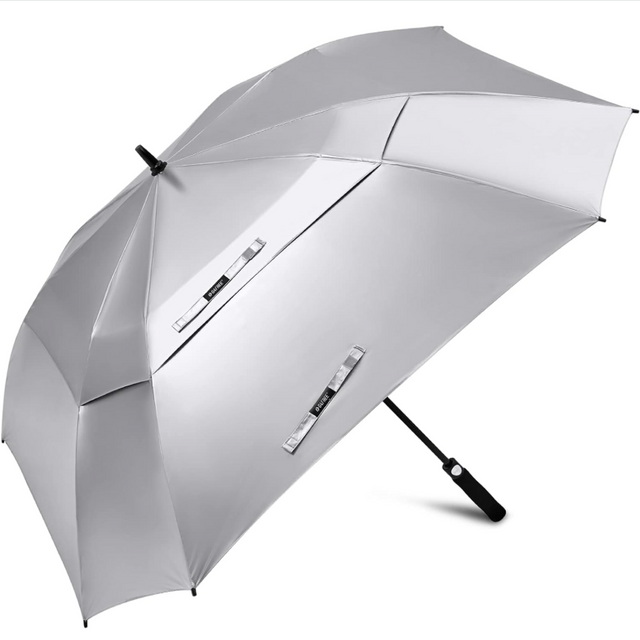
- Double Canopy: Layered vent system enabling gusts to pass through, minimizing the risk of inversion in high winds—the bane of regular umbrellas.[9]
- Windproof Construction: Strong ribs and flexible, shock-absorbing shaft, often tested under severe weather, preserving the umbrella's upright function.[10]
- Comfortable Handle: Rubberized, contoured, or wooden grips designed for non-slip performance in wet conditions.[11]
- Customization Potential: Ideal for OEM branding, promotional gifting, and tailored specifications by global umbrella manufacturers for brands, wholesalers, and events.
Golf umbrellas are an essential tool for golfers during rain or high sun, but their strength and size cater to broader needs:
- Shielding multiple people in outdoor settings such as weddings, sports tournaments, and concerts.
- Serving as premium promotional gifts for brands with large printing areas for company logos or themed messages.[9]
- Family functions and travel, offering ample shelter for groups, luggage, or beach equipment.
- Coaches, referees, and spectators at various sporting events, favoring golf umbrellas for their dependable protection.[12]
- OEM/ODM opportunities where manufacturers offer custom colors, printing, and packaging for international clients.
The canopy is the visual and functional centerpiece of the umbrella. Common materials include:
- 210T Pongee Polyester: Favored for water resistance, quick drying, and vibrant printing.[13][10]
- Nylon: Extremely light, easy to transport, and provides reliable rain protection.[14]
- RPET Polyester: Recycled eco-friendly material, increasingly chosen for sustainability efforts.[1]
- UV-treated Polyester: Offers UPF 50+ sun protection, combating the risks of prolonged sun exposure.[10]
- Waterproof Composites: For high-performance umbrellas, multi-layered composites offer both rain and wind resistance.
A golf umbrella frame must maintain shape despite strong winds and frequent use. Popular materials include:
- Fiberglass: Preferred for its flexibility, lightness, and corrosion resistance. It bends in wind but rarely breaks, ensuring the longevity of the product.[15][11][1]
- Aluminum: Lightweight and corrosion-resistant, suitable for portability.
- Steel: Heavy but extremely durable, often used in luxury umbrellas for maximum life.[1]
- Carbon Fiber: Reserved for premium umbrellas demanding minimum weight and maximum strength.[16]
Handles impact comfort and performance. Choices include:
- Rubberized: Non-slip, ergonomic and ideal for humid and rainy environments.
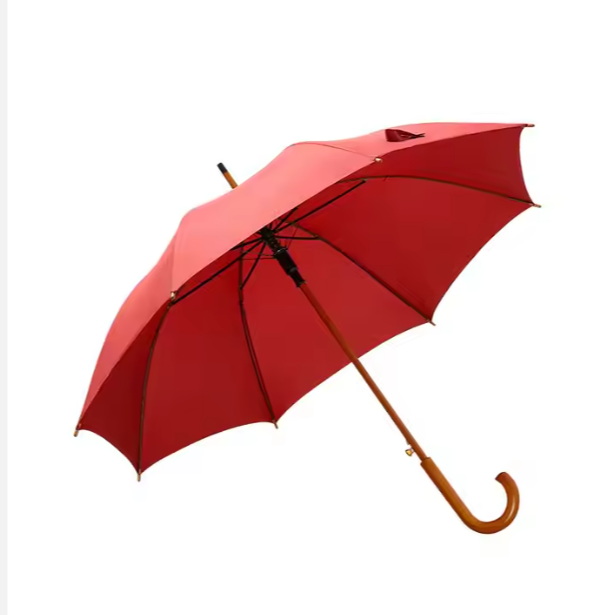
- Wooden: Traditional, luxurious look and feel, often selected for branded umbrellas.[17][11]
- Plastic: Cost-effective for mass production and lightweight needs.
- Auto-Open: One-button operation to instantly deploy the canopy.[10]
- Manual Closure: Folding is typically manual to maintain structural accuracy.
- Double-Automatic (advanced): Premium umbrellas sometimes incorporate automatic closure for convenience.
Most golf umbrellas fall into several types, each optimized for specific use cases:
- Standard Golf Umbrella: 54–62 inches, designed for 2–3 people. Reliable choice for individual golfers.
- Large Golf Umbrella: 68–80 inches, maximum coverage for groups or family outings.[9][10]
- Compact/Foldable Golf Umbrella: Smaller arc (48–54 inches), easier carry and storage, trade-off in coverage.[10]
- Double Canopy/Windproof Umbrella: Vented design dissipates wind energy, ideal for high-wind environments.[9][10]
- UV Protection Umbrella: Lined with UVA/UVB-blocking layers, increasingly chosen for sun-drenched climates.[10]
The size selection is crucial: a solo golfer may be well-served by a 62-inch traditional golf umbrella, but families, equipment-laden athletes, or commercial buyers seek larger formats for extended protection and marketing impact.
Producing a high-quality golf umbrella requires precise coordination, skilled craftsmanship, and rigorous testing. For factories serving global brands and wholesalers, these are the necessary stages:[2][3][5][1]
Top-tier umbrella manufacturing begins by sourcing premium materials—waterproof canopy fabrics, durable frames, ergonomic handles. Factories may choose eco-friendly textiles like RPET polyester in response to evolving global sustainability requirements.[5][1]
Advanced automated machines slit rolls of fabric to panel width, usually 8–12 inches wide, to ensure consistent canopies. All edges undergo reinforced overlocking to prevent fraying, enhancing the umbrella's lifetime resilience against wind and frequent use. Pantone color matching and fabric testing guarantee aesthetic and functional expectations for brands and custom buyers.[1]
Brand logos, slogans, patterns, and promotional graphics are applied using digital, silk-screen, sublimation, or heat-transfer printing. The custom branding is meticulously aligned and cured for color durability against rain or sun exposure.[2][5][1]
The cut and printed panels are sewn into full umbrella canopies, with precise stitch densities (12–15 stitches/cm) for structural integrity. Edges are double-hemmed for wind resistance, and attachment points for frame integration are reinforced to avoid seam failure. Some umbrellas require 6–24 stitched panels depending on client specifications.[5][2]
The canopy is assembled onto the umbrella frame—the ribs, shaft, tips, and handle—all carefully matched to meet the requested specifications. Manual stitching secures panels to ribs for strength and longevity. The shaft is typically fiberglass, steel, or aluminum, and handles are installed by screwing, gluing, or heat-sealing depending on design. Adjustable ribs and double-canopy designs are popular among international buyers seeking windproof performance.[5][1]
The umbrella strap, tip, cap, and tie wrap are added. Additional finishing, such as laser engraving on handles or branded sleeves, is available for OEM/ODM clients. Each umbrella is inspected mid-production and after final assembly for quality control—frame strength, canopy fixation, handle grip, and opening/closing mechanisms.[5]
Every golf umbrella is subjected to at least two rounds of rigorous inspection. Tests include water repellency, UV protection, wind resistance in simulated storm conditions, and repeated open/close cycles. Defective units are repaired or removed to prevent shipping failures.[4][2]
After passing inspections, umbrellas are packed into customer-specified boxes—carton, retail, or custom-branded packaging. Warehouses maintain controlled temperature and humidity conditions to prevent rust or mildew, and logistics are optimized for rapid shipment worldwide.[2]
Professional umbrella factories offer detailed customization—size, color, canopy pattern, handle style, branding methods, packaging, and even dedicated production lines for global clients. Minimum order quantities, sample-making timelines, and production capacities are clarified for buyers, ensuring flexibility for diverse order volumes.[1][5]
Golf umbrellas have transcended their sporting origins, gaining traction in:
- Promotional and Corporate Branding: Companies utilize golf umbrellas as high-impact gifts, with space for large, vibrant logos.
- Event Merchandise: Sports teams, festivals, and charities distribute custom golf umbrellas for practical exposure and revenue.
- Personal Accessory: Families, travelers, and outdoor enthusiasts turn to large umbrellas for protection and style.
- Sustainability Focus: Eco-friendly umbrella materials and biodegradable packaging are rising trends demanded by international clients.
- Technology Integration: Manufacturers are innovating with wind tunnel testing, UV resistance, ergonomic features, and smart automation to maintain competitive advantage.
To choose a golf umbrella fit for your needs, consider:
- Canopy Size: 62-inch is standard for individual, 68–80 inch recommended for groups or equipment shelter.
- Frame Quality: Fiberglass or aluminum for lightweight wind resistance, steel for long-term durability.
- Fabric: Waterproof, quick-dry, UV-resistant polyester or nylon with double-stitched panels.
- Handle Comfort: Non-slip grip for rainy play, customizable for brand requirements.
- Customization Needs: OEM potential—brand logo, Pantone matching, advertising graphics, packaging style.
- Supplier Reliability: Proven track record, quality control, production capacity, and timely delivery.
Factories with automated machinery, skilled QC teams, and full-service OEM/ODM offerings afford brands and wholesalers the ability to launch unique, market-winning umbrella products.
Golf umbrellas are more than oversized rain shields—they represent a fusion of engineering, material science, and modern branding. Their versatility, coverage, and durability make them essential accessories for golfers and popular choices for families, businesses, and event organizers worldwide. The manufacturing process for golf umbrellas is defined by skilled craftsmanship, precision automation, and strict quality standards—especially for global OEM buyers seeking reliability and customization. As industry trends lean toward eco-friendly materials, technological improvements, and creative design, golf umbrellas continue to grow in international relevance and appeal. Partnering with an experienced umbrella factory ensures brands and wholesalers receive golf umbrellas that perform reliably from first fairway to city street.
Premium golf umbrellas use fiberglass frames for wind flexibility and 210T polyester or eco-friendly RPET canopies for water and UV resistance.[11][1]
Double canopy golf umbrellas utilize layered vented fabric, allowing wind to pass through without inverting the structure—even during intense storms.[9][10]
Yes, global factories offer OEM/ODM services for custom logos, colors, printing techniques, and packaging, catering to international brand and event needs.[5][1]
Absolutely. Their size and durability make them ideal for outdoor activities, events, family protection, and promotional campaigns.[9][10]
Each umbrella undergoes water resistance, wind resistance, and durability tests, with multiple inspection checkpoints to ensure top quality before packaging and shipment.[4][2]
[1](https://topumbrella.com/info/191)
[2](https://www.umbrellas-factory.com/news/detailed-umbrellas-manufacturing-process/)
[3](https://www.madeumbrella.com/news/view_891.html)
[4](https://www.youtube.com/shorts/Hr5ATZwY-Tg)
[5](https://towum.com/umbrella-manufacturing-process/)
[6](https://www.promotionalgolf-umbrellas.com/news/the-daily-life-of-the-umbrella-manufacturing-factory-225059.html)
[7](https://www.susinoumbrella.com/blog/the-whole-process-of-umbrella-manufacturing_b96)
[8](https://topumbrella.com/info/164)
[9](https://topumbrella.com/info/141)
[10](https://www.gonexsport.com/blogs/gift-guides/how-to-choose-the-best-golf-umbrella)
[11](https://vovexgolf.com/blogs/golf/how-big-is-a-golf-umbrella)
[12](https://www.shipsticks.com/blog/best-golf-umbrellas/)
[13](https://www.umbrellasonly.com.au/blog/what-are-the-different-parts-of-a-golf-umbrella.htm)
[14](https://baliosumbrellas.com/the-ultimate-guide-for-umbrella-material/)
[15](https://www.umbrellaworkshop.com/umbrellas/parts-of-an-umbrella/)
[16](https://www.susinoumbrella.com/blog/golf-umbrella-design-and-materials_b95)
[17](https://parapluiedecherbourg.com/en/how-and-why-should-you-choose-a-better-golf-umbrella/)


