
Language
Please Choose Your Language
Views: 222 Author: Amanda Publish Time: 2025-11-01 Origin: Site


Content Menu
● Standard Golf Umbrella Sizes
>> Shaft Length and Portability
>> Frame and Shaft Engineering
>> Handle Types
● Technical Comparison: Golf vs. Regular Umbrellas
● Advantages of a Golf Umbrella
>> 1. How big should a golf umbrella be?
>> 2. What features make golf umbrellas superior to standard umbrellas?
>> 3. Can golf umbrellas be used outside the golf course?
>> 4. Why is vented canopy important in golf umbrellas?
>> 5. Are there options for custom branding and sizes?
A golf umbrella is far more than a simple rain guard—it's an indispensable accessory for golfers seeking both performance and comfort on the course. Featuring canopies that stretch up to 70 inches in diameter, this essential item offers unrivaled protection against the elements for the player, equipment, and even companions. This comprehensive guide explores every aspect of golf umbrella sizing, construction, design evolution, and the myriad advantages that make them a preferred choice for both sports and daily use.[3][4][5]
Golf umbrellas are notable for their large canopies and extended shaft lengths, a direct response to the unpredictable and open nature of golf courses. Typical canopy diameters are:
- Small Golf Umbrellas: 54 inches
- Standard Golf Umbrellas: 60 to 62 inches
- Large Golf Umbrellas: 64 to 68 inches
- Extra-Large Golf Umbrellas: 70 to 72 inches[4][5][3]
This arc length is measured along the umbrella curvature and determines the umbrella's overall coverage. With a diameter spanning up to 70 inches, a golf umbrella offers enough space to shelter the golfer, their golf bag, and sometimes a caddy as well.[5][4]
Closed lengths of golf umbrellas typically range between 40 and 50 inches, ensuring convenient storage in golf bags or carts. Lightweight foldable models suit players who prioritize portability while ensuring adequate opened coverage for the course.[5]
Early golf umbrellas were strictly utilitarian—made of oiled cotton fabric stretched over heavy wooden frames and handles. Their limited color palette prioritized function over style, focusing mainly on keeping golfers and their equipment dry during play. These early models also boasted large canopy sizes, typically greater than 60 inches, reflecting the consistent need for extended coverage.[5]
Advancements in materials and engineering have transformed golf umbrellas into robust yet stylish gear. Today, these umbrellas use fiberglass frames that balance lightweight handling with strength. Double-canopy designs with strategic vents allow strong winds to pass through without flipping the umbrella inside out. Ergonomic handles, automatic open/close mechanisms, and a variety of vibrant colors and patterns ensure both aesthetic appeal and technical excellence.[3][4][5]
Golf umbrella canopies are manufactured from polyester or nylon. Polyester is highly water-resistant and suitable for heavy rain, while nylon is lightweight, favoring portability in less severe conditions. Many modern umbrella fabrics feature advanced UV coatings, transforming the canopy into a sun shield for protection against harmful rays.[5]
Vented or double-canopy structures further improve wind resistance and stability—a critical advantage on open golf courses where sudden gusts are common.[4][5]
Frames and shafts are essential to an umbrella's performance and longevity. Fiberglass offers flexibility and strength with lightweight construction, making it the preferred choice for quality golf umbrellas. Steel frames deliver durability but come at the cost of added weight, while aluminum offers corrosion resistance and reasonable strength suitable for telescopic handles or folding umbrellas.[2][5]
The handle, critical for comfortable use, may be made of rubber, wood, or plastic. Rubberized handles offer superior grip, particularly in wet weather. Wooden handles deliver a classic feel and visual elegance, though they're less effective in slippery conditions. Plastic handles are favored for budget models but may compromise comfort and grip during extended play.[2][5]
A well-designed golf umbrella must withstand strong winds. Reinforced fiberglass frames and vented/double canopies prevent inside-out flipping and breakage. By permitting wind to flow through the canopy, these features preserve both performance and product integrity even during harsh weather.[9][5]
Leading golf umbrellas use Teflon-coated or similarly treated fabrics to promote water-beading and rapid drying. Meticulously stitched seams and sealed joints ensure that no moisture penetrates the canopy, keeping players and equipment dry.[4][5]
Modern golf umbrellas often include a UV-blocking layer within the canopy fabric, sometimes enhanced with a silver coating for further ultraviolet resistance. A higher UPF rating ensures comprehensive protection, minimizing the risks of sunburn and heat exhaustion on sunny days.[5]
Golf umbrellas are highly sought after as promotional tools due to the large printable area on their canopies. Companies, clubs, and tournament organizers frequently request custom branding—logos or artwork—transforming each umbrella into a functional advertisement and a prestigious event giveaway.[10][4]
Beyond this, bespoke options allow for tailored color combinations, rib counts for added wind resistance, and proprietary handle designs to suit individual and corporate specifications.[3][4]
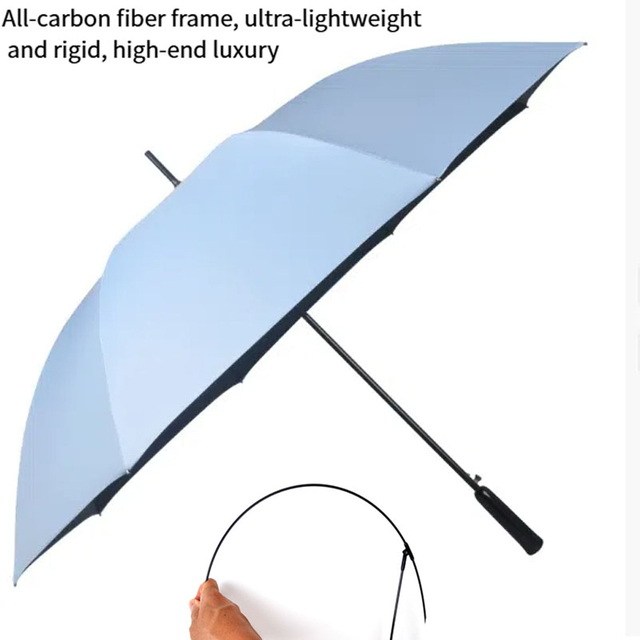
Golf umbrellas differ fundamentally from standard personal umbrellas:
| Feature | Golf Umbrella (60-70 in) | Regular Umbrella (36-42 in) |
| Canopy Diameter | 60–70 in | 36–42 in |
| Frame Material | Fiberglass/Aluminum | Steel/Plastic |
| Canopy Vents | Common | Rare |
| UV Protection | High | Low |
| Branding Area | Large | Small |
| Weight | Moderate | Light |
| Application | Group/Equipment | Personal |
Golf umbrellas are built for group use, equipment protection, and resilience under demanding outdoor conditions.[10][4][5]
Professional golf umbrellas combine automated precision with skilled labor. The manufacturing process includes:
- Cutting high-grade polyester or nylon into pre-measured panels
- Sewing panels together using reinforced seams
- Laminating or coating fabrics for water and UV resistance
- Assembling fiberglass, aluminum, or steel frames with precision-fitted ribs
- Installing ergonomic, weather-resistant handles
- Conducting rigorous wind tunnel and water resistance tests
- Applying custom prints, embroidery, or logos as specified by the buyer[2][3][4]
Quality control is strict, with each umbrella undergoing weighted-stress and wind-resistance testing to ensure durability and client satisfaction. OEM factories offer tailored solutions for foreign brands, wholesalers, and manufacturers, adapting every detail to meet international specifications.[10][4]
Golf umbrellas offer more than weather protection:
- Shelter for player, clubs, caddy, and accessories[4][5]
- High wind resistance via reinforced frames and vented canopies[9]
- UV protection for safe play in sunny conditions[11][5]
- Double-duty as general rain or outdoor event umbrellas[10]
- Customizable branding for clubs, brands, and sponsors[4][10]
- Lasting durability even in heavy use situations[5]
- Choose canopy size based on user height and coverage need (solo or group)
- Prefer vented/double-canopy models for wind resistance in open environments
- Look for water-repellent and UV-coated fabrics for protection in all seasons
- Select ergonomic handles for comfortable extended use
- Review manufacturer specifications for rib count and frame material for best durability[10][4][5]
A top-tier golf umbrella combines generous coverage, rigorous manufacturing, reinforced windproof engineering, and comfortable ergonomic design to deliver consistent performance and reliability on the course. Modern umbrellas, with their 60–70 inch arc, advanced materials, and customizable branding, provide not just shelter but style and enhanced experiences for both professional and recreational users. When selecting a golf umbrella, prioritize ventilation, waterproof fabric, frame strength, and ergonomic comfort to ensure optimal protection for yourself and your equipment, regardless of the weather.[3][4][5]
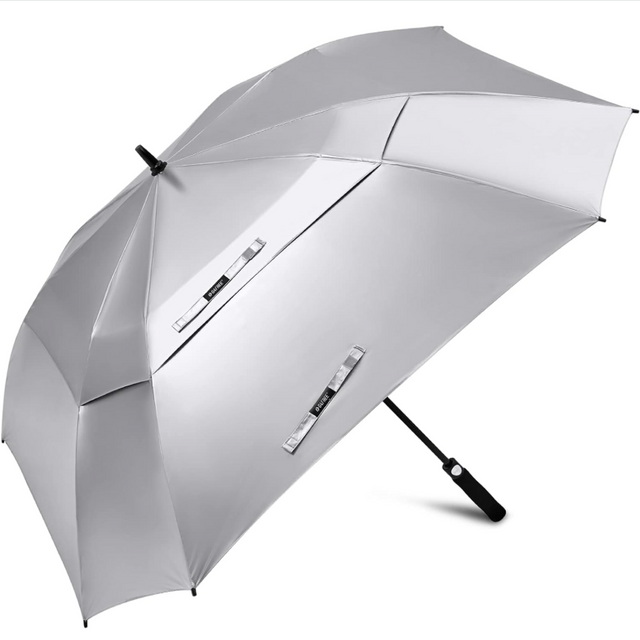
For most golfers, a canopy diameter of 60–68 inches offers a balance of full coverage and convenient handling. Taller individuals or groups may need extra-large options up to 70–72 inches for optimal protection.[3][4][5]
Features include larger canopy sizes, vented or double-canopy designs for wind resistance, reinforced fiberglass frames, and ergonomic handles. These advantages translate to more reliable coverage and greater comfort on the golf course.[2][4][5]
Yes. Their durability and coverage make them ideal for general outdoor activities, sports events, and as protective covers for musical instruments, equipment, or group outings.[10][5]
Vented canopies significantly increase wind resistance, allowing strong gusts to pass through, which reduces the chance of the umbrella flipping and breaking during adverse conditions.[9][4]
OEM factories offer wide-ranging customization: printing, embroidery, bespoke color choices, different ribs counts, and varying canopy materials to suit international clients, event organizers, and promotional needs.[3][4][10]
[1](https://actionpromote.co.uk/blog/your-guide-to-golf-umbrellas/)
[2](https://www.umbrellaworkshop.com/umbrellas/parts-of-an-umbrella/)
[3](https://www.blueprintumbrella.com/the-ultimate-guide-to-golf-umbrellas-style-strength-and-versatility.html)
[4](https://topumbrella.com/info/141)
[5](https://vovexgolf.com/blogs/golf/how-big-is-a-golf-umbrella)
[6](https://www.funumbrella.com/blog/the-ultimate-guide-to-umbrella-parts-and-materials)
[7](https://www.yoana-umbrella.com/the-ultimate-guide-to-umbrella-components/)
[8](https://insights.made-in-china.com/Umbrellas-A-Comprehensive-Guide-to-Understanding-Their-Uses-and-Meeting-User-Needs_KTHabZtxOnio.html)
[9](https://www.blueprintumbrella.com/a-stay-dry-and-comfortable-with-the-best-large-windproof-golf-umbrella.html)
[10](https://umbrellaheaven.com/product-category/sport-umbrellas/golf-umbrellas/)
[11](https://weatherman.com/products/golf-umbrella)


