
Language
Please Choose Your Language
Views: 222 Author: Amanda Publish Time: 2025-11-06 Origin: Site


Content Menu
● Key sizing principles and practical rules
● Common Patio Umbrella sizes and recommended applications
● How to measure space accurately for a Patio Umbrella
● Materials, mechanisms, and features affecting size choice
● Base choices and mounting options
● Branding, customization, and packaging for OEM clients
● FAQs
>> 1) What size Patio Umbrella is best for a standard 4-person table?
>> 2) How much larger should the umbrella be than the table?
>> 3) Can a 9 ft Patio Umbrella fit a rectangular table?
>> 4) What wind considerations should OEM buyers focus on?
>> 5) What base size is needed for stability with a large umbrella?
Choosing the right Patio Umbrella size is essential for delivering consistent shade, comfort, and aesthetic harmony in outdoor spaces. For OEM clients serving international brands, wholesalers, and manufacturing partners, a well-structured size strategy supports product differentiation, branding opportunities, and reliable performance across markets with varying wind, sun, and outdoor-use conditions. This article extends practical guidance on sizing Patio Umbrella canopies to fit a range of table dimensions, seating arrangements, and space constraints, while highlighting considerations for branding, logistics, and end-user satisfaction. It also offers concrete rules of thumb, measurements, and scenarios to help OEM teams design versatile, scalable umbrella lines.
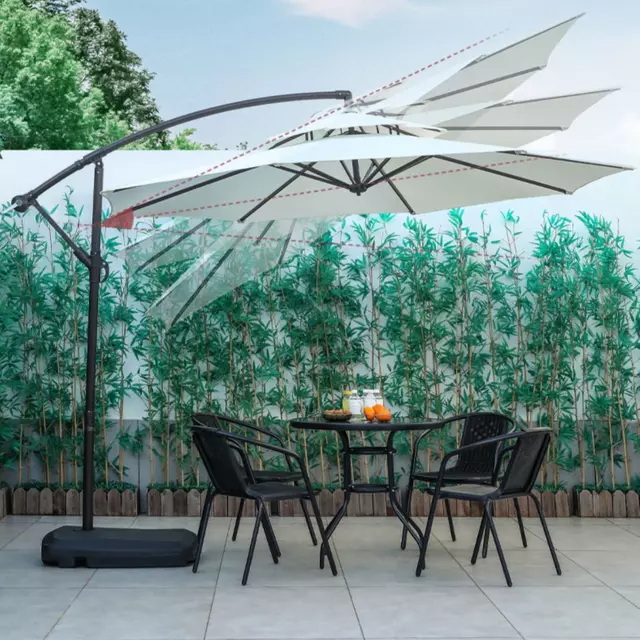
- Shade coverage beyond the table: A widely used guideline is to extend the canopy beyond the table perimeter by about 2 feet (approximately 60 cm) on all sides. This margin helps ensure guests comfortable shade without crowding chairs, and it provides a cushion for movement as people sit, stand, or rotate around the table. For round tables, the canopy diameter generally equals the table diameter plus about 2 feet on each side; for rectangular tables, the canopy should cover the longer dimension plus margins on the ends to preserve shade across the seating area. This principle informs the common range of 6–8 ft for compact setups, 9–11 ft for typical dining configurations, and 12–13 ft for larger gatherings. The rationale remains grounded in shade geometry and human comfort, and it is widely adopted by retailers and shade specialists.
- Table shape and seating layout: Round tables tend to align well with circular canopies of matching diameter, while rectangular and oval tables often benefit from elongated canopies or multiple umbrellas to ensure edge-to-edge coverage. For café and dining configurations, 9–11 ft umbrellas frequently pair with four- to six-seat layouts, whereas 6–8 ft options suit smaller setups. When space is constrained or when a property requires a single canopy to cover multiple seating zones, consider how sun paths change during the day and how a tilt or rotation mechanism can optimize shading without resizing the canopy.
- Stand, wind, and stability: The umbrella's base and stand must be matched to the chosen size to prevent tipping. Larger umbrellas require stronger bases or integrated anchoring systems, and wind considerations become more critical as canopy size increases. Venting, tilt features, and robust frame construction help manage lift and sway, contributing to a safer, more comfortable experience for users. These mechanical and structural choices also influence perceived shade quality and user satisfaction, which are important for OEM programs that aim to serve multiple markets with consistent branding and performance.
- OEM branding and logistics: For foreign brands and distributors, offering a scalable sizing framework—such as core canopy sizes of 9 ft with compatible accessories, branding options, and predictable packaging—enables consistent shade characteristics across markets while allowing customization for regional preferences. Packaging should protect the canopy, ribs, and base components during transit, and assembly instructions should be clear to reduce returns and support smooth installation by end customers.
- 6–8 ft (1.8–2.4 m) umbrellas: Suitable for small tables and bistro sets, balcony dining, and intimate seating for two to four people. These sizes provide shade coverage roughly in the 33–44 square feet range, depending on canopy shape and vent design, making them ideal for compact spaces where portability and aesthetics matter. For circular tables around 24–30 inches in diameter, a 6–7 ft canopy typically offers adequate shade with a balanced silhouette in tight spaces.
- 9–11 ft (2.7–3.4 m) umbrellas: The standard choice for many outdoor dining configurations, especially tables seating four to six people. Coverage commonly falls between 60–90 square feet, delivering comfortable shade across the table and surrounding chairs. This size is the most versatile for patios, pool sides, and resort settings, and it commonly aligns with rectangular tables up to moderate lengths where seating remains comfortable and shadows remain evenly distributed.
- 12–13 ft (3.7–4.0 m) umbrellas: Best for large dining ensembles, open-plan outdoor rooms, sectional lounges, or spaces with multiple seating clusters. The expansive canopy provides broad shade but requires stronger bases and careful wind management. This size is well-suited for large restaurant terraces, hotel patios, and sizable home entertainment areas where a single umbrella covers multiple seating zones without creating uneven shade pockets.
- Measure the table footprint: Start by measuring the table diameter for round tables or the length and width for rectangular tables. Add approximately 2 feet of shade margin on each side to estimate the canopy diameter needed for comfortable coverage. For instance, a round table with a 36-inch diameter typically benefits from a 6–7 ft umbrella, while a rectangular table around 60 inches long may pair well with a 9 ft canopy, depending on chair placement and desired shade intensity.
- Plan for movement and clearance: Leave at least 24–30 inches of clearance between the edge of the shade and adjacent furniture, allowing chairs to be pulled out and guests to move without collisions with the canopy ribs. In higher-traffic areas or public spaces, add extra space to accommodate foot traffic and canopy rotation as the sun tracks across the sky.
- Select compatible stands and bases: Base requirements scale with canopy size. Lighter bases can support smaller canopies in calm environments, while larger setups require heavier bases or anchored systems to withstand wind loads. For OEM programs, include a range of base options that harmonize with sizes across the lineup, ensuring stability and consistent performance in diverse markets.
- Consider wind and regional factors: Local wind conditions and typical usage patterns influence the practical size. Wind-vented canopies, reinforced frame geometries, and appropriate mounting solutions help balance shade with safety. When designing for international markets, provide guidance on wind ratings and optional accessories that improve stability in exposed environments.
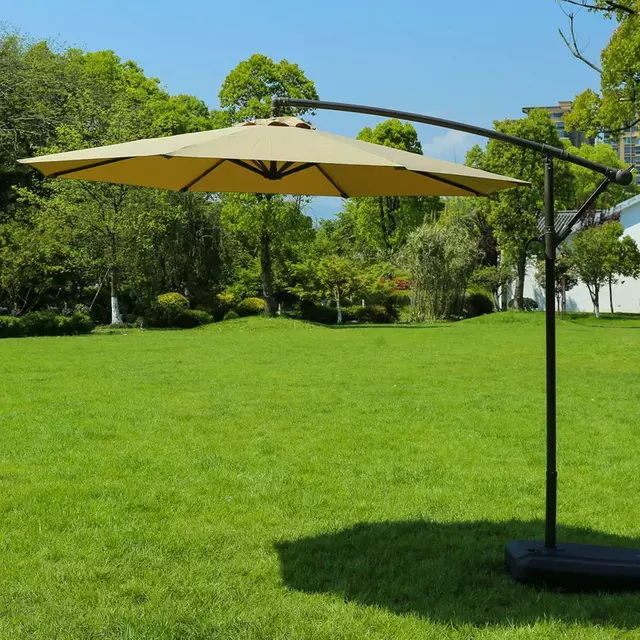
- Frame materials and durability: Aluminum frames are common for outdoor shading products due to corrosion resistance and lighter weight, enabling larger canopies with manageable handling. Steel frames offer robust strength for heavier bases and wind resistance. OEM programs benefit from specifying a range of frame materials and finishes to meet regional aesthetic preferences and performance standards.
- Canopy fabric and wind performance: Fabric choice influences wind tolerance and colorfastness. Heavier, high-denier fabrics with UV stability improve longevity in sun-drenched markets and contribute to a more stable shade profile. Venting options improve airflow and reduce lift, particularly for larger canopies. The combination of fabric, venting, and frame design determines real-world shade performance under wind.
- Mechanisms and operation: Tilt, crank, and motorized options affect how shade shifts with sun position, which in turn can influence perceived coverage. Larger canopies benefit from smoother operation and reliable tilt systems to maximize shade without manual strain. For brands targeting global markets, offering a spectrum of mechanical options helps align product lines with customer expectations and usage patterns.
- Base sizing and anchoring: The weight and footprint of the base should match canopy size to prevent tipping. For larger umbrellas, heavier bases (or integrated deck-mount options) are common. OEM programs can standardize base compatibility across sizes (e.g., 60–100 kg bases for mid-sized canopies, heavier for 12–13 ft models) to simplify logistics and installation.
- Alternative mounting: In space-limited environments or permanent installations, consider wall-mounted or ceiling-supported options that provide stability while conserving footprint. Docking systems and quick-release bases can streamline multi-location deployments for brands operating globally.
- Custom sizing and modular design: Offer a core canopy size (such as 9 ft) with scalable accessories and branding elements, enabling brands to tailor products for different markets while maintaining a consistent shade profile and silhouette. Modular designs also support cross-selling with compatible accessories (e.g., lights, fans, protective covers) to expand product ecosystems.
- Branding placements: Options include logo embroidery on the canopy, branded decals on the underside, and branded bases or handles. Color matching and fade resistance are critical, especially for outdoor branding that must endure sun exposure and weathering.
- Packaging and logistics: Design packaging that protects components during transit, with clear assembly instructions and a parts list. Provide standard carton dimensions and weight targets to optimize freight and reduce damage in international shipments.
A well-sized Patio Umbrella is more than a shade device; it is a branding and user-experience asset for OEM clients serving international markets. By aligning canopy sizes with table dimensions, seating layouts, and space constraints—and by offering scalable branding, robust bases, and wind-aware designs—manufacturers can deliver consistent shade quality and aesthetics across diverse environments. A thoughtfully engineered range, with clear installation guidance and adaptable base options, supports easier logistics, faster deployment, and higher customer satisfaction for global brands and distributors.
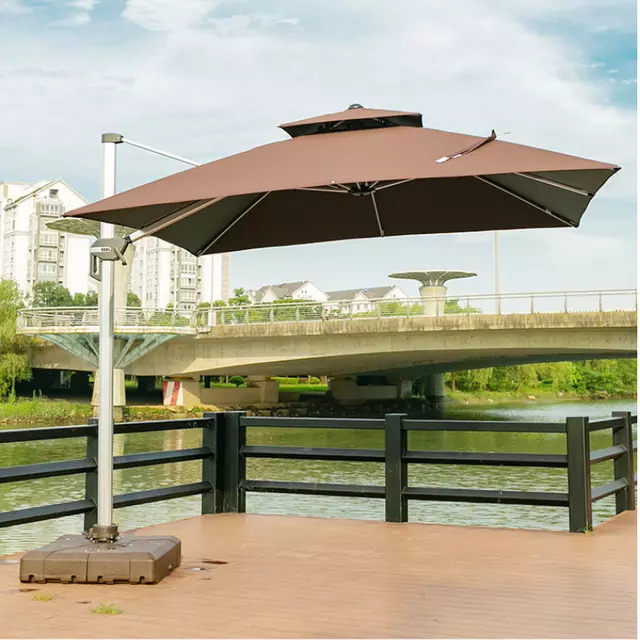
- A 9-foot Patio Umbrella is typically ideal for a standard 4-person dining setup, providing ample shade beyond the table edges while accommodating seating around the perimeter. For smaller 4-person tables, an 8-foot option can also work if space is constrained. [Cite: general industry guidance]
- A practical rule is to extend shade at least 2 feet beyond each side of the table. For round tables, aim for a canopy diameter about 1.5 to 2 times the table diameter to ensure even coverage and comfortable margins. [Cite: shade-coverage guidelines]
- Yes. A 9 ft canopy can cover many rectangular tables up to roughly 72–84 inches in length, depending on chair placement and the desired shade area. For longer rectangular tables, larger sizes (10–11 ft or more) may be preferable to ensure full coverage. [Cite: size guides]
- Wind resistance depends on canopy venting, frame strength, and base stability. Ventilated canopies and well-anchored bases reduce lift and sway, especially for larger canopies. Provide wind-load ratings per size and offer accessories like wind vents to enhance performance in exposed markets. [Cite: performance guides]
- Larger umbrellas (12–13 ft) typically require heavier bases or anchored mounting solutions. Base weights commonly range from roughly 100–150 kg (220–330 lb) or more, depending on wind conditions, installation surface, and canopy size. Always match base specifications to the canopy and local climate. [Cite: stability standards]
[1](https://westshade.com/blogs/what-size-patio-umbrella-do-i-need/)
[2](https://www.patiowell.com/blogs/tips-how-tos/what-size-patio-umbrella-do-i-need)
[3](https://www.patioproductions.com/blog/patio-furniture/patio-umbrella-buyers-guide/)
[4](https://purpleleafshop.com/blogs/news/patio-umbrella-size-guide)
[5](https://www.aosom.com/blog-the-complete-guide-to-measuring-patio-umbrellas.html)
[6](https://mybaser.com.au/what-size-Umbrella-should-i-choose-Umbrella-size-guide)
[7](https://www.brookfieldresidential.com/news-and-blog/complete-guide-to-patio-umbrellas)
[8](https://www.christysports.com/blog/patio-umbrellas-guide.html)
[9](https://www.rstbrands.com/blog/how-to-choose-outside-patio-umbrellas-rst-brands)
[10](https://westshade.com/blogs/what-size-umbrella-for-patio-table/)


