
Language
Please Choose Your Language
Views: 222 Author: Amanda Publish Time: 2025-12-02 Origin: Site


Content Menu
● What Makes A Golf Umbrella "The Best"?
● Why Golf Umbrella Size Matters
● Windproof Engineering In A Golf Umbrella
● Fabric, Coatings And UV Protection
● Handles, Shafts And Everyday Comfort
● Inside An OEM Golf Umbrella Factory
● Custom OEM Golf Umbrella For Brands, Wholesalers And Events
● How To Brief Your OEM Partner For A Golf Umbrella Project
● Typical Specifications Of A Premium Golf Umbrella
● OEM Quality Control: What Buyers Should Expect
● Why OEM Manufacturers Often Make The "Best" Golf Umbrella
● FAQ
>> 1. What size Golf Umbrella should most golfers choose?
>> 2. Is a double‑canopy Golf Umbrella always better?
>> 3. What materials are best for a Golf Umbrella frame?
>> 4. How can a brand customize an OEM Golf Umbrella?
>> 5. How long should a quality Golf Umbrella last?
Who makes the best Golf Umbrella? In the real world, the "best" Golf Umbrella is usually created by specialist OEM manufacturers working behind the scenes for international brands, retailers and wholesalers, not just by the logo on the canopy. The winning combination is professional golf‑specific design, high‑quality materials, strict manufacturing standards and the ability to customize for different markets and brand stories.
The best Golf Umbrella is built around protection and reliability on the course: it must keep the golfer and clubs dry, stay stable in strong wind and offer shade in harsh sunlight. It also needs to open quickly, feel comfortable in the hand and survive frequent use over multiple seasons. A premium Golf Umbrella therefore blends performance, comfort and durability rather than chasing just one feature such as size or color.
Key elements that typically define a top‑tier Golf Umbrella include:
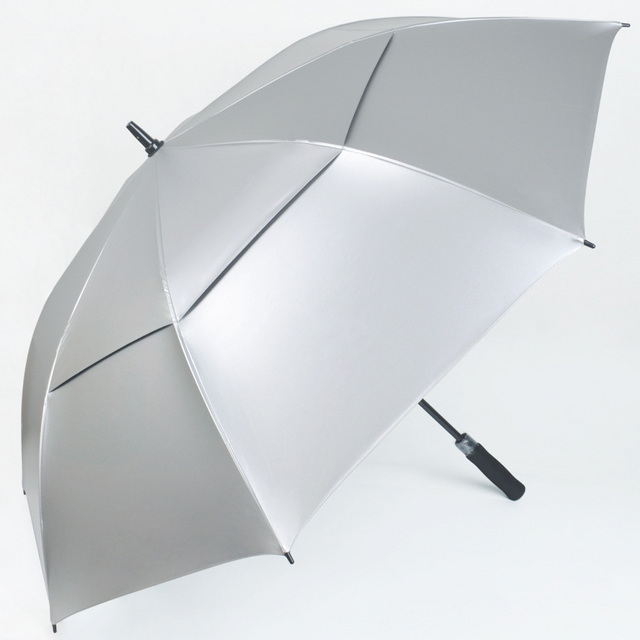
- A generous canopy diameter, normally 60–68 inches, to cover golfer and bag.
- A reinforced, wind‑resistant frame that can flex instead of snapping in gusts.
- High‑density, water‑repellent fabric, often with UV‑blocking treatment.
- An ergonomic, non‑slip handle sized to work with trolleys and carts.
- Smooth opening and closing mechanisms that feel solid but easy to operate.
When an OEM factory can repeat these qualities consistently across thousands of Golf Umbrella units for different brands, that is when it truly "makes the best Golf Umbrella" in a professional sense.
Size is the first feature golfers notice when comparing a Golf Umbrella with a regular umbrella. On a wet or windy fairway, a compact city umbrella simply cannot keep both player and clubs dry, especially when walking between holes or waiting on the tee box. This is why serious Golf Umbrella designs use oversized canopies.
A typical "sweet spot" for a Golf Umbrella is around 60–62 inches for club shops and everyday golfers, and up to 68 inches for tour‑style or tournament Golf Umbrella models. Larger diameters provide better coverage but add some weight and wind resistance, so brands often work with OEM manufacturers to fine‑tune size, number of panels and overall balance for their target users.
If size is easy to see, wind performance is the hidden test that separates an average Golf Umbrella from the best Golf Umbrella. On exposed fairways, wind gusts can flip or break a cheap umbrella in seconds. Top OEM factories therefore design Golf Umbrella frames with wind in mind from the very beginning.
Common windproof strategies for a Golf Umbrella include:
- Double‑canopy or vented designs that allow pressure to escape rather than inverting the canopy.
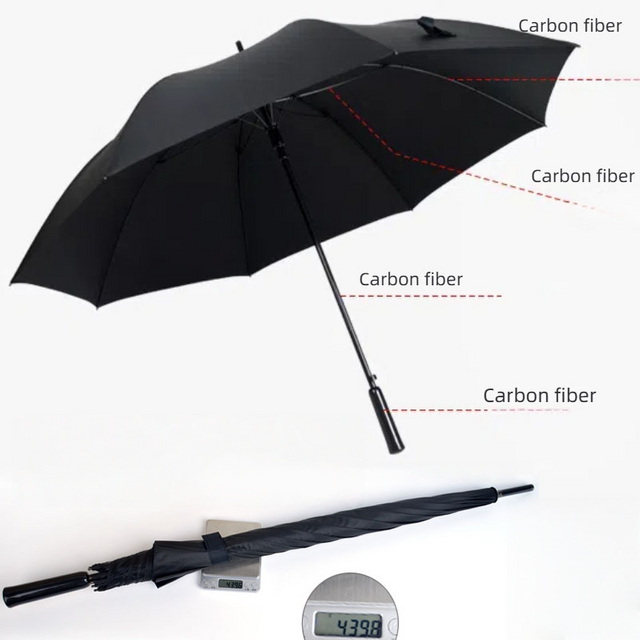
- Fiberglass ribs and shafts that bend under stress and then return to shape instead of snapping like brittle metal.
- Reinforced joints and runners that keep the Golf Umbrella opening smoothly even after many cycles.
For brand buyers, these elements are usually specified in the technical sheet when creating a new OEM Golf Umbrella project, ensuring that every batch meets the same wind‑resistance expectations.
The fabric chosen for a Golf Umbrella must handle heavy rain, strong sun and repeated folding without stretching, tearing or fading. In professional OEM production, fabric selection is one of the earliest and most important decisions for a Golf Umbrella line.
High‑quality Golf Umbrella products usually feature:
- Tightly woven polyester or nylon with durable water‑repellent treatment.
- UV‑blocking coatings or laminated layers that offer real UPF protection.
- Colors and prints that hold up under sunlight, friction and frequent use.
Because Golf Umbrella canopies also act as moving billboards for brands, the fabric must take printing well. Pantone color matching, logo clarity and edge definition are all critical points in custom Golf Umbrella OEM projects.
A Golf Umbrella is often carried for four hours or more during a round, so comfort is not a minor detail. The best Golf Umbrella models pay careful attention to shaft length, handle shape and weight distribution so that golfers can hold, hang or place the umbrella in a cart holder without strain.
Popular choices for a premium Golf Umbrella handle include:
- Straight rubberized or EVA foam handles for a secure, non‑slip grip.
- Contoured or pistol‑style handles designed to fit the natural hand position.
- Diameter and length calibrated to standard golf cart and trolley holders.
An experienced OEM Golf Umbrella manufacturer can propose different handle molds, surface textures and material blends so that wholesalers and brand owners can match both functionality and brand style.
Behind every successful Golf Umbrella program is a production process that runs smoothly from design to shipment. A professional OEM factory treats each Golf Umbrella as a technical product rather than a simple household umbrella, following organized stages to control quality.
Typical steps inside a Golf Umbrella manufacturing plant include:
1. Material testing – Checking canopy fabric, frame components, coatings and handles for strength, color fastness, water repellence and slip resistance before mass use.[1]
2. Fabric preparation and printing – Cutting fabric to precise patterns and applying logos or patterns using screen printing, digital printing or heat transfer with tight color matching, which is especially important for large, branded Golf Umbrella projects.[2][1]
3. Panel cutting and sewing – Cutting panels with small tolerances and stitching them into a round canopy, paying close attention to stitch density and seam strength for long‑lasting Golf Umbrella performance.[1][2]
4. Frame assembly and hand‑stitching – Assembling ribs, stretchers and shafts, then hand‑stitching the canopy to the frame so that each Golf Umbrella opens evenly and holds its shape in the wind.[3][2][1]
5. Inspection and packaging – Inspecting each Golf Umbrella for defects, testing opening and closing, and finally packing them in custom packaging and cartons for shipment to global buyers.[2][1]
This disciplined approach lets OEM factories deliver consistent Golf Umbrella quality across multiple orders and seasons.
For overseas brand owners and wholesalers, the "best" Golf Umbrella is not only the one that performs well but also the one that tells their brand story effectively. This is where OEM customization becomes a competitive advantage.
A specialized OEM Golf Umbrella partner can support:
- Custom sizes and shapes – From standard 60‑inch to extra‑large 68‑inch or even square or unique‑shaped Golf Umbrella designs.
- Brand‑specific colorways – Full‑canopy solid colors, alternating panel designs or gradients that match corporate or team colors.
- Multiple logo positions – Panels, closing straps, sleeves and even handle end caps for maximum brand visibility.
- Special editions – Tournament, club or corporate event Golf Umbrella runs with unique artwork and date details.
By combining these options with strong engineering, an OEM manufacturer helps clients create a Golf Umbrella line that stands out visually while still delivering high performance on the course.
When starting a new project, a clear brief helps the OEM factory quickly turn ideas into practical Golf Umbrella samples and then into stable mass production. For brand owners, distributors and professional buyers, an effective Golf Umbrella brief usually includes:
- Target users (tour players, club members, corporate gifts, retail consumers).
- Desired canopy size (for example, 62‑inch or 68‑inch Golf Umbrella).
- Frame requirements (fiberglass ribs, double‑canopy, wind‑resistant testing level).
- Fabric and color preferences (solid, two‑tone, printed patterns, UV level).
- Logo positions, print techniques and Pantone codes.
- Expected order quantity, delivery time and packaging style.
The more specific the brief, the more accurately the OEM factory can recommend the right Golf Umbrella structure, materials and cost structure for the project.
From the perspective of many professional buyers, a modern high‑end Golf Umbrella often follows a "reference spec" that balances coverage, weight and durability. While details differ, a commonly admired configuration looks like this:
- 62–68 inch double‑canopy Golf Umbrella with 8 or more panels.
- Fiberglass ribs and shaft for strength and flexibility.
- 190T or higher‑density polyester canopy with DWR (durable water repellent) and UV coating.
- Auto‑open mechanism with smooth, reliable runner.
- Straight rubberized handle compatible with carts and trolleys.
- Printed or woven labels and a branded sleeve or pouch.
With this type of specification sheet, an experienced OEM factory can translate the concept into pre‑production samples, testing and then scalable Golf Umbrella manufacture for different markets and seasons.
Professional OEM factories do more than assemble parts; they manage risk and consistency for every Golf Umbrella shipment. Quality control systems protect both the buyer's brand reputation and the golfer's experience on the course.
Buyers working with a serious Golf Umbrella OEM partner can expect:
- Incoming inspection of fabric, frames and components before production.
- In‑line checks to catch stitching, printing or assembly problems early.
- Finished‑product testing such as open‑close cycles and visual inspection of each Golf Umbrella.[1][2]
- Organized warehousing and packaging that keeps Golf Umbrella products dry, clean and ready for export.[1]
These processes make it realistic for a single OEM factory to manufacture Golf Umbrella lines for multiple international brands at the same time while maintaining distinct quality and design standards.
Looking across the whole industry, well‑known golf and sports brands gain much of their strength from trusted OEM Golf Umbrella partners who specialize in this product category. These factories focus on golf‑specific needs—large canopies, wind resistance, UV protection and branded presentation—day after day.
As a result, the answer to "Who makes the best Golf Umbrella?" becomes:
- The OEM factory that understands golf conditions and golfer behavior.
- The OEM team that invests in frames, fabrics and coatings optimized for Golf Umbrella performance.
- The OEM partner that combines engineering, branding support and logistics into a complete solution for global clients.
When a brand or distributor cooperates closely with such a factory, the final Golf Umbrella may carry many possible logos, but it will consistently perform at a "best in class" level for its category and price point.
No single brand can permanently claim to make the best Golf Umbrella, because the true strength of this product lies inside the OEM factories that design, test and manufacture high‑performance umbrellas for the global golf market. The best Golf Umbrella is one that combines a generous canopy, wind‑resistant frame, durable water‑repellent and UV‑protected fabric, comfortable handle and smooth mechanics with careful quality control and smart customization. By partnering with a specialist OEM Golf Umbrella manufacturer and defining clear specifications, brands, wholesalers and producers can deliver Golf Umbrella collections that keep golfers dry, shaded and confident in every round.
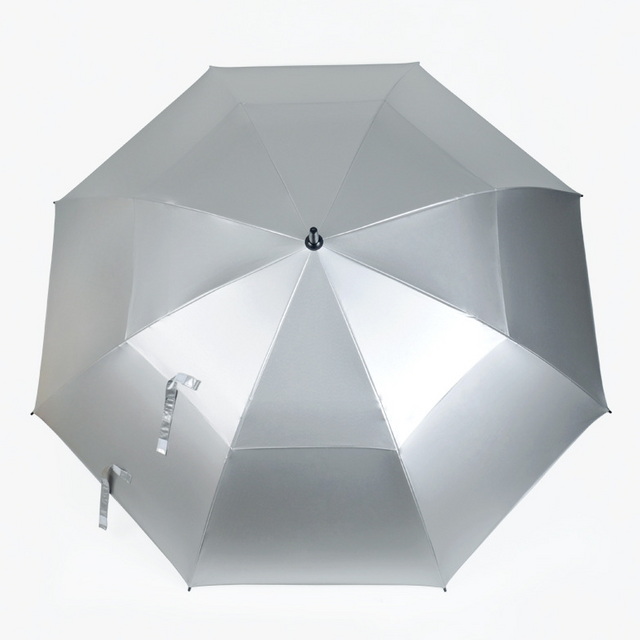
Most golfers are well served by a Golf Umbrella in the 60–62 inch range, which balances full coverage of golfer and bag with manageable weight. Larger players, caddies and those in very wet climates sometimes prefer a 68‑inch Golf Umbrella for extra protection, accepting a little more bulk for the added coverage.
A double‑canopy Golf Umbrella is usually better in windy conditions because the vented design allows air to escape, reducing the risk of inversion or frame damage. However, if you mostly play in light rain and low wind, a well‑made single‑canopy Golf Umbrella with strong ribs can still perform very reliably.
Fiberglass ribs and shafts are widely regarded as ideal for a Golf Umbrella because they are strong, relatively light and flex instead of snapping under gusts. Some frames mix fiberglass with metal or other composites, but for a top‑tier Golf Umbrella most buyers prioritize fiberglass or similarly flexible materials in the specification.
Brands can customize an OEM Golf Umbrella by choosing canopy size, panel layout, colors, prints, handle style and packaging to match their visual identity and price point. Through detailed briefs and sample approval, an OEM partner can create a unique Golf Umbrella line with precise Pantone colors, logo placements and finishes tailored to different sales channels or events.
With proper materials and careful manufacturing, a quality Golf Umbrella should last multiple seasons of regular play without losing structural integrity or printing clarity. Lifespan depends on how often it is used and how it is stored, but a well‑engineered Golf Umbrella from a reputable OEM factory is designed to withstand repeated opening, closing, rain exposure and sun without quickly failing.
[1](https://www.umbrellas-factory.com/news/detailed-umbrellas-manufacturing-process/)
[2](https://www.madeumbrella.com/news/view_891.html)
[3](https://www.youtube.com/watch?v=dQkghj7HKcE)
[4](https://www.facebook.com/ProfessionalUmbrella/videos/inside-our-umbrella-factory-in-cambodia-real-production-process-topumbrella/615693774927294/)
[5](https://www.promotionalgolf-umbrellas.com/news/the-daily-life-of-the-umbrella-manufacturing-factory-225059.html)
[6](https://www.susinoumbrella.com/blog/the-whole-process-of-umbrella-manufacturing_b96)


