
Language
Please Choose Your Language
Views: 222 Author: Amanda Publish Time: 2025-12-12 Origin: Site


Content Menu
● Why Golf Umbrellas Need Extra Coverage
>> Protecting the Player and the Bag
>> Coping With Open‑Area Weather
● Design Features Behind the Large Size
● Comfort and Handling for Golfers
>> Long Shaft and Comfortable Grip
>> UV‑Blocking Fabrics and Coatings
● Branding and Promotional Advantages
>> Ideal for OEM and Private Label Projects
● Golf Umbrella vs Regular Umbrella
● Scenario Examples: How Golf Umbrellas Perform
>> During Heavy Rain on the Fairway
● Key Benefits of a Large Golf Umbrella
● OEM Opportunities for Golf Umbrellas
● FAQs
>> 1. How big should a Golf Umbrella be?
>> 2. Is a Golf Umbrella suitable for everyday use?
>> 3. What features should I look for in a high‑quality Golf Umbrella?
>> 4. Are all Golf Umbrellas windproof?
>> 5. How can brands customize Golf Umbrellas for promotion?
Golf umbrellas are so big because golfers need professional‑grade protection for both their bodies and their equipment in wide‑open, weather‑exposed environments. The extra‑large canopy, reinforced frame, and ergonomic shaft of a Golf Umbrella deliver reliable performance against rain, wind, and sun in situations where a regular umbrella would quickly fail.
A Golf Umbrella is a large, heavy‑duty umbrella designed primarily for use on golf courses to protect players, caddies, and golf bags from rain, wind, and intense sunlight. Unlike compact city umbrellas, the Golf Umbrella focuses on coverage, durability, and stability rather than small size or portability.
Most Golf Umbrellas feature a wide canopy, a long, straight shaft, and a comfortable grip that is easy to hold even with a golf glove. Taken together, these design elements turn the Golf Umbrella into a piece of functional sports equipment rather than a simple fashion accessory.
One of the most obvious characteristics of a Golf Umbrella is its size. Typical Golf Umbrella arc sizes range from about 60 inches to 68 inches, which is significantly larger than a standard personal umbrella. Some models even go beyond that to meet the needs of taller players or those who want extra coverage.
When fully opened, the canopy diameter of a standard Golf Umbrella often covers enough area for one or two adults plus a full golf bag on a trolley or carried on the shoulder. This generous coverage is the core reason a Golf Umbrella appears so big when compared with everyday umbrellas seen on city streets.
On the course, golfers often walk long distances between holes, carrying or pushing a bag full of clubs, balls, and accessories. A large Golf Umbrella can protect the golfer, the bag, the clubs, and even a scorecard or rangefinder at the same time. This reduces the risk of equipment getting wet and slippery, which can affect performance.
For golfers who play in tournaments or serious practice rounds, keeping grips and clubheads dry is essential. The big canopy of a Golf Umbrella creates a mobile shelter that follows the player around the course and minimizes the impact of changing weather.
Golf courses are usually located in open spaces with limited natural shelter. Trees, clubhouses, and shelters may be far apart, so golfers cannot always seek cover quickly when weather changes. This is why a Golf Umbrella is designed to handle gusts of wind, heavy rain, and sudden shifts in direction more effectively than a typical city umbrella.
The combination of a wide canopy and specialized construction means that the Golf Umbrella can withstand the challenging environment of fairways and greens, where wind is stronger and more unpredictable. Without this extra‑large Golf Umbrella, players would be constantly exposed to the elements.
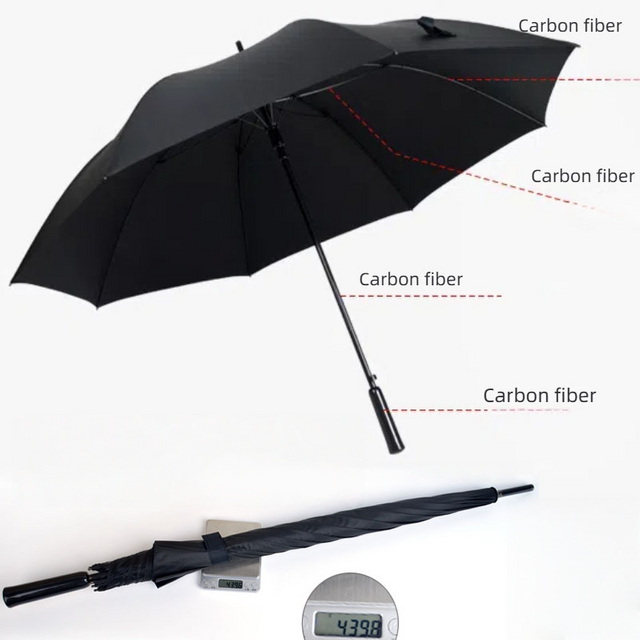
A big canopy creates more surface area for wind and rain to push against, so a Golf Umbrella must have a stronger structure to remain stable. Many quality Golf Umbrellas use fiberglass ribs and a reinforced shaft to provide strength and flexibility at the same time.
Fiberglass ribs are lighter than traditional metal yet more resistant to bending and breaking under stress. When strong gusts of wind hit the canopy, these ribs can flex and absorb force instead of snapping. This structural design allows the Golf Umbrella to maintain a large size without becoming fragile.
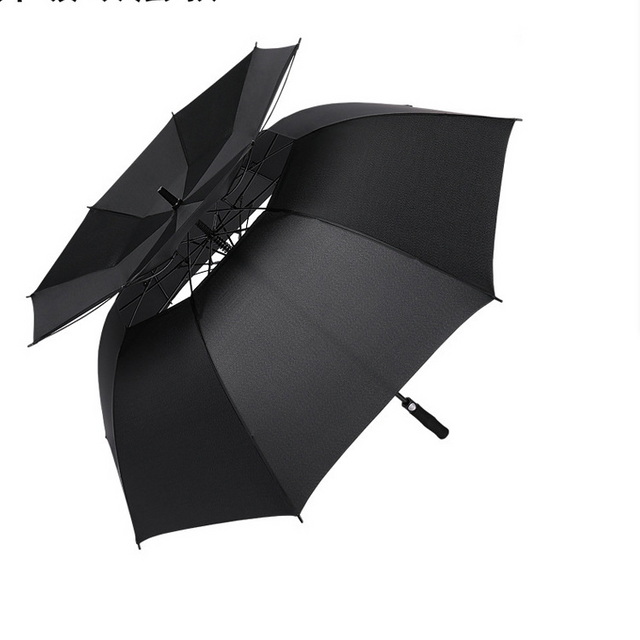
A common feature in modern Golf Umbrellas is the double‑canopy design. Instead of a single layer of fabric, the Golf Umbrella uses two overlapping layers with vents that allow a controlled amount of air to pass through. This reduces the air pressure trapped under the canopy and significantly lowers the risk of inversion.
The double‑canopy structure is one of the key innovations that makes a large Golf Umbrella practical on windy courses. It lets the umbrella stay big enough to provide broad coverage while maintaining stability and reducing drag.
The fabric of a Golf Umbrella must be tough enough to handle repeated opening, closing, and exposure to strong rain and sun. Many Golf Umbrellas use high‑density polyester or pongee fabric with water‑repellent and quick‑dry coatings. This keeps the canopy light while ensuring that water beads up and runs off quickly.
Some Golf Umbrella fabrics also incorporate colorfast treatments and protective coatings, so printed logos and patterns stay bright even after long outdoor use. These materials support both performance and visual branding.
The shaft of a Golf Umbrella is typically longer than that of a standard umbrella. This allows golfers to hold the umbrella comfortably over themselves and their bags without needing to bend or twist their wrists awkwardly. The longer shaft also means that the canopy sits higher, giving space for swings, movement, and equipment underneath.
Handles on Golf Umbrellas are often designed with ergonomics in mind. Many use rubberized or foam grips with contoured shapes to prevent slipping. This is especially useful when the golfer is wearing a glove or when hands are wet from rain or sweat.
Because golf weather can change quickly, many Golf Umbrellas include automatic‑open mechanisms. With a single press of a button, the canopy deploys rapidly and fully. This quick action is important on the course, where a player may need to react fast to sudden rain without interrupting the pace of play.
Some high‑end Golf Umbrellas also integrate smooth manual or automatic closing systems to make it easy to stow the umbrella between shots or when the weather clears. These operational details contribute to the practicality of using such a large umbrella.
A Golf Umbrella is not only for rainy days. On sunny days, the large canopy offers broad shade that can significantly improve comfort during a long round. Continuous exposure to direct sunlight can cause fatigue, dehydration, and skin damage, especially over four or more hours of play.
With a large Golf Umbrella, golfers can create their own portable shade whenever they are waiting to take a shot, walking between holes, or standing on the tee. The wide coverage is essential for effective sun management on open courses.
Many modern Golf Umbrellas use fabrics that offer high levels of UV protection. Some models are rated with high UPF values and can block a significant percentage of harmful ultraviolet rays. This is crucial for golfers who play frequently and want to protect their skin over the long term.
Silver‑coated or dark‑lined canopies are particularly popular in sun‑protection Golf Umbrella designs. These coatings reflect or absorb a portion of the solar radiation, helping to keep temperatures under the canopy lower and providing a more comfortable experience.
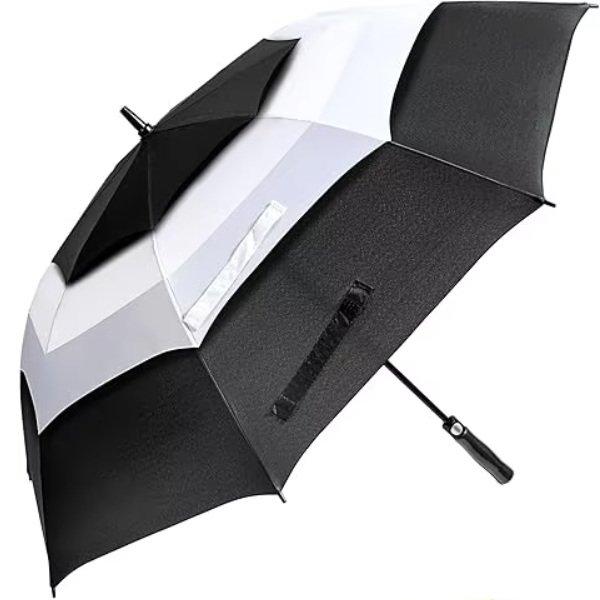
The big panels of a Golf Umbrella offer generous space for branding. Logos, slogans, and company names can be printed on multiple panels, along the edges, or even across the entire canopy. This makes the Golf Umbrella an ideal promotional product for brands that want high visibility in outdoor settings.
Compared with smaller umbrellas, a Golf Umbrella makes any artwork or logo easier to see from a distance. On a golf course, at events, or in daily life, a branded Golf Umbrella acts as a walking advertisement that stands out visually.
For overseas brands, wholesalers, and importers, the Golf Umbrella is a popular OEM item. Large canopies, multiple panel options, and different color combinations allow private label clients to create unique designs tailored to their target markets.
An OEM manufacturer can provide a wide variety of Golf Umbrella styles, including classic solid colors, color‑blocked panels, and modern patterns. Combined with custom handles, tips, and packaging, the Golf Umbrella becomes a powerful tool for brand building.
A comparison between a Golf Umbrella and a regular umbrella helps explain why the former must be larger and stronger:
- Size and coverage: A Golf Umbrella usually has a much larger arc and diameter, which allows it to cover both the golfer and the golf bag. A regular umbrella typically serves only one person at a time.
- Structural strength: Golf Umbrellas rely on reinforced frames, fiberglass ribs, and wind‑resistant construction, while many everyday umbrellas use lighter materials that may not withstand strong gusts.
- Usage environment: Golf Umbrellas are meant for wide‑open courses, practice ranges, and outdoor events, whereas regular umbrellas are designed for urban environments with more shelter.
- Functional focus: The Golf Umbrella prioritizes performance, stability, and coverage, while the regular umbrella often balances practicality with compact size and portability.
These differences show why the Golf Umbrella needs to be big in order to fulfill its specific role on the course.
Imagine a sudden downpour in the middle of a round. A golfer using a small umbrella might protect their head but leave the bag exposed, leading to wet grips and waterlogged gear. By contrast, a large Golf Umbrella can shelter both player and bag, keeping equipment dry enough for consistent swings.
The golfer can keep the Golf Umbrella open while walking to the ball, then close or angle it just long enough to take the shot before opening it again. This practical routine is possible because of the umbrella's wide canopy and easy handling.
In winter, many courses are windy and damp. A standard umbrella may invert in gusts or pull against the user's arm. A well‑designed Golf Umbrella, with its double‑canopy and reinforced ribs, can handle gusty conditions with greater stability. This allows golfers to continue playing with less frustration and fewer interruptions.
A stable Golf Umbrella also contributes to safety by reducing the chance of broken ribs or sharp edges in strong wind. Durability and wind resistance are therefore key reasons for the large, engineered structure.
During hot summer rounds, players often face several hours of direct sunlight without shade. A big Golf Umbrella can create a personal shaded zone wherever the golfer moves. With UV‑blocking fabric, it becomes more than a rain shield; it acts as a mobile sun‑protection system.
This kind of protection is especially valuable during midday tee times or in regions with strong sun. Over time, a UV‑protective Golf Umbrella supports better skin health and comfort for frequent players.
Summarizing the main advantages of a large Golf Umbrella:
- Wide weather protection: Shields golfer, caddie, and equipment from rain, wind, and sun.
- Wind‑resistant engineering: Reinforced frames and vented canopies handle gusts better than standard umbrellas.
- Comfort and ergonomics: Longer shaft and ergonomic handle make the Golf Umbrella easier to use on the course.
- UV and heat management: UV‑blocking fabrics and large shade areas help reduce sun exposure and heat.
- High branding value: Large surface area is ideal for logos and designs, making the Golf Umbrella a strong promotional tool.
These benefits explain why the Golf Umbrella has become a standard piece of gear for many players and a popular product in the OEM and private label market.
For manufacturers, the Golf Umbrella category offers substantial potential. Buyers from different regions require various sizes, color combinations, and feature sets. By offering flexible customization, an OEM supplier can meet the needs of:
- Golf brands that want premium, logo‑printed Golf Umbrellas for pro shops and tournaments.
- Retail chains looking for value‑oriented Golf Umbrella ranges with reliable quality for general consumers.
- Corporate clients who need branded Golf Umbrella gifts for events, sponsorships, and promotional campaigns.
An experienced OEM manufacturer can support these clients by providing professional design suggestions, material recommendations, and production solutions tailored to local markets. This includes options such as automatic‑open systems, UV‑coated canopies, double‑canopy designs, and packaging that highlights brand identity.
Golf umbrellas are so big because they are built to solve real problems on the course: wide‑area weather exposure, long playing times, and the need to protect both players and valuable equipment. The large canopy, reinforced structure, double‑canopy venting, and UV‑protective fabrics make the Golf Umbrella a highly effective shield in rain, wind, and strong sun.
Beyond pure function, the Golf Umbrella also offers excellent branding opportunities thanks to its large print area and long service life. For overseas brands, wholesalers, and importers, a well‑designed Golf Umbrella is not only a practical sports accessory, but also a powerful promotional platform. By partnering with capable OEM manufacturers, they can create customized Golf Umbrella collections that stand out in the market and deliver real value to golfers around the world.
A commonly recommended size for a Golf Umbrella is between 60 and 68 inches in arc length. Umbrellas in this range provide enough coverage for a golfer and a full golf bag, while still being manageable to carry and control. Players who are taller or who often share an umbrella with a partner may prefer models at the upper end of this range.
Yes, a Golf Umbrella can be used in daily life, especially in regions with heavy rain or strong wind. Its large canopy and sturdy frame can offer more reliable protection than a compact umbrella. However, the size of a Golf Umbrella may feel bulky in crowded streets or small indoor spaces, so some users keep both a Golf Umbrella and a smaller umbrella for different situations.
A high‑quality Golf Umbrella should include a strong frame, preferably with fiberglass ribs, a durable canopy fabric with water‑repellent and UV‑resistant properties, and a comfortable, non‑slip handle. Additional features such as a double‑canopy vented design and an automatic‑open mechanism can further improve performance and usability. When choosing an umbrella, it is also important to check stitching quality and overall finishing.
No umbrella can be completely windproof, but many Golf Umbrellas are specifically engineered to be highly wind‑resistant. Models with double‑canopy construction, flexible fiberglass ribs, and reinforced joints perform better in gusty conditions than basic designs. Even so, extremely strong winds can damage any umbrella, so users should still exercise caution in severe storms.
Brands can customize Golf Umbrellas in many ways, including printing logos on individual panels, using corporate colors for canopy and handle, and adding branded details to straps, tips, and packaging. OEM manufacturers can also adjust canopy size, fabric type, frame material, and opening mechanisms to match the brand's positioning. By combining visual design with functional features, companies can create unique Golf Umbrella products that reflect their identity and appeal to their target customers.


