
Language
Please Choose Your Language
Views: 222 Author: Amanda Publish Time: 2025-12-10 Origin: Site


Content Menu
● Understanding the Auto Umbrella Mechanism
● Safety and Preparation Before Repair
● Diagnosing Common Auto Umbrella Problems
● Repairing a Stuck or Unresponsive Button
● Fixing an Auto Umbrella That Will Not Stay Open
● Resolving an Auto Umbrella Stuck Halfway
● Repairing Bent Ribs and Frame Damage
● Reattaching Canopy Fabric and Fixing Tears
● Restoring and Maintaining the Spring and Shaft
● When to Repair and When to Replace
● Preventive Care for Longer Auto Umbrella Life
● OEM Considerations for Brands and Wholesalers
● FAQs
>> 1. Why does my Auto Umbrella button stop working?
>> 2. Can I fix a broken rib on an Auto Umbrella myself?
>> 3. What should I do if my Auto Umbrella is stuck half open?
>> 4. How can I prevent rust and sticking in my Auto Umbrella?
>> 5. When is it better to replace my Auto Umbrella instead of repairing it?
Auto Umbrella models are convenient, fast, and compact, but their complex internal mechanisms can fail after heavy use, wind damage, or poor storage habits. Understanding how an Auto Umbrella works and how to diagnose and repair common faults allows users and brands to extend product life and reduce returns. This guide integrates step‑by‑step repair advice with practical maintenance and OEM selection tips so Auto Umbrella owners can restore smooth, reliable performance.
An Auto Umbrella typically combines a telescopic metal shaft, a powerful coil spring, a slider, ribs, stretchers, and a push button built into the handle. When the user presses the button, a catch releases the compressed spring so the slider shoots upward, pushing the ribs open and locking the canopy in position. In many auto open–close designs, a second press unlocks the canopy to collapse it, while the user manually compresses the shaft to reset the spring for the next cycle.
The entire Auto Umbrella mechanism depends on precise alignment of small parts under tension. Dust, rust, bent ribs, cracked plastic, or a weakened spring can quickly lead to problems such as failure to open, failure to stay open, or jamming halfway. Because these components are compact and sometimes hidden inside the handle or shaft, careful observation and methodical testing are essential before attempting any repair on an Auto Umbrella.
Before working on any Auto Umbrella, always ensure the umbrella is dry and free from mud or debris. A slippery shaft or wet handle increases the risk of losing control when the spring releases. Work on a flat, well‑lit surface, keeping small screws, pins, and springs in a dish or container to avoid losing them mid‑repair.
Treat the Auto Umbrella spring as a high‑energy component that can snap open unexpectedly if a catch slips. Keep fingers away from the slider and the button linkage while testing. If the Auto Umbrella appears severely warped or the spring housing is cracked, consider eye protection and gloves or choose to replace the unit entirely. Safety should always outweigh the value of a single Auto Umbrella.
The first step in any repair is diagnosis. Auto Umbrella failures usually fall into a few recognizable categories:
- The Auto Umbrella button does nothing when pressed.
- The Auto Umbrella opens only partway and stops.
- The Auto Umbrella opens but will not stay open.
- The canopy closes but the shaft will not retract.
- The Auto Umbrella frame is twisted or ribs are broken.
- The canopy fabric has detached or torn.
Open and close the Auto Umbrella several times, listening for clicks and observing how far the slider travels. If the button feels soft or loose, the problem is often in the handle linkage. If the slider stops at the same point every time, the fault is more likely in the shaft track, spring tension, or a bent rib obstructing movement. The clearer the diagnosis, the easier it is to choose the correct repair method for your Auto Umbrella.
When the Auto Umbrella button no longer triggers opening or closing, the handle is the logical place to start. Most handles are held together with a small screw or locking clips; remove the screw or gently pry the shell apart with a thin tool to reveal the internal button mechanism. Inside, you will usually see the external button, a small return spring, and a rod or lever that runs from the button toward the shaft.
Inspect this area for dust, corrosion, or broken plastic. On many Auto Umbrella handles, a tiny lever or plastic bridge transfers the force from the button to the main release rod. If this part shifts or cracks, the button will depress without moving the rod. Cleaning off dirt and repositioning or replacing this piece often restores normal operation. A very small amount of silicone or light machine oil can be applied to sliding plastic surfaces—never soak the parts, since excess lubricant can attract more dust.
If the button fails to spring back after pressing, the miniature spring behind it may be bent, fatigued, or missing. Inexpensive replacement springs from pen mechanisms or small hardware assortments can sometimes be cut and adapted for this purpose. Once the spring is reinstalled or replaced, reassemble the Auto Umbrella handle and test the button several times while the umbrella is still closed. Only after the button feels firm and responsive should you attempt a full automatic opening.
When an Auto Umbrella opens and then collapses immediately, the problem usually lies in the locking system near the top of the shaft. As the slider reaches the fully extended position, a small catch or latch should click into a groove, holding the ribs in the open position. If this catch is worn down, bent, or obstructed, it will not stay engaged, causing the Auto Umbrella to fold back under the spring or canopy tension.
Start by slowly opening the Auto Umbrella and listening for the characteristic click at full extension. If there is no audible lock, carefully examine the junction where the slider meets the upper shaft, looking for damaged notches or bent metal. On some models, gentle reshaping with pliers can restore the locking edge so it properly engages the groove. Take care not to over‑bend or crack the metal, as this may permanently weaken the Auto Umbrella frame.
For owners comfortable with DIY modifications, some choose to drill a tiny hole in the shaft or slider and insert a removable pin or small bolt to serve as a manual lock. This approach physically prevents the Auto Umbrella from sliding back down until the pin is removed. While unconventional, it can keep an older Auto Umbrella functional and safe for occasional use when original parts are unavailable.
A very common complaint is an Auto Umbrella stuck halfway open or halfway closed, especially after being forced in high wind. In many cases, the slider has jumped off its intended path, or the internal spring has not fully engaged or released. Instead of forcing the umbrella closed, the safest strategy is often to guide it to the fully open position first.
Hold the handle firmly and, if the Auto Umbrella is compact, gently pull the tip away from the handle to extend the shaft. Apply smooth, even force rather than jerks; often, the slider will snap back into its correct track once it reaches the natural end of travel. If the Auto Umbrella refuses to move past a certain point, check whether any ribs are folded incorrectly or twisted around each other. Straightening these ribs can free the slider and allow a complete cycle.
Once the Auto Umbrella reaches either fully open or fully closed, press the button and observe the travel. Sometimes a single full reset cycle is enough to restore normal action. If jamming continues in the same position, the root cause may be a damaged spring, crushed shaft segment, or internal plastic part that will require disassembly or professional service.
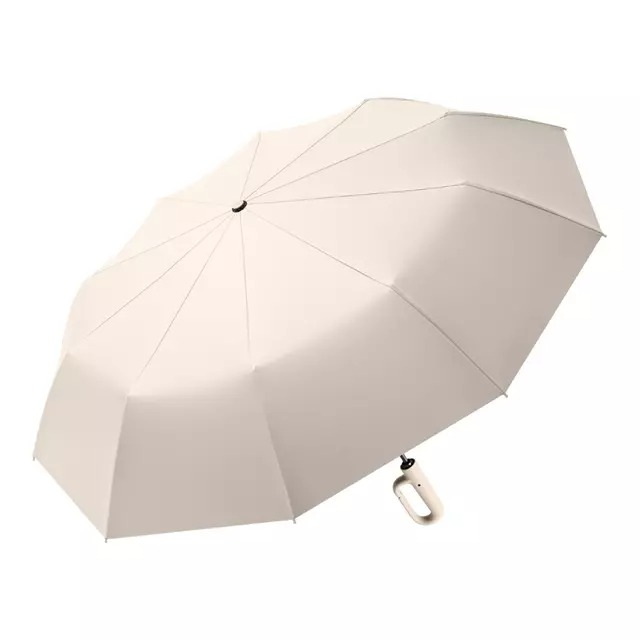
Strong gusts and accidental impacts can bend the ribs on an Auto Umbrella, resulting in a warped canopy or incomplete opening. Inspect each rib from tip to base, comparing the curvature side‑by‑side. Minor bends can be corrected by carefully straightening the metal with your fingers or with padded pliers. Using padding prevents tool marks and reduces the risk of weakening the rib.
If a rib is cracked or broken in the middle, consider whether replacement is practical. Some repair kits offer generic rib sections that can be cut to length and fastened with small screws, rivets, or wire to the remaining frame. Another approach is to salvage parts from an old Auto Umbrella with a similar frame size. When attaching a replacement rib section, ensure all joints pivot freely and the rib length matches the other ribs closely; uneven lengths can cause the Auto Umbrella to twist or strain the fabric.
For Auto Umbrella models with fiberglass ribs, cracks near the joint may be temporarily reinforced with strong tape or epoxy, but this is rarely a long‑term fix. When several ribs are broken or the central shaft is bent, replacement of the entire Auto Umbrella is often a better investment than complex frame repair.
Even when the mechanism is sound, an Auto Umbrella can become difficult to use once the canopy fabric separates from its ribs or develops tears. Most canopies attach at each rib tip through fabric pockets, plastic caps, or stitching. If a rib cap falls off or a seam fails, one panel will sag or flap in the wind, stressing the remaining ribs.
To reattach the fabric, inspect the attachment method. If a cap is missing, a new cap or even a small, smooth button can be sewn onto the rib tip, then stitched through the canopy. Use strong, weather‑resistant thread, ideally polyester or nylon, for sewing on an Auto Umbrella. For simple seam failures, re‑stitch along the original line using a backstitch for strength, keeping tension similar to the surrounding seams so the canopy opens evenly.
Small tears in the canopy fabric can be patched from the underside with lightweight nylon patches and flexible adhesive, or sewn with tight, fine stitches. Avoid bulky knots or thick patches that could snag during opening. With neat repairs, the Auto Umbrella will once again open cleanly and offer proper protection from rain.
The internal spring is the heart of every Auto Umbrella, providing the force that propels the canopy open. Over time, rust, dirt, or metal fatigue may reduce its performance. In many compact Auto Umbrella designs, the main spring is enclosed inside the shaft, making full replacement difficult without specialized knowledge. However, partial restoration is still possible through cleaning and lubrication of accessible components.
Wipe the shaft with a dry or slightly damp cloth to remove dirt and residue. If there is visible rust, gently polish the surface with fine abrasive pad or steel wool, then dry thoroughly. Apply a very light coat of rust‑inhibiting oil or silicone spray to the shaft, slider, and joints. Excess oil should be wiped off; the goal is a thin film that lets the Auto Umbrella parts glide smoothly without attracting dust.
If the spring feels weak but intact, you can slightly improve performance by fully collapsing the Auto Umbrella and keeping it closed for a period, allowing the spring to rest in a compressed state. However, if the Auto Umbrella fails to open even after cleaning, the spring may be cracked or permanently fatigued. Replacing a main spring is more advanced and usually only justified on high‑quality Auto Umbrella models.
Choosing between repair and replacement depends on the extent of damage, the original quality of the Auto Umbrella, and the user's expectations. A single broken rib, a loose button, or a small tear in the canopy are low‑cost problems that a handy person can fix in minutes. On the other hand, multiple fractured ribs, a bent central shaft, or a broken main spring indicate serious structural failure.
If the Auto Umbrella was very inexpensive to begin with and uses thin, easily deformed materials, even successful repair may not last long. In such cases, replacing the umbrella with a sturdier model is more economical in the long run. Conversely, a branded or premium Auto Umbrella with a strong frame and comfortable handle is usually worth repairing, especially if the damage is localized. Users who rely on an Auto Umbrella daily, such as commuters, quickly see the benefit of investing in better construction.
Preventive maintenance greatly extends the lifespan of any Auto Umbrella and reduces the need for repair. One of the most important habits is allowing the Auto Umbrella to dry fully in the open position after use. Storing an Auto Umbrella wet inside a bag, car, or drawer promotes rust on the shaft, spring, and metal joints and can cause mildew on the canopy fabric.
Regularly check that the ribs open and close smoothly and that no joints feel stiff. A small drop of light oil at friction points once or twice a season can keep the Auto Umbrella operating quietly and easily. Avoid opening the Auto Umbrella in very tight spaces where ribs may strike walls or doors, since repeated impacts bend the frame. Also, never use an Auto Umbrella as a walking stick or cane; the extra side‑loads can twist the shaft and misalign the internal mechanism.
By storing the Auto Umbrella in a protective sleeve when dry, cleaning off dirt, and respecting its mechanical limits, owners can enjoy smooth automatic opening for many rainy seasons.
For brands, wholesalers, and producers sourcing Auto Umbrella products, design and material choices directly influence failure rates, warranty costs, and customer satisfaction. A well‑engineered OEM Auto Umbrella should use corrosion‑resistant metals for shafts and ribs, reliable springs rated for thousands of cycles, and strong plastic formulations for handles and buttons. Thorough testing of auto open and auto close operations under different temperatures and humidity conditions helps identify weak points before mass production.
Customization options also matter. Adjustable spring tension, button sensitivity, and frame size allow OEM partners to tailor Auto Umbrella models for different markets. For example, regions with frequent strong winds may need reinforced frames and double‑canopy designs, while compact travel Auto Umbrella products require slim but durable telescopic shafts. Clear quality control standards and detailed inspection during production minimize variations that could cause failures later.
By working directly with an experienced OEM Auto Umbrella manufacturer, brands can specify frame geometry, fabric weight, and finishing details that balance cost and durability. In the long term, offering a dependable Auto Umbrella that resists common problems—sticking, bending, and tearing—builds a stronger reputation and reduces after‑sales service pressure.
An Auto Umbrella is more than a simple rain accessory; it is a compact mechanical system that depends on precise interaction between springs, shafts, ribs, fabric, and a trigger button. When any of these components wear out, bend, or lose alignment, the Auto Umbrella may stop opening, fail to stay open, or jam awkwardly. With careful diagnosis and a few basic tools, many of the most common issues—stuck buttons, half‑open canopies, bent ribs, and loose fabric—can be fixed at home, restoring convenience and extending product life.
For users, preventive care such as drying the Auto Umbrella fully, lubricating moving joints lightly, and avoiding misuse dramatically reduces breakdowns. For brands and wholesalers, selecting a high‑quality OEM Auto Umbrella design, specifying robust materials, and enforcing strict quality control helps limit returns and complaints. Whether repairing a favorite Auto Umbrella or designing a new line for international markets, understanding the mechanism and its weak points is the key to reliable protection in every storm.
In most cases, the Auto Umbrella button fails because dirt, corrosion, or wear has affected the tiny linkage between the button and the release rod inside the handle. Opening the handle to clean the components, repositioning the lever, and checking the small return spring often restores a firm, responsive click. If the internal plastic has cracked or a spring is missing, replacing these small parts or swapping in a compatible handle may be necessary.
Yes, a single broken rib on an Auto Umbrella is usually repairable with basic tools. You can straighten slightly bent metal by hand or with padded pliers, and you can replace a completely broken rib using a spare from a donor umbrella or a repair kit. The key is to match the length and curvature of the original rib and ensure that all joints pivot freely, so the Auto Umbrella opens symmetrically and does not strain the canopy.
If your Auto Umbrella is stuck half open, avoid forcing it closed immediately. Instead, gently guide the shaft toward the fully open position and check whether any ribs are twisted or folded incorrectly. Once you straighten any visible obstructions, apply steady pressure to extend the Auto Umbrella completely, then press the button to cycle the mechanism. Often, this full reset clears a minor jam and allows normal open‑close operation again.
The most effective prevention is always drying your Auto Umbrella fully in the open position after each use and avoiding long‑term storage while damp. Occasionally wipe the shaft and ribs with a dry cloth, removing dirt and moisture, and add a tiny amount of light oil or silicone to the key moving joints. This routine minimizes rust, reduces friction, and helps the Auto Umbrella open and close smoothly even after months of use.
Replacement is usually the better option when your Auto Umbrella has several broken ribs, a seriously bent main shaft, or a damaged main spring that no longer provides enough force. Repairing all of these issues can be time‑consuming and may still leave the frame weakened. In such situations, investing in a new, higher‑quality Auto Umbrella—ideally from a reputable OEM source—offers more reliable performance, longer service life, and fewer future repair headaches.


