
Language
Please Choose Your Language
Views: 222 Author: Amanda Publish Time: 2025-12-09 Origin: Site


Content Menu
● Indoor vs Outdoor: The Core Debate
● How Event Planners Classify Outdoor Tents
● Types of Outdoor Tent and How They Feel
>> Frame Tents
>> Enclosed Event and Party Tents
● Functional Role of the Outdoor Tent
● Health, Safety, and Regulatory Perspective
● Outdoor Tent in Marketing and Branding
● OEM Perspective: Designing and Manufacturing Outdoor Tents
● When Does a Tent Feel “Indoor”?
● Practical Answer: So Is a Tent Indoor or Outdoor?
● FAQ
>> 1. Is a tent officially classified as indoor or outdoor?
>> 2. Can an Outdoor Tent fully replace an indoor venue?
>> 3. What are the main types of Outdoor Tent for commercial use?
>> 4. What should brands focus on when sourcing Outdoor Tents from an OEM supplier?
>> 5. Are Outdoor Tents safe to use in all weather conditions?
A tent is generally considered an outdoor structure, yet in real use it occupies a flexible “in‑between” zone between open air and fully enclosed buildings. It offers the open feeling of the outdoors with the protection and control more commonly associated with indoor spaces.
By common definition, a tent is a portable shelter made of fabric such as canvas, polyester, or nylon, supported by poles, ropes, or a rigid frame. It is usually designed to be pitched on the ground and taken down after use, which clearly separates it from permanent architecture. This is why most people and most reference sources treat any outdoor tent as an outdoor product by nature rather than a part of the built environment.[1][2]
A tent's portability is essential to its identity. It can be packed, transported, and re‑installed in another place with relatively simple tools and skills, so it supports temporary activities like camping, seasonal markets, and short‑term brand activations. For manufacturers and OEM partners, this portability drives demand for Outdoor Tent designs that are both durable in harsh environments and convenient for frequent setup and takedown.[3][4]
The indoor–outdoor debate usually appears when people try to categorize spaces for comfort, regulations, or insurance. In casual conversation, almost everyone calls a tent an outdoor solution because it stands in the open environment and is not part of a permanent building. Even when sidewalls are used, users feel they are still “outside, under cover” in an Outdoor Tent, rather than fully indoors behind bricks and concrete.[2][4][1]
However, once a tent is fully enclosed with walls, doors, and limited openings, it starts to behave more like an indoor environment in terms of ventilation, crowd density, and even acoustics. Health and safety guidance in some regions treats tightly enclosed tents as “indoor‑like” spaces, especially when heating devices are used and air exchange is reduced. This does not change the tent's outdoor identity as a portable shelter, but it does influence how people manage risks, airflow, and occupancy inside an Outdoor Tent.[5][6][7]
Event planners and venue managers often treat tents as a special category that blends the advantages of indoor and outdoor venues. Instead of arguing about labels, they evaluate guest comfort, weather exposure, and technical requirements of each Outdoor Tent installation. Factors like wind resistance, sun exposure, and rain protection matter just as much as décor and layout.[6][8][5]
In many event proposals, open‑air canopy tents are booked when the client wants a clearly outdoor experience with shade and minimal barriers to the surroundings. In contrast, framed or enclosed Outdoor Tents with windows, sidewalls, and flooring are positioned as “outdoor venues with indoor comfort.” This language emphasizes that guests still enjoy a garden, beach, or cityscape setting but remain protected from sun, wind, and moderate rain inside the Outdoor Tent.[8][5][6]
Different Outdoor Tent structures produce very different perceptions of being indoors or outdoors. Understanding these differences helps brands, wholesalers, and OEM manufacturers match products to real usage scenarios.
Frame tents rely on a metal frame that supports the roof and sometimes the walls without central poles in the interior. This design maximizes open floor space and allows multiple configurations of sidewalls, windows, and doors. When all sidewalls are installed, a frame‑style Outdoor Tent can feel almost like a temporary indoor hall, especially if it includes flooring and lighting.[5][6]
Because the frame carries the load, frame tents can be installed on varied surfaces such as grass, concrete, or decking, sometimes with weights instead of stakes. This flexibility makes the frame‑type Outdoor Tent popular for city events, trade fairs, and corporate marketing where permanent ground anchors are not possible.[8][5]
Pole tents or marquee tents are supported by central and perimeter poles, with fabric tensioned by stakes and guy lines. The sweeping rooflines and visible poles give a classic outdoor atmosphere that many wedding and festival organizers appreciate. Even when sidewalls are added, the high ceilings and natural curves preserve a sense of being in a large, temporary Outdoor Tent rather than a closed room.[4][3]
Because pole tents rely heavily on stakes and tension, they are usually installed on softer ground such as lawns or fields. This reinforces their connection to the outdoors and makes them ideal for rustic weddings, countryside events, and music festivals that celebrate natural surroundings.[6][8]
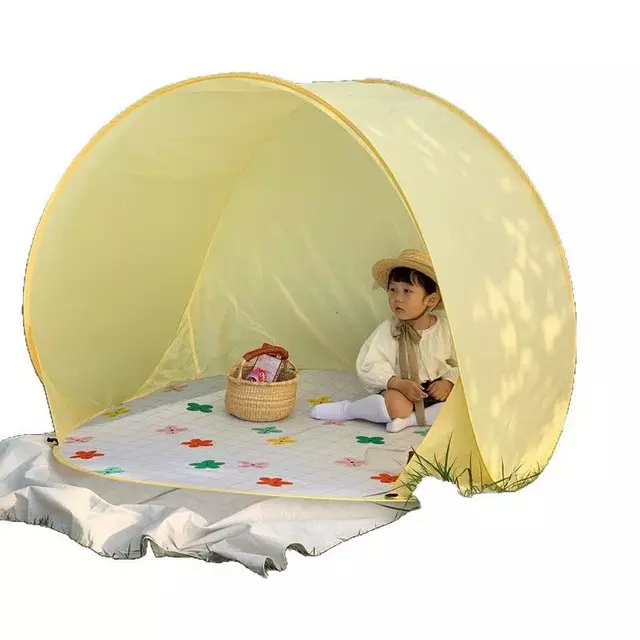
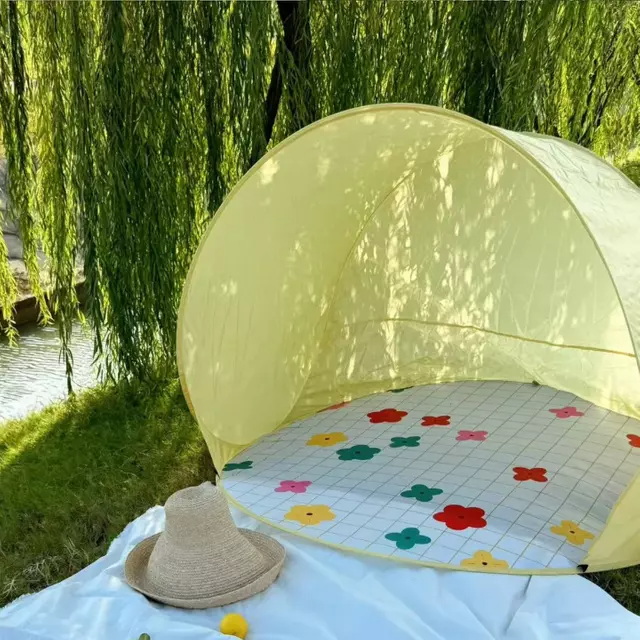
Open‑air canopy tents, pop‑up tents, and simple gazebos provide a roof with few or no walls. Their main role is to supply shade and basic shelter from light rain while keeping airflow and visibility as open as possible. Guests can easily move in and out of the Outdoor Tent space, and they usually perceive very clearly that they are outside.[5][8]
These designs are widely used for farmers' markets, sports events, street promotions, and outdoor exhibitions. Because there are minimal barriers, brands can engage directly with passers‑by, and the Outdoor Tent becomes a visible yet welcoming extension of the street or field environment.[9][10]
Enclosed event tents use heavier fabrics and modular sidewalls, sometimes with clear windows or solid panels. With proper flooring, curtains, lighting, and heating or air conditioning, these Outdoor Tents can feel extremely close to indoor ballrooms. Guests might even forget they are standing on a temporary structure if the décor is elaborate.[6][5]
From an engineering perspective, though, the structure remains a temporary shelter designed to be dismantled. This dual identity is what makes an enclosed Outdoor Tent so attractive for high‑end weddings and corporate occasions: clients gain indoor‑level comfort and style while still benefiting from outdoor locations such as gardens, rooftops, or beachfronts.[8][5][6]
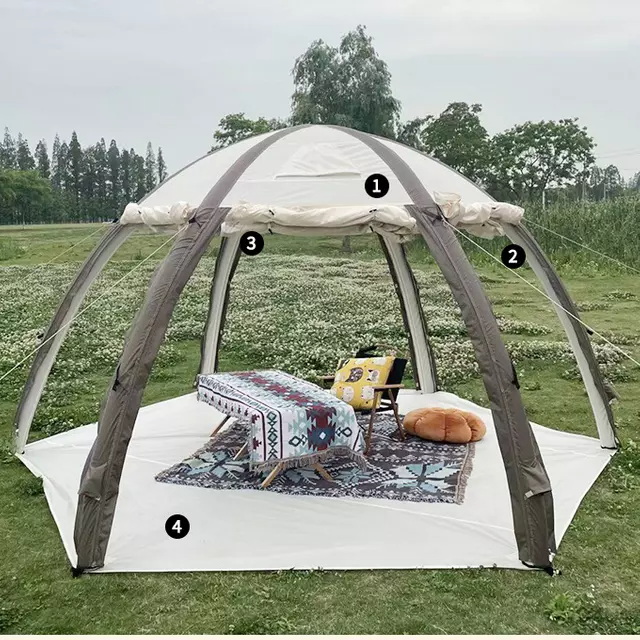
Inflatable tents and domes are supported by pressurized air rather than rigid poles, creating bold shapes and smooth surfaces that catch the eye. These Outdoor Tents are especially popular for modern brand activations and sports sponsorships because the large curved surfaces are ideal for graphics and lighting effects.[11]
Inside an inflatable Outdoor Tent, users often feel as if they have stepped into a futuristic pavilion. Yet, like any other Outdoor Tent, the structure is temporary and often used for short‑term campaigns, roadshows, and mobile exhibitions that move from city to city.[10][11]
Beyond definitions, the day‑to‑day role of an Outdoor Tent is to serve as infrastructure for outdoor activities. It delivers weather protection, visual structure, and a defined meeting place. For camping, it protects sleepers from wind, light rain, insects, and sun. For events and business, an Outdoor Tent hosts guests, showcases brands, and houses equipment.[9][10][6]
Because of this, many organizations treat the Outdoor Tent not just as a product but as a key part of operational planning. They decide how many units to deploy, which sizes to choose, and how to configure sidewalls and accessories. In busy seasonal calendars, the same Outdoor Tent might serve as a market stall one week, a registration booth the next, and an information kiosk at a festival after that.[10][9]
Health and safety rules focus on real risks rather than labels. Authorities examine how enclosed an Outdoor Tent is, how many people will occupy it, how air will circulate, and whether fabrics meet fire‑retardant standards. In some guidance documents, nearly sealed tents are treated similarly to indoor spaces for ventilation and crowd limits, particularly when portable heaters or generators are used.[7][6]
Fire safety codes may require that certain sides of an Outdoor Tent remain open or that clear exit routes and signage be provided. Occupancy limits, emergency lighting, and flame‑resistant materials are all part of responsible tent use. For OEM manufacturers supplying Outdoor Tent products internationally, understanding these regulatory expectations is crucial, because clients in different markets may face diverse local codes.[7][6]
In marketing, the Outdoor Tent is strongly associated with outdoor exposure, foot traffic, and visual impact. Branded canopies and pavilions become three‑dimensional billboards that tower over crowds at sports races, trade fairs, and music festivals. Logos on the roof and valances can be seen from a distance, turning each Outdoor Tent into a recognizable destination for visitors.[11][9][10]
This visibility is combined with practical value. Staff can work in shade, products stay dry, and customers feel comfortable browsing displays or trying samples. An Outdoor Tent can house demo stations, consultation spaces, or simple seating areas. Because it can be transported and reused, marketers can build a consistent brand presence across multiple cities and events using the same Outdoor Tent design and color scheme.[9][10]
From an OEM manufacturing standpoint, Outdoor Tent development is about integrating performance, branding potential, and cost efficiency into one package. International brands often prefer to outsource production to specialized factories that understand outdoor fabrics, metalwork, printing processes, and packaging logistics. These OEM partners must deliver consistent quality across large batches while meeting agreed specifications and standards.[12][13]
Important design aspects include:
- Fabric selection: Outdoor Tent fabrics need UV resistance, waterproof coatings, and good tear strength to withstand repeated use and exposure.
- Frame engineering: Aluminum or steel frames must balance weight, strength, and ease of deployment, with secure joints and corrosion protection.
- Branding surfaces: Smooth, stable panels are required for clean logos and full‑color graphics, including precise color matching to brand guidelines.
- Modular accessories: Sidewalls, half walls, windows, doors, gutters, and connection systems allow a single Outdoor Tent model to serve many layouts.
- Packaging and transport: Foldable designs, wheeled bags, and protective cartons help wholesalers and end users move Outdoor Tents between locations.
A capable OEM supplier supports clients with sampling, design adjustments, and testing so that each Outdoor Tent performs reliably in real‑world outdoor environments.[12][10][9]
There are situations where people informally say they are “indoors” even though they are in a tent. Typically this happens when the Outdoor Tent is fully enclosed, equipped with a hard or raised floor, and decorated with furniture and lighting similar to hotel ballrooms or conference halls. Guests may forget that the walls are fabric when everything else looks like a formal interior.[5][6]
Heating or air conditioning also reinforces the impression of being indoors, because temperature is controlled and wind is blocked. Yet from the perspective of planning, logistics, and safety, the setup is still an Outdoor Tent installation: it is temporary, it can be dismantled, and it stands in a location that is ultimately part of the outdoor environment. This difference in perception versus classification is central to the “indoor or outdoor” question.[6][8][5]
In practical terms, a tent—especially an Outdoor Tent used for events, marketing, or camping—should be considered an outdoor structure that can create an indoor‑like zone when required. Its physical nature, mobility, and purpose connect it firmly to outdoor activities, even when the inside feels sheltered and comfortable. Users gain the benefits of fresh air, scenery, and flexible space alongside substantial control over shade, rain, and wind.[1][2][4]
For brands, wholesalers, and event professionals, the most useful approach is to describe each setup clearly: type of Outdoor Tent, level of enclosure, expected weather, and safety measures. This avoids confusion and sets realistic expectations for comfort and risk management. Rather than forcing a strict “indoor vs outdoor” label, treating the Outdoor Tent as a flexible bridge between the two helps everyone plan more effectively.[9][5][6]
A tent is fundamentally an outdoor product, designed to be portable, temporary, and closely connected to its surrounding environment. Even when fully enclosed and decorated to resemble an interior room, an Outdoor Tent still functions as outdoor infrastructure that can be installed, removed, and reused wherever it is needed. This hybrid nature lets users enjoy the openness of outdoor settings while gaining many advantages of indoor shelter.[2][3][1][5]
For brands, wholesalers, and OEM partners, the Outdoor Tent is more than a simple cover: it is a customizable tool for building experiences, protecting people and products, and presenting strong visual identity in any location. By understanding how different Outdoor Tent types influence comfort, regulations, and perception, businesses can deploy them more strategically and answer the question “indoor or outdoor?” with confidence in each specific context.[13][10][12][9]
Most definitions and industry practices treat a tent as an outdoor shelter, mainly because it is temporary, portable, and set up in open environments. Even when an Outdoor Tent is fully enclosed with walls and doors, it is still not considered a permanent indoor building. Users usually describe it as being outdoors but under cover.[3][4][1][2]
An Outdoor Tent can replicate many features of indoor venues, such as lighting, flooring, décor, and climate control, and it can host formal events like weddings, conferences, and product launches. However, it remains more sensitive to weather, ground conditions, and local safety regulations than a fixed building, so event planners often keep backup plans or additional equipment on hand.[8][5][6]
Common commercial options include pop‑up canopy tents, frame tents, pole or marquee tents, enclosed event tents, and inflatable Outdoor Tents. Each has different strengths: canopies offer quick shade, frame and pole tents handle larger crowds, enclosed tents provide near‑indoor comfort, and inflatable Outdoor Tents deliver strong visual impact for modern marketing campaigns.[11][5][6][8]
Brands should pay attention to fabric quality, frame strength, printing capability, regulatory compliance, and after‑sales support. A reliable OEM manufacturer will understand outdoor performance requirements, offer custom sizes and colors, support high‑quality logo printing, and ensure that each Outdoor Tent meets relevant safety and durability expectations in target markets.[13][10][12][9]
Outdoor Tents are engineered for typical outdoor conditions, but they have limits in extreme wind, heavy snow, or severe storms. Users should follow installation guidelines, secure the Outdoor Tent properly with stakes or weights, and monitor forecasts to decide whether to reinforce, reduce occupancy, or take the tent down. For critical events or harsh climates, specialized designs and professional advice may be required.[13][6]
[1](https://www.merriam-webster.com/dictionary/tent)
[2](https://www.britannica.com/dictionary/tent)
[3](https://en.wikipedia.org/wiki/Tent)
[4](https://www.pomoly.com/Tent-Definition-Significance-to-Outdoor-Adventure-a709783.html)
[5](https://www.venturarental.com/2025/02/13/open-air-vs-enclosed-tents-which-is-best-for-your-event/)
[6](https://anchorinc.com/blogs/why-a-tent-is-necessary-for-winter-events/)
[7](https://www.montgomerycountymd.gov/DPS/Resources/Files/COMBUILD/Coronavirus-NFPA-Tent-Fact-Sheet.pdf)
[8](https://americantent.com/blogs/news/outdoor-vs-indoor-venues-for-events-the-best-tents-for-the-occasion)
[9](https://www.theodmgroup.com/outdoor-events-branded-tents/)
[10](https://www.instantpromotion.com/blog/post/ten-benefits-of-custom-canopy-tents-for-outdoor-marketing)
[11](https://extremetent.com/blog/inflatable/inflate-your-brand-why-inflatable-tents-are-dominating-the-outdoor-event-landscape/)
[12](https://www.everichoutdoor.com/tent-manufacturer-oem/)
[13](https://www.gaoshantent.com/newsinfo-gs-tents-manufacturer-unique-advantages-of-a-market-leader.html)


